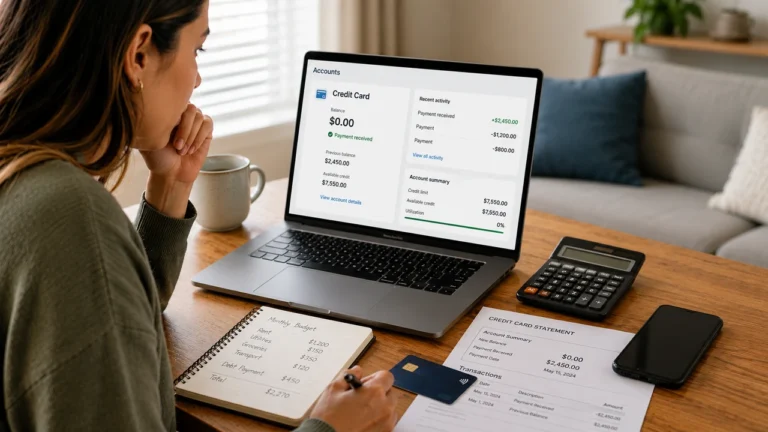
If you are asking why did my credit score drop after paying off debt, you probably expected your score to go up — not fall after doing the “right” thing.
You paid off a credit card, loan, car loan, personal loan, or another debt because that is what everyone tells you to do. Pay down debt. Be responsible. Lower what you owe. So when you check your score and see that your credit score dropped after paying off debt, it feels confusing, frustrating, and honestly unfair.
This is where many people panic. You may think, I paid off debt and my credit score went down, so did I make a mistake? Did the lender report something wrong? Did closing the account hurt me? Did I just damage my credit after trying to fix it?
The truth is, your credit score is not judging your effort. It does not look at your payoff and say, “Great job, here are extra points.” Credit scoring models look at changes in your credit profile. When you pay off debt, several things can shift at the same time: your credit utilization, your available credit, your credit mix, your account status, and sometimes even the way your credit history looks on your report.
That is why a person can do something financially smart and still see a temporary score drop. It does not always mean the payoff was bad. It usually means the system reacted to the new structure of your credit report before everything had time to settle.
So if you feel like, I did everything right but my score dropped, you are not crazy. And if your paid off loan but credit score dropped, there are real reasons behind it. In this guide, you will learn why this happens, when it is normal, when it may be a warning sign, and what to do next so your score can recover in the right direction.
- Paying off debt does not automatically improve your credit score.
- Quick answer
- Why did my credit score drop after paying off debt?
- Is it normal for your credit score to drop after paying off debt?
- How credit scoring actually reacts to paying off debt
- The real reasons your credit score dropped after paying off debt
- Your credit utilization changed
- Your account was closed after payoff
- Your credit mix became weaker
- Your length of credit history changed
- Credit report timing made the drop look worse
- Your credit utilization changed
- Your account was closed after payoff
- Your credit mix became weaker
- Your length of credit history changed
- Credit report timing made the drop look worse
- Why your credit score dropped 40 or 100 points after paying off debt
- The mistake most people don’t realize
- Real scenarios: why your score dropped in your situation
- You paid off a credit card and your score dropped
- You paid off a car loan and your score dropped
- You paid off a personal loan and your score dropped
- You paid off debt but your score did not increase
- You paid off a credit card and your score dropped
- You paid off a car loan and your score dropped
- You paid off debt but your score did not increase
- What to do if your credit score dropped after paying off debt
- How long does it take for your credit score to recover?
- Why your credit score didn’t increase after paying off debt
- What happens after paying off debt: real expectations
- Common myths about paying off debt and credit scores
- How to know if your credit score is recovering
- What to do if something looks wrong
- Frequently asked questions
- Why does a credit score go down after paying off a debt?
- How long does it take for a credit score to go up after paying off debt?
- When will my credit score go up after paying off debt?
- Will my credit score go back up after paying off a loan?
- Why did my credit score drop 40 points after paying off debt?
- Why did my credit score drop 100 points after paying off a car?
- Does paying off debt hurt your credit score?
- Should I close an account after paying it off?
- Is it better to pay off debt or keep a small balance?
- What is the biggest killer of credit scores?
- Why did my credit score go down if I paid on time?
- Why did my credit score go down after closing an account?
- How can I fix my credit score after paying off debt?
- What should I check if my score dropped after paying off debt?
Paying off debt does not automatically improve your credit score.
That sounds backward, but this is where many people get credit wrong. Credit scoring models do not measure whether your action was “good” or “responsible.” They measure how your credit profile changed after that action. If paying off debt changed your credit utilization, closed an account, reduced your credit mix, or affected your available credit, your score can react before it improves.
Quick answer
Your credit score can drop after paying off debt because the payoff may change how your credit profile looks. This can happen if your credit utilization changes, an account is closed, your credit mix becomes weaker, your average account age is affected, or lenders update your report at different times. So, does paying off debt lower your credit score? Sometimes, yes — but usually only temporarily. Paying off debt is still a smart financial move, but credit scoring models react to the structure of your credit report, not just the fact that you paid something off. If you are wondering is it normal for credit score to drop after paying off debt, the answer is yes, it can be normal. In many cases, the score stabilizes after one or two reporting cycles.
Why did my credit score drop after paying off debt?
Your credit score may drop after paying off debt because credit scoring models do not automatically reward “good behavior” in the way people expect. They do not look at your payoff and simply add points because you made a responsible financial move. Instead, they evaluate how risky your credit profile looks after the payoff is reported.
This is why many people ask, why did my credit score go down after paying off debt if paying debt is supposed to help? The answer is usually hidden in the details of your credit report. When you pay off a balance, a loan, or a credit card, the account may update in a way that changes your overall profile. Your total available credit may change. Your credit utilization may shift. Your credit mix may look weaker. An installment loan may close. A credit card may show a lower balance but also a closed status. To you, that looks like progress. To the scoring model, it may look like a structural change.
That is the key difference. Paying off debt is usually good for your finances, but your score reacts to data, not intention. If your credit score decreased after paying off loan, it does not always mean you made a bad decision. It may mean the scoring model is adjusting to the fact that one active account is no longer active, or that your credit profile now has fewer open accounts helping your score.
This is also why paying off debt can hurt your credit score temporarily. A closed loan can reduce your active credit mix. A closed credit card can reduce your available credit. A sudden reporting change can make your profile look different before the full positive effect of lower debt appears. It feels unfair, but the system is not judging fairness. It is calculating risk based on the latest information reported by lenders.
In many cases, this drop is not permanent. Once your credit report updates fully and your remaining accounts stay stable, your score may recover. The important thing is not to panic and make fast moves that create more damage, like opening unnecessary new accounts or closing old cards without understanding the impact.
If your score dropped and you are not sure debt payoff was the only reason, read why did my credit score drop for no reason to check other hidden triggers.
Is it normal for your credit score to drop after paying off debt?
Yes, it can be normal for your credit score to drop after paying off debt, especially when the payoff changes the structure of your credit profile. This often happens after paying off an installment loan, auto loan, personal loan, or a credit card account that later gets closed.
If you are wondering, is it normal for credit score to drop after paying off debt, the answer is yes — in some situations. A temporary drop does not always mean you made a mistake. It usually means the scoring model is reacting to new information. For example, if you paid off a car loan, that account may now show as closed. That can affect your credit mix because you may have fewer active loan types on your report.
The same thing can happen with a credit card. If paying off the balance leads to a closed account or a lower credit limit, your total available credit may go down. That can change your utilization ratio, even if you owe less money overall. This is one reason people ask, does paying off debt hurt your credit score? The honest answer is that it can hurt temporarily, depending on what changes after the payoff.
So, what happens to credit score after paying off loan? Sometimes the score drops first, then stabilizes as the credit report updates. If there are no new late payments, collections, hard inquiries, or reporting errors, the drop is often temporary. The smart move is to check what changed, wait for the next reporting cycle, and avoid making rushed decisions that could create more damage.
How credit scoring actually reacts to paying off debt
To understand credit scoring after paying off debt, you have to look at how the system reads your credit report. A credit score is not based on one action alone. It is based on the full picture of your credit behavior, including your payment history, balances, account age, credit mix, new credit, and whether accounts are open or closed.
That means paying off debt can help one part of your profile while changing another part at the same time. For example, lowering a high balance can help your credit utilization. But if the account closes after the payoff, your total available credit may shrink. If you pay off your only installment loan, your credit mix may become thinner. If an older account is affected, your account age may matter too. This is why your score can react in a way that feels confusing.
The main credit score factors after debt payoff usually include payment history, credit utilization, length of credit history, credit mix, and new credit activity. Payment history is still the biggest factor, so paying on time matters a lot. But once the debt is paid, the scoring model also checks what changed around that payoff. Did your balance drop? Did the account stay open? Did your available credit stay the same? Did a loan close? Did another account update at the same time?
This is the part many people miss. Credit scoring models do not see your personal story. They do not know that you worked hard, saved money, and finally paid off a balance. They only see reported data. If that data now shows fewer active accounts, a different credit mix, lower available credit, or a closed account, your score may move down before it moves up.
So, what affects credit score after paying off debt? The answer is not just the amount you paid. It is the whole structure of your credit report after the payoff is reported. A payoff can be financially smart and still create a short-term score drop because the model is recalculating risk based on the new profile. That is why the next step is not to panic. The next step is to check which factor changed and let the reporting cycle update before making another major credit move.
The real reasons your credit score dropped after paying off debt
There is usually not one single reason your credit score dropped after paying off debt. In most cases, the score falls because one part of your credit profile changed in a way the scoring model did not read as positive right away. You may have less debt, but you may also have less available credit, fewer active accounts, a different credit mix, or a reporting update that temporarily makes your profile look weaker.
This is why paying off debt can feel so confusing. In real life, paying off debt is progress. On your credit report, though, the payoff can trigger several technical changes at once. Here are the most common reasons your score may drop after a payoff.
| Reason your score dropped | What it means | Is it usually temporary? |
|---|---|---|
| Credit utilization changed | Your total available credit may have decreased. | Yes, often temporary |
| Account was closed | A paid-off account may no longer help your open credit profile. | Sometimes |
| Credit mix changed | You may have fewer active loan types on your report. | Usually temporary |
| Credit history changed | Your average account age may be affected over time. | Depends on the profile |
| Reporting timing | Not all lenders update your report at the same time. | Yes |
Your credit utilization changed
One of the biggest reasons for a score drop is a change in credit utilization. Credit utilization is the percentage of your available revolving credit that you are using. For example, if you have a $10,000 total credit limit and you owe $3,000, your utilization is 30%. Lower utilization is usually better for your score.
But here is where it gets tricky. If you paid off debt and the account stayed open, your utilization may improve. But if the account was closed, your total available credit may go down. That can make your utilization look higher on your remaining open accounts, even if you owe less money overall.
For example, imagine you had two credit cards. One card had a $5,000 limit and a $0 balance after payoff. The second card had a $5,000 limit and a $2,000 balance. Together, your available credit was $10,000 and your utilization was 20%. But if the paid-off card gets closed, your available credit drops to $5,000 while you still owe $2,000 on the other card. Now your utilization jumps to 40%.
That is why a person can pay off debt and still see a lower score. The payoff helped the balance, but the account closure hurt the utilization math. This is especially common when a credit score dropped after paying off credit card debt and the credit limit disappeared from the active profile.
Your account was closed after payoff
Another major reason your score may drop is that the account was closed after the debt was paid. This is why it is important to understand the difference between a paid account and a closed account. Paying off an account means the balance is reduced to zero. Closing an account means that account is no longer active.
A closed account is not always bad, but it can change how your credit profile looks. If it was a credit card, you may lose available credit. If it was an installment loan, you may lose an active loan account. If it was an older account, it may affect how your credit history is viewed over time.
This is one of the most common reasons people feel blindsided. They think the payoff should only help. But the credit score does not only see “paid.” It also sees whether the account is still open, whether it still contributes to your available credit, and whether it still supports your credit mix.
If your account closed after payoff, your score may drop because the model is recalculating your profile without that account working the same way it did before. This does not mean paying it off was wrong. It means the account status changed, and the scoring model reacted to that change.
Your credit mix became weaker
Your credit mix is another reason your score can drop after paying off debt. Credit mix refers to the different types of credit accounts on your report, such as credit cards, auto loans, personal loans, student loans, and mortgages. A profile with both revolving credit and installment loans can look more balanced than a profile with only one type of credit.
If you paid off your only installment loan, your credit profile may suddenly have less variety. For example, if you had credit cards and one car loan, then paid off the car loan, your report may now show only revolving accounts as active. That can make your credit mix look weaker.
This is why someone may see a score drop after paying off a car loan, personal loan, or mortgage. The debt is gone, which is good financially. But the scoring model may no longer see that active installment account helping your profile.
The drop from credit mix is usually not the biggest factor, but it can matter when your file is thin or when the paid-off loan was one of your strongest active accounts. If you have a short credit history or only a few open accounts, losing one active account can have a bigger effect.
Your length of credit history changed
Your length of credit history can also play a role, especially if the paid-off account was old or important to your file. Credit scoring models look at things like how long your accounts have been open, the age of your oldest account, and the average age of your accounts.
In many scoring models, a closed account can still remain on your credit report for years, so the impact is not always immediate. But over time, if an older account stops helping your active profile or eventually falls off your report, it can affect the age-related part of your score.
This matters more if your credit file is already young. If you only have a few accounts and one older account changes status, your profile may look less established. A long, stable credit history usually helps because it gives the scoring model more data to judge risk. A shorter or thinner history gives the model less information.
That is why closing old credit cards after paying them off can be risky, especially if they have no annual fee. Keeping an old account open can sometimes help preserve available credit and credit history. Of course, every situation is different, but closing old accounts without understanding the effect can create a score drop you did not expect.
Credit report timing made the drop look worse
Sometimes your score drops simply because of credit report timing. Lenders do not all update your credit report on the same day. One account may report the payoff quickly, while another account may not update until later. A credit card balance may report before your payment posts. A loan may show as closed before other positive changes appear.
This timing gap can make your credit profile look temporarily unbalanced. For example, your paid-off loan may already show as closed, but your lower credit card balances may not have been reported yet. Or your total available credit may change before the rest of your accounts update. For a short period, the score may react to incomplete information.
This is why it is usually smart to wait at least one full reporting cycle before panicking. Many lenders report once a month, and your score may need time to reflect the full picture. If there are no new negative marks, no late payments, no collections, and no incorrect balances, the drop may stabilize after the next update.
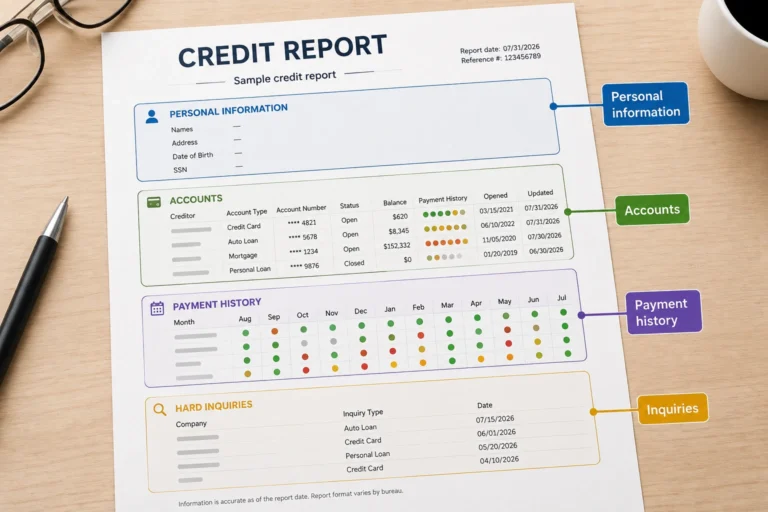
The important thing is to check your credit report, not just the score number. The score tells you that something changed. The report shows you what changed. Look for account status, balances, credit limits, payment history, and any new negative information. Once you understand which factor moved, you can decide whether the drop is normal, temporary, or something that needs to be fixed.
Your credit utilization changed
Your credit utilization after paying off debt can change in a way that surprises you. Credit utilization is the percentage of your available revolving credit that you are using. Lower utilization usually helps your score, but only if your available credit stays strong after the payoff.
Here is where the problem starts. If you paid off a credit card and the account was closed, or the lender lowered your credit limit, your total available credit decreased after paying off debt. That can make your utilization ratio look worse, even if you owe less money overall.
For example, let’s say you had $10,000 in total available credit and owed $2,000. Your utilization was 20%. If one paid-off card with a $5,000 limit gets closed, your total available credit drops to $5,000. If you still owe $2,000 on another card, your utilization jumps to 40%. So even though you paid off debt, the score may see you as using a higher percentage of your remaining credit.
This is one reason a credit score dropped after paying off credit card debt. The debt payoff helped one part of the profile, but the lower available credit hurt another part. Before you panic, check your current credit limits, open accounts, and balances to see whether utilization is the real reason your score moved down.
Your account was closed after payoff
Another reason your score may fall is the difference between a closed account vs paid account. A paid account means the balance was brought down to zero. A closed account means the account is no longer active. Those two things are not the same for your credit score.
If an account closed after payoff, your credit profile may change in several ways. A closed credit card may reduce your total available credit, which can affect your credit utilization. A closed loan may reduce your active credit mix. If the account was older, it may also affect how strong your credit history looks over time.
This is why some people see their credit score dropped after account closed, even though they paid the balance in full. The payoff was not the problem by itself. The problem is that the account stopped helping your open credit profile the same way it did before. Before closing any paid-off account, especially an old credit card with no annual fee, check how it may affect your available credit and account history.
Your credit mix became weaker
Your credit mix can also explain why your credit score dropped after paying off loan. Credit mix means the different types of credit accounts on your report, such as credit cards, auto loans, personal loans, student loans, and mortgages. A profile with both revolving credit and installment loans can look more balanced than a profile with only one type of credit.
If you paid off an auto loan, personal loan, or mortgage, that account may no longer count as an active installment loan. This can create a paid off loan credit mix change, especially if it was your only installment account. The debt is gone, which is good for your finances, but your active credit profile may now look less diverse.
The credit mix impact on credit score is usually not as large as payment history or credit utilization, but it can still matter. This is especially true if your credit file is thin, new, or built around only a few accounts. In that case, losing one active loan can make your profile look weaker for a while, even though paying it off was still a responsible financial move.
Your length of credit history changed
Your length of credit history may also be part of the problem, especially if the account you paid off was one of your oldest accounts. Credit scoring models look at how long your accounts have been open, the age of your oldest account, and the average age of accounts on your credit report.
If a paid-off account is closed, it may not always hurt your score right away, because closed accounts can often stay on your report for years. But over time, closing old account credit score effects can show up if that account stops helping your profile or eventually falls off your report.
This matters more when your credit file is thin or new. If you only have a few accounts and one old account closes, your credit history may look less established. That can create a small length of credit history drop or make your profile look less stable to scoring models.
Before closing an older paid-off account, check whether it has an annual fee, whether it helps your available credit, and whether it is one of your oldest accounts. Sometimes keeping it open is better for your score.
Credit report timing made the drop look worse
Sometimes your score drops because of credit report update timing, not because the payoff actually hurt you long term. Lenders do not all report updates on the same day. One lender may report that your loan is paid off and closed, while another lender has not yet reported your lower balances, updated limits, or recent payments.
This can make your credit report look temporarily unbalanced. For a short period, the scoring model may see the closed account before it sees the full positive effect of the payoff. That is why people often wonder when credit score updates after payoff. In many cases, you need to wait for the next credit score reporting cycle, which is often around 30 days, depending on the lender.
If nothing negative appeared on your report, the drop may simply be a timing issue. Check your balances, account status, and credit limits, then give the report time to update before making another major credit move.
Why your credit score dropped 40 or 100 points after paying off debt
A small score change after paying off debt can be normal, but a bigger drop feels scary. If you are asking why did my credit score drop 40 points after paying off debt, the answer is usually tied to a clear change in your credit profile. A 40-point drop can happen when an account closes, your total available credit decreases, your credit utilization increases, or your credit mix becomes weaker after a loan payoff.
For example, if your credit score dropped after paying off car loan, the car loan may now show as closed. That can remove an active installment account from your profile. If that was your only installment loan, your credit mix may look thinner. The same thing can happen if your credit score dropped after paying off mortgage. The debt is gone, which is financially positive, but the scoring model may react to the closed loan before your overall profile stabilizes.
A 100-point drop is more serious. If you are wondering why did my credit score drop 100 points after paying off debt, do not assume the payoff alone caused it. A drop that large often means several factors changed at once. Maybe the paid-off account closed, your utilization rose on other cards, a credit limit was reduced, or a new negative item appeared on your report. It could also mean there is a reporting error, such as a wrong balance, incorrect account status, duplicate account, or late payment you do not recognize.
The smartest move is to check your full credit report, not just the score number. Look at the account you paid off, whether it is marked open or closed, your current balances, your available credit, and any new negative marks. A 40-point drop may be temporary. A 100-point drop deserves a closer look because it may involve more than normal payoff timing.
The mistake most people don’t realize
The biggest mistake people make is thinking that a zero balance always means a better credit score. In real life, paying off debt is usually a smart financial move. But for your score, the question is not only “Do you owe less money?” The real question is “How did your whole credit profile change after the payoff?”
If the account stayed open, your available credit remained the same, and your utilization dropped, the payoff may help your score. But if the account closed, your credit limit disappeared, your credit utilization increased on remaining cards, or your credit mix became weaker, your score may drop first.
This is why paying off debt can feel backwards. You did something responsible, but the scoring model is looking at structure, not effort. It checks whether your accounts are open or closed, how much available credit you still have, how old your accounts are, and whether you still have a balanced mix of credit types.
So the real mistake is not paying off debt. The mistake is assuming that every payoff automatically improves your score immediately. A payoff helps most when it lowers debt without weakening the rest of your credit profile.
Real scenarios: why your score dropped in your situation
The reason your score dropped depends on what kind of debt you paid off and what changed after the payoff. This is why two people can both pay off debt and get completely different results. One person may see a score increase, while another sees a temporary drop because an account closed, a credit limit changed, or the credit mix became weaker.
You paid off a credit card and your score dropped
If your credit score dropped after paying off credit card debt, check whether the card stayed open. If the card closed or the lender lowered your limit, your total available credit may have decreased. That can make your credit utilization look higher on your remaining cards, even though you owe less overall.
You paid off a car loan and your score dropped
If your credit score dropped after paying off car loan, the loan may now show as closed. That can affect your credit mix, especially if it was your only active installment loan. The car loan payoff is good for your finances, but your credit profile may now look less diverse to the scoring model.
You paid off a personal loan and your score dropped
A paid-off personal loan can also change your active account structure. If the loan was one of your few open accounts, closing it may make your profile look thinner. This can matter more if you have a short credit history or only a small number of accounts.
You paid off debt but your score did not increase
If you paid off debt but your score did not increase, another factor may still be holding it down. High balances on other accounts, late payments, collections, hard inquiries, or reporting errors can block progress. If your score is not moving at all, read why is my credit score not increasing to see what may still be blocking your progress.
You paid off a credit card and your score dropped
If you paid off a credit card and your score dropped, the problem may not be the payoff itself. The problem may be what happened after the payoff. If the credit card was closed, or the lender reduced your credit limit, your total available credit may have gone down.
That can hurt your credit utilization. For example, if you still carry balances on other cards, but one paid-off card no longer counts toward your available credit, your utilization ratio can rise. To the scoring model, it may look like you are using a higher percentage of your remaining credit, even though you just paid down debt.
This is why a credit score dropped after paying off credit card debt can feel so confusing. You lowered what you owed, but the structure of your credit profile changed at the same time. Check whether the card is still open, whether the limit changed, and how much balance remains on your other cards before assuming the payoff hurt you.
You paid off a car loan and your score dropped
If you paid off a car loan and your score dropped, the drop may be connected to the loan closing after payoff. A car loan is an installment loan, which means it adds a different type of credit to your profile than a credit card. Once the loan is paid off, it may no longer count as an active installment account.
That can affect your credit mix, especially if the car loan was your only active loan. Before the payoff, your report may have shown both revolving credit, like credit cards, and installment credit, like the auto loan. After the payoff, your profile may look less diverse to the scoring model.
This does not mean paying off the car loan was a bad move. It usually means your credit score reacted to a paid off loan credit mix change. If there are no new late payments, collections, or reporting errors, the drop may be temporary while your credit report updates and your remaining accounts stay stable.
You paid off debt but your score did not increase
If you paid off debt but your score did not increase, another factor may still be holding your credit score down. A payoff can help, but it does not erase everything else on your credit report. High balances on other cards, late payments, collections, recent hard inquiries, a thin credit file, or reporting errors can all keep your score stuck.
This is why paying off one debt does not always create an instant score jump. Credit scoring models look at the full profile, not just one account. If your credit utilization is still high on other cards, or if negative marks are still recent, the positive effect of the payoff may be limited for now.
If your score is not moving at all, read why is my credit score not increasing to see what may still be blocking your progress.
What to do if your credit score dropped after paying off debt
If your score went down after a payoff, do not panic and do not start making random credit moves. The best way to understand how to recover credit score after paying off debt is to find out exactly what changed on your credit report. A drop usually has a reason, and once you know the reason, you can respond correctly.
First, check if the account was closed. If a credit card, auto loan, personal loan, or other account moved from open to closed, that may explain the drop. A closed account can affect your available credit, credit mix, or account history.
Next, review your total available credit. If your available credit decreased after the payoff, your credit utilization may look higher than before. This can happen when a credit card closes or a lender lowers your limit. Then check utilization on all open accounts, not just the account you paid off. If other cards still have balances, your score may react to the percentage of credit you are still using.
After that, wait for the next reporting cycle. Many lenders update credit reports once a month, and not all updates happen at the same time. Your score may look worse before the full payoff benefit appears. In many cases, waiting 30 days gives you a clearer picture.
While you wait, avoid opening unnecessary new accounts. New applications can add hard inquiries and lower your average account age. Also, do not close old credit cards unless there is a strong reason, such as a high annual fee. If an old card has no annual fee, keeping it open may help preserve your available credit and credit history.
Finally, check your credit report for errors. If the account status, balance, payment history, or limit looks wrong, that may be the real reason for the drop. This is how to fix credit score drop the smart way: identify the factor, avoid rushed decisions, and correct inaccurate information if needed.
If you want to recover faster, focus on the actions that create the fastest visible impact. Start with how to improve your credit score fast.
How long does it take for your credit score to recover?
If your score dropped after a payoff, the next question is usually when will my credit score go back up? In many cases, the first changes can appear within 30 to 60 days, depending on when your lenders update your credit report. Some lenders report once a month, and not all accounts update at the same time.
So, how long does it take credit score to go up after paying off debt? A small temporary drop may stabilize after one or two reporting cycles. If the drop happened because of reporting timing, lower balances, or a normal account update, you may see your score start to recover within 1–2 months. If the payoff changed your credit mix, closed an important account, or reduced your available credit, recovery may take closer to 1 to 3 months.
The answer to how fast does credit score recover also depends on what else is happening in your credit file. If there are no new late payments, collections, hard inquiries, or reporting errors, your score has a better chance of stabilizing faster. But if another negative item appears around the same time, the recovery may take longer.
The smartest move is to check your credit report, wait for the next full update, and avoid making emotional credit decisions while the system catches up.
For a deeper breakdown of recovery timing, read how long does it take to fix your credit score.
Why your credit score didn’t increase after paying off debt
If you are asking why didn’t my credit score increase after paying off debt, the answer is usually that the payoff fixed only one part of your credit profile. A credit score does not move based on one action alone. It looks at the full report, including balances, payment history, account age, credit mix, new credit, and negative marks.
Your credit score may not increase after paying off loan debt if your utilization is still high on other accounts. For example, paying off one loan will not help much if your credit cards are still close to their limits. High credit utilization can keep your score down even when you reduce other debt.
Your score can also stay flat if you have recent late payments, collections, charge-offs, hard inquiries, a thin credit file, or a short credit history. These factors can weigh more heavily than one paid-off account, especially if they are recent. This is why people often feel stuck: they did something right, but another stronger factor is still holding the score back.
Another possibility is a reporting delay or error. The lender may not have updated the payoff yet, or the account may be showing the wrong balance, wrong status, or incorrect payment history. So if you are wondering why is my credit score stuck, check your full credit report before assuming the payoff did nothing.
The key is to look at what is still hurting your score, not only what you already fixed.
What happens after paying off debt: real expectations
After paying off debt, your credit score does not always jump right away. The more realistic path often looks like this: payoff → short drop → stabilization → possible increase. That may feel frustrating, but it is normal when the payoff changes how your credit report looks.
First, the lender reports the payoff. Then the account may show a lower balance, a zero balance, or a closed status. If the account closes, your credit mix, available credit, or account history may change. That is when a temporary drop can happen.
Next comes stabilization. This usually happens after one or two reporting cycles, when the rest of your accounts update and the scoring model gets a clearer picture of your full profile. If your remaining accounts stay open, your credit utilization stays low, and no new negative marks appear, your score may begin to recover.
The possible increase comes later, especially if paying off debt lowered your overall risk. But the increase depends on the whole profile, not just the payoff. A person with high utilization, recent late payments, or a thin credit file may see a slower improvement than someone with stable accounts and clean payment history.
If you expected a bigger increase, read how much your credit score increases if you pay off debt to understand realistic outcomes.
Common myths about paying off debt and credit scores
Part of the confusion comes from common credit myths. The first myth is that paying off debt always increases your score. Paying off debt can help, but it depends on what changes after the payoff. If your account closes, your credit limit disappears, or your credit mix becomes weaker, your score may drop first.
The second myth is that closing accounts helps your score. In some cases, closing an account may make sense financially. But for your credit score, closing an old card can reduce your available credit, increase utilization, and weaken your account history.
The third myth is that a zero balance means perfect credit. A zero balance is good, but credit scoring models also look at payment history, account age, utilization, credit mix, hard inquiries, and negative marks.
Another myth is that your score updates instantly. It does not. Lenders report on their own schedules, and your score may need one or two reporting cycles to reflect the full picture.
The final myth is that one good action fixes everything. Paying off debt is powerful, but it cannot erase late payments, collections, high balances on other cards, or credit report errors overnight.
How to know if your credit score is recovering
You can tell your credit score is recovering by watching the right signs on your credit report, not just the daily score number. The first sign is that your credit utilization goes down. If your balances are lower and your available credit stays stable, your profile usually starts looking less risky.
The second sign is that no new negative marks appear. No new late payments, collections, charge-offs, or hard inquiries means nothing fresh is pulling the score down. That gives your positive changes more room to show up.
Another good sign is that your score stops dropping. Even if it does not jump right away, stabilization matters. A flat score after a drop can mean the worst part of the update has already passed.
You also want your open accounts to remain stable. Keep older accounts open when possible, avoid unnecessary applications, and make every payment on time. Finally, check whether your credit report data becomes consistent across balances, limits, account status, and payment history.
To track the right signs, read how to know if your credit score is improving.
What to do if something looks wrong
If the drop seems too large or does not make sense, do not ignore it. A small temporary drop after paying off debt can be normal, but a major drop may mean something else changed on your credit report. Look for an unknown account, wrong balance, incorrect credit limit, duplicate account, or a closed account you did not close.
You should also check your payment history carefully. A late payment you do not recognize can hurt your score much more than a normal payoff update. Make sure the paid-off account shows the correct balance, correct status, and correct payment history. If the lender reported the account as late, charged off, still open with a balance, or closed incorrectly, that could explain the drop.
If something on your report looks wrong, you may need to dispute errors on your credit report.
If you plan to dispute anything, collect proof first. Here is what documents help support a credit report dispute.
Frequently asked questions
Why does a credit score go down after paying off a debt?
A credit score can go down after paying off a debt because your credit profile changes. Your credit utilization, credit mix, account status, available credit, or reporting timing may shift after the payoff. The payoff itself may be financially positive, but your score reacts to the full structure of your credit report, not just the fact that you paid something off.
How long does it take for a credit score to go up after paying off debt?
It usually takes 30 to 60 days for your credit score to start adjusting after paying off debt. In some cases, it can take up to 90 days, especially if lenders update your accounts at different times or if a paid-off loan changed your credit mix, available credit, or account status.
When will my credit score go up after paying off debt?
Your credit score may start going up after one or two reporting cycles. For many people, that means about 30 to 60 days. If the drop happened because of reporting timing, your score may stabilize once all lenders update your accounts. If an account closed or your credit mix changed, recovery may take longer.
Will my credit score go back up after paying off a loan?
In many cases, yes, your credit score can go back up after paying off a loan. If there are no new late payments, collections, hard inquiries, or reporting errors, your score may recover after your credit report updates and your remaining accounts stay stable.
Why did my credit score drop 40 points after paying off debt?
A 40-point credit score drop after paying off debt can happen when an account closes, your available credit decreases, your utilization changes, or your credit mix becomes weaker. This kind of drop can be temporary, but you should still check what changed on your credit report.
Why did my credit score drop 100 points after paying off a car?
A 100-point credit score drop after paying off a car is less common and may mean more than the car loan payoff changed. Check your credit report for new negative marks, wrong balances, incorrect account status, duplicate accounts, or payment history errors. A drop that large deserves a closer look.
Does paying off debt hurt your credit score?
Paying off debt can temporarily hurt your credit score in some cases, especially if an account closes, your available credit decreases, or your credit mix changes. Long term, reducing debt is usually good for your financial health, but the score may react negatively at first because your credit profile changed.
Should I close an account after paying it off?
Not always. If an old credit card has no annual fee, keeping it open may help preserve your available credit, credit utilization, and credit history. Closing a paid-off account can sometimes hurt your score, especially if it was one of your older or higher-limit accounts.
Is it better to pay off debt or keep a small balance?
It is usually better to pay off debt than to carry a balance just for your credit score. You do not need to pay interest to build credit. The goal is to keep accounts in good standing, make payments on time, and keep utilization low without carrying unnecessary debt.
What is the biggest killer of credit scores?
The biggest killer of credit scores is usually missed payments, because payment history is one of the most important parts of your credit score. High credit utilization, collections, charge-offs, hard inquiries, and serious credit report errors can also damage your score. If your score dropped after paying off debt, check whether a new negative mark appeared at the same time.
Why did my credit score go down if I paid on time?
Your credit score can go down even if you paid on time because payment history is not the only scoring factor. Your credit utilization, credit mix, account status, available credit, account age, and reporting timing can also affect your score. Paying on time helps, but it does not protect your score from every other credit profile change.
Why did my credit score go down after closing an account?
Your credit score can go down after closing an account because the closed account may reduce your total available credit, increase your utilization ratio, weaken your credit mix, or affect your credit history over time. This is especially important if the account was old, had a high credit limit, or helped balance your credit profile.
How can I fix my credit score after paying off debt?
To fix your credit score after paying off debt, first check what changed on your credit report. Look at account status, balances, credit limits, utilization, payment history, and any new negative marks. Keep old accounts open when possible, avoid unnecessary new applications, make every payment on time, and give your report time to update.
What should I check if my score dropped after paying off debt?
Check whether the account is marked open or closed, whether the balance is correct, whether your credit limit changed, and whether any new negative marks appeared. Also review your credit utilization, payment history, account age, credit mix, and credit report update timing before making another move.
Your credit score didn’t drop because you did something wrong. It dropped because the system reacted to change.
Paying off debt is still a smart financial move, even if your score reacts in a confusing way at first. A temporary drop usually means something shifted in your credit profile: an account closed, your credit utilization changed, your credit mix became thinner, or your report updated unevenly. That does not mean you should panic or undo the payoff.
The goal is not just to pay off debt. The goal is to build a credit profile that stays strong after the change. Keep your remaining accounts stable, make every payment on time, keep balances low, avoid unnecessary new credit, and check your report for errors if the drop looks too large.
For a full recovery plan, read how to improve your credit score step by step.