You paid on time. You didn’t miss anything. And still, your credit score dropped. That is what makes it so frustrating. It feels random, unfair, and hard to explain — especially when nothing obvious changed.
This situation is more common than most people realize in the U.S. Many people see their credit score drop for no reason even when they did everything right. In most cases, the cause comes down to credit utilization, reporting timing, or a small update that happened quietly in the background.
The key thing to understand is this: a credit score almost never drops without a reason. There is always a specific trigger behind it — even if you cannot see it right away. Most of the time, the drop is not caused by a mistake, but by how your credit data was reported to the credit bureaus.
In this guide, you will learn exactly why your credit score dropped, the hidden factors most people miss, what to check first, and how to start fixing it step by step — so you can take back control of your credit score quickly.
That is why a credit score drop is not random — it is always a reaction to something that already changed.
- Quick answer: why did my credit score drop for no reason
- What most people get wrong about a credit score drop
- How credit scores actually work behind the scenes
- Why your credit score dropped suddenly
- Credit utilization increased
- Missed or late payment
- Hard inquiry
- New account
- Negative mark
- Why your credit score dropped even though you did nothing wrong
- Balance reported before payment
- Statement timing
- Credit limit decrease
- Closed account
- Loan payoff effect
- Hidden reasons people do not notice after a credit score drop
- Reporting cycle
- Balance fluctuations
- Bureau differences
- Authorized user changes
- Credit report errors
- Why did my credit score drop 3, 10, 20, 50, or even 200 points
- Why did my credit score drop 3 or 10 points
- Why did my credit score drop 20 points
- Why did my credit score drop 50 points
- Why did my credit score drop 100 to 200 points
- Why did my credit score go down when nothing happened
- Why did my credit score drop even though I did not miss a payment
- The biggest mistake people make after a credit score drop
- What to check immediately if your credit score dropped
- Why did my credit score drop after paying off debt or a credit card
- Why ignoring a credit score drop makes it worse
- How to recover after a sudden credit score drop
- Lower utilization
- Fix payments
- Dispute errors
- Avoid new accounts
- Wait for the reporting cycle
- When a credit score drop is temporary and when it is serious
- How long does it take to recover from a credit score drop
- FAQ: credit score dropped for no reason
- Why did my credit score drop 50 points for no reason
- Why did my credit score drop 10 points
- Why did my credit score drop overnight
- Why did my credit score drop even though I paid on time
- Why did my credit score drop even though I did not miss a payment
- Does checking my credit score lower it
- Will my credit score go back up
- Why is my credit score different on different apps
- Why did my credit score drop 200 points
- What to do next if your credit score dropped
- What this really means for you
- Final thoughts
Quick answer: why did my credit score drop for no reason
A credit score almost never drops for no reason. If your credit score dropped for no reason, there is always a specific trigger behind it — even if you have not noticed it yet. In most cases, the drop is caused by higher credit utilization, reporting timing, a hard inquiry, a missed or late payment, or a change in your accounts such as a closed credit card or reduced credit limit.
This is why a sudden credit score drop feels confusing. From your side, nothing changed. But from the system’s side, your credit data was updated — and your score reacted immediately. One of the most common reasons is when a balance is reported before your payment is processed, making your utilization look higher than it actually is.
The fastest way to understand why your credit score dropped is to check your balances, payment history, recent inquiries, and full credit report. Once you identify the cause, you can fix it quickly — and in many cases, the drop is temporary and your score can recover within the next reporting cycle.
If you want a clear recovery plan, read this step-by-step guide to improving your credit score.
What most people get wrong about a credit score drop
Most people think a credit score drop means they made a mistake. That is not always true. In many cases, the drop happens because of how the system processes data — not because of something you did wrong.
A credit score does not measure your intentions. It measures reported data. That means even responsible behavior can still lead to a temporary drop if the timing or reporting works against you.
Once you understand this, the situation becomes much easier to control. A credit score drop is not random — it is predictable once you know how the system works.
How credit scores actually work behind the scenes
Credit scores do not change randomly. They follow a strict system based on how lenders evaluate risk. Every time your credit data updates, your score recalculates instantly based on what was reported — not what you intended to do.
Important: Your credit score can change even if you did everything right — because the system reacts to reported data, not real-time behavior.
This is exactly how the credit scoring system works in the U.S. Most credit scoring models, including FICO, calculate your score based on reported data from lenders, not on your intentions or timing. That means even responsible actions can lead to a temporary drop if the data was reported at the wrong moment.
This is why timing matters so much. Your score does not wait for your payment to clear. It reacts to the balance that was reported at a specific moment. If your balance was high when the credit report update happened, that is what the system used — even if you paid it off right after.
Once you understand this, a credit score drop stops feeling random. It becomes a predictable reaction to how your data moves through the system — and that is something you can learn to control.
Why your credit score dropped suddenly
If your credit score dropped suddenly, there is always a reason behind it. Credit scores respond to changes in your credit data — and every credit report update can trigger a change in your score, even if nothing feels different from your side. Even small updates in balances, payments, or accounts can trigger a noticeable shift. What feels random is usually tied to reporting timing and how your information was updated.
This is exactly how the credit scoring system works in the U.S. Lenders report data to credit bureaus, and your score adjusts based on what is reported at that moment. It does not wait for explanations — it reacts to the numbers it sees.
Credit utilization increased
One of the most common reasons for a sudden credit score drop is higher credit utilization. Even if you pay your balance in full, your issuer may report your balance before the payment is processed. If that reported number is high, your score can drop. This is why many people feel like their credit score dropped for no reason, when it was actually a timing issue.
You can use credit responsibly and still see a drop. If your balance was higher on the reporting date, your credit utilization increases — and your score reacts almost immediately.
Missed or late payment
A missed payment or late payment is one of the fastest ways to lower your score. Payment history is a major factor, so even one delay can have a strong impact. This is not a minor fluctuation — it signals increased risk to the system.
Hard inquiry
A hard inquiry happens when you apply for new credit. One inquiry may cause a small dip, but multiple applications in a short time can lower your score more noticeably. If your credit score dropped suddenly after applying for credit, this may be part of the reason.
New account
Opening a new credit account can lower your score because it reduces the average age of your credit history and adds a hard inquiry. Even though approval feels like progress, the scoring model treats it as a change in behavior — and your score may adjust temporarily.
Negative mark
A negative mark is one of the most serious reasons for a credit score drop. This can include collections, charge-offs, or newly reported late payments. If your credit score dropped for no reason and the drop was large, this is one of the first things to check. These are reported events that directly impact your score.
But timing is not the only reason a score can drop. Sometimes the biggest confusion starts when you did everything right.
Why your credit score dropped even though you did nothing wrong
You paid on time. You didn’t miss anything. And still, your credit score dropped. That is what makes it so frustrating. It feels like nothing changed — so why did your credit score drop for no reason?
This situation is very common. Many people experience a sudden credit score drop even when they did everything right. In most cases, the reason comes down to reporting timing and credit utilization — not a mistake you made.
The system does not care what you intended — it only reacts to what was reported. From your perspective, nothing changed. But from the credit bureau’s perspective, your data changed first — and your score reacted to that update.
In other words, you did not do anything wrong. Your credit profile was simply captured at a specific moment, and that moment worked against you.
Balance reported before payment
One of the most common hidden reasons for a credit score drop is when your balance is reported before your payment is processed. You paid your card, but the system saw a higher reported balance — which increased your credit utilization. Even if you paid in full later, the reported number is what matters for your score.
Statement timing
Statement timing plays a major role in how your score changes. If your statement closes while your balance is high, that is the number that gets reported to the credit bureaus. Your credit score dropped not because of what you did, but because of when the data was recorded.
Credit limit decrease
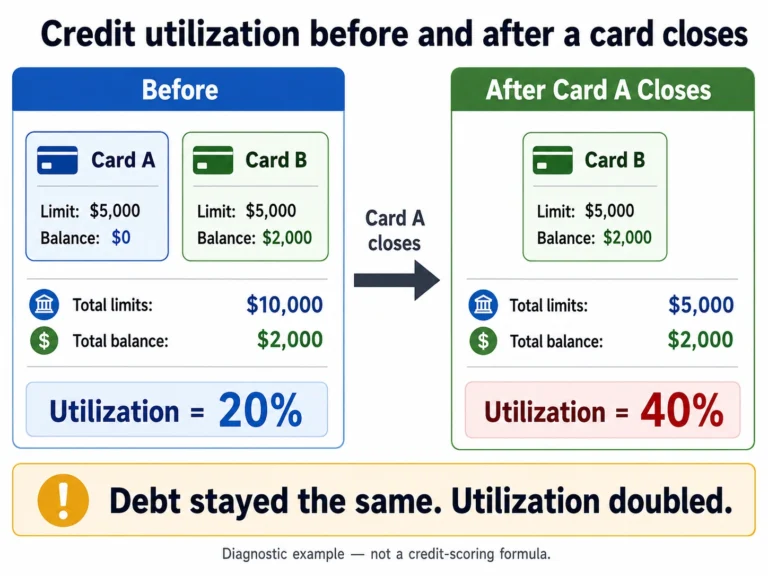
If your lender lowers your credit limit, your credit utilization increases immediately — even if your spending stays the same. From your side, nothing changed. But from the system’s side, your risk level increased, which can cause a sudden credit score drop.
Closed account
A closed account reduces your total available credit and can push your utilization higher. This can happen even if you did not close the account yourself. As a result, your credit score dropped for no reason from your perspective, even though your credit profile changed.
Loan payoff effect
Paying off a loan is a positive step, but it can still cause a temporary credit score drop. This may happen because your credit mix changes or an account is closed after payoff. In most cases, this effect is temporary, but it can feel confusing when you did everything right.
If your credit score dropped for no reason, the answer is often here. You did not make a mistake — the system simply updated your data at a specific time, and your score reacted to it.
Hidden reasons people do not notice after a credit score drop
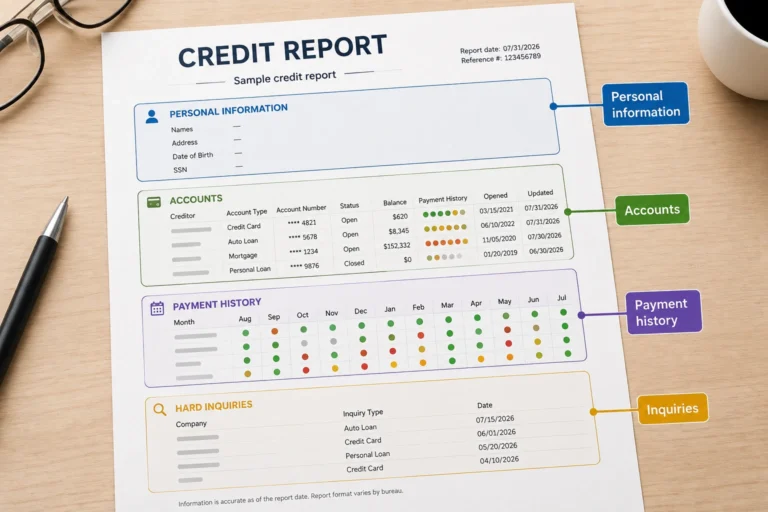
This is where things get confusing. If your credit score dropped and you cannot find a clear reason, the cause is often hidden in small updates most people never notice. A sudden credit score drop usually does not happen randomly. It happens because something in your credit data changed first, even if that change was small, delayed, or easy to miss.
Many of these updates happen quietly in the background. That is why people often feel like their credit score dropped for no reason, when the real cause was simply not obvious at first.
The key is simple. Your score reacts to what gets reported, not what you meant to do. If the data changes at the wrong time, your score can change with it.
Reporting cycle
One of the most common hidden reasons is the reporting cycle. Your lender reports your balance on a specific date, not in real time. If your balance was higher when that snapshot was taken, that is the amount that gets reported. Even if you paid your card right after, your credit score may still drop based on the higher reported number.
This happens because each credit report update reflects a snapshot of your data at a specific moment — not your real-time balance.
Balance fluctuations
Your balance can move up and down during the month, but what matters most is the number that gets reported. If your balance is higher at that moment, your credit utilization increases and your score may fall. This is one of the most common reasons people see a credit score drop even when they pay on time.
Bureau differences
Not all credit bureaus update at the same time. One app may show that your credit score dropped suddenly, while another still shows the older number. That does not always mean something is wrong. It often means one bureau updated before another, which can make the drop feel more dramatic than it really is.
Authorized user changes
If you were added or removed as an authorized user, your credit profile can change right away. This may affect your available credit, account age, and overall utilization. Even if you did nothing yourself, this kind of update can explain why your credit score dropped for no reason.
Credit report errors
Sometimes the cause is a mistake on your credit report. An incorrect late payment, a wrong balance, a duplicate account, or an account that does not belong to you can all lower your score. These errors are not the most common cause, but they happen often enough that you should always check your report when something does not add up.
If your credit score dropped for no reason, the answer is often hidden in one of these details. The change was not random — it just was not easy to spot. Once you find the real cause, the next step becomes much clearer.
Once you understand the hidden causes, the next step is checking where the problem actually showed up.
Why did my credit score drop 3, 10, 20, 50, or even 200 points
Not every credit score drop means the same thing. Some changes are small and temporary. Others point to a more serious issue that needs attention right away. If you are wondering why your credit score dropped for no reason, the size of the drop can give you an important clue about what may have changed behind the scenes.
Why did my credit score drop 3 or 10 points
A drop of 3 to 10 points is usually minor. In many cases, it happens because of normal balance changes, a small increase in credit utilization, or a recent hard inquiry. This kind of movement is common and does not always mean something is wrong. If your credit score dropped suddenly by only a few points, it may simply reflect a routine update in your credit data.
Why did my credit score drop 20 points
A 20-point credit score drop is more noticeable, but it is still often fixable. This can happen if your card balance was reported a little higher than usual, your credit utilization increased, or a new account or inquiry was added to your report. It may also happen if a lender reduced your credit limit. A drop of this size usually means something changed, but not always something severe.
Why did my credit score drop 50 points
A 50-point drop is more of a warning sign. It can happen after a missed payment, a major increase in balances, a closed account, or another stronger update to your credit report. At this level, it is smart to stop guessing and start checking the details. A drop this size does not always mean permanent damage, but it should not be ignored.
Why did my credit score drop 100 to 200 points
A drop of 100 to 200 points is usually serious. This kind of sudden credit score drop may point to a collection account, a major delinquency, a serious error on your credit report, identity theft, or another negative mark with a strong impact. If your credit score dropped for no reason by this much, checking your full credit report should be your first step. At this level, there is usually a clear cause — and the sooner you find it, the faster you can respond.
Why did my credit score go down when nothing happened
If your credit score went down when nothing happened, something usually did change — it just may not have been obvious to you at first. A credit score can drop because of a higher reported balance, a change in credit utilization, a new hard inquiry, an account update, or the timing of when information was reported to the credit bureaus.
That is why this situation feels so confusing. From your side, nothing major happened. But from the system’s side, your credit data changed — and your score reacted to that update.
This is one of the main reasons people search why did my credit score go down when nothing happened or why did my credit score drop for no reason. In many cases, the cause is small, temporary, and easy to miss. The best next step is to check your recent balances, payment history, and full credit report to see what changed behind the scenes.
Why did my credit score drop even though I did not miss a payment
If your credit score dropped even though you did not miss a payment, the reason is usually something other than payment history. A credit score drop can still happen if your credit utilization increased, your balance was reported before your payment posted, your credit limit was reduced, a hard inquiry appeared, or an account was opened or closed.
That means you may have paid on time and still seen a sudden credit score drop. From your point of view, you did everything right. But credit scores look at more than on-time payments. They also respond to how much credit you used, when your balance was reported, and what changed across your accounts.
This is one of the biggest reasons people search why did my credit score drop for no reason. In many cases, the cause is not a missed payment at all. It is a change somewhere else in your credit profile. If your score dropped unexpectedly, these are the first details to check before assuming something serious happened.
The biggest mistake people make after a credit score drop
The biggest mistake people make is assuming something is broken — or doing nothing at all. When a credit score drops, many people either panic or ignore it. Both reactions slow down recovery.
A credit score drop is not a signal to guess. It is a signal to check your data. The faster you identify the cause, the faster you can correct it. Waiting or making random changes often makes the situation worse instead of better.
What to check immediately if your credit score dropped
If your credit score dropped, do not guess. There is always a reason — and the faster you find it, the faster you can fix it. A sudden credit score drop almost always comes from a specific change in your balances, payments, recent activity, or credit report data. Check this today — do not wait.
In most cases, the cause is found in one of these areas. Start here and you will quickly understand what changed.
- Check your balances — Review each credit card and look for a higher reported balance. Even if you paid it later, that number increases your credit utilization and can cause a credit score drop.
- Review your payment history — Make sure nothing was reported late, even by mistake. One missed or delayed payment can explain why your credit score dropped suddenly.
- Look at hard inquiries — If you recently applied for a credit card, loan, or financing, a hard inquiry may be part of the reason your credit score dropped for no reason. Multiple applications can have a stronger effect.
- Check account changes — Look for a reduced credit limit, a closed account, or a newly opened account. These changes affect your total available credit and your overall credit profile.
- Review your credit report — Check for errors such as incorrect late payments, wrong balances, duplicate accounts, or accounts that do not belong to you. This is where hidden issues often appear.
Once you find the cause, you can take the right steps to fix it. If you need a clear plan, follow this step-by-step guide to improving your credit score.
Why did my credit score drop after paying off debt or a credit card
If your credit score dropped after paying off debt or after paying off a credit card, it does not always mean you did something wrong. In fact, this is one of the most confusing situations for many people, because paying off debt feels like it should only improve your credit score. But sometimes a credit score drop happens because the payoff changed something else in your credit profile.
For example, if you paid off a loan, your credit mix may have changed. If you paid off and then closed a credit card, your available credit may have decreased, which can increase your credit utilization. In other cases, your balance may have updated in a way that temporarily affected your score before the next reporting cycle corrected it.
This is why people often search why did my credit score drop after paying off debt or why did my credit score drop after paying off a credit card. In many cases, the drop is temporary, even though it feels frustrating when you did everything right.
If your credit score dropped suddenly after paying something off, check whether an account was closed, your total available credit changed, or your credit report has not fully updated yet. Once the data stabilizes, your score may recover.
Why ignoring a credit score drop makes it worse
If your credit score dropped, doing nothing is one of the worst decisions you can make. The system continues to update your profile whether you act or not.
That means small issues do not stay small. A high balance stays high. A missed payment becomes older and more damaging. An error stays on your report longer than it should.
The longer you wait, the harder recovery becomes. A sudden credit score drop is not just information — it is a signal that something already changed and needs attention.
The faster you respond, the easier it is to fix.
How to recover after a sudden credit score drop
If your credit score dropped suddenly, the worst thing you can do is ignore it or guess what went wrong. Credit scores react quickly, and small issues can turn into bigger problems if you do not act.
The good news is that most credit score drops are temporary. Once you identify the cause and take action, your score can start improving faster than you expect.
The strategy is simple: find the cause and act on it immediately.
Lower utilization
If your credit utilization increased, bring it down as soon as possible. Paying down balances lowers your utilization and can help your credit score recover after the next update. Even one card with a high balance can affect your entire profile, so focus on that first.
Fix payments
If the drop was caused by a missed or late payment, make the account current right away. Payment history is one of the most important factors in your score, so delays can have a strong impact. Fix it quickly and make sure it does not happen again.
Dispute errors
If you see incorrect information on your credit report, do not ignore it. Wrong balances, false late payments, or accounts that do not belong to you can lower your score. If the data is inaccurate, file a dispute with the credit bureau and the lender to correct it.
Avoid new accounts
If your credit score already dropped, avoid applying for new credit. New applications create hard inquiries and can reduce the average age of your accounts, adding more pressure to your score. Focus on stabilizing your credit profile first.
Wait for the reporting cycle
Sometimes recovery takes time. If your sudden credit score drop was caused by timing or a temporary balance increase, your score may improve after the next reporting cycle. Once the updated data is reported, your score can adjust upward.
If you want a clear plan to rebuild your score, follow this step-by-step guide to improving your credit score.
When a credit score drop is temporary and when it is serious
Not every credit score drop means you have a major problem. Some changes are temporary and improve once new data is reported. Others are more serious and require immediate attention. The difference usually depends on what caused the drop and how large the change was.
A temporary credit score drop often happens because of higher credit utilization, normal balance changes, a recent hard inquiry, or reporting timing. For example, if your balance was reported before you paid it down, your credit score may drop for a short time and then recover after the next reporting cycle. This type of sudden credit score drop can feel stressful, but it usually does not cause long-term damage.
A serious credit score drop is usually linked to a missed payment, a collection account, a charge-off, identity theft, a major error on your credit report, or another negative mark. These issues tend to have a stronger impact and typically will not fix themselves without action. If your credit score dropped for no reason and the drop was large, this is where you need to look more closely.
The best way to tell the difference is to check what changed. If the cause was timing or a temporary balance increase, your score may recover on its own. If the cause was a negative update or incorrect data, you need to act quickly to protect and rebuild your credit score.
How long does it take to recover from a credit score drop
How long it takes to recover from a credit score drop depends on what caused it. Some drops are short-term and may improve within one or two reporting cycles. Others take longer, especially if the reason was a missed payment, a collection account, or another negative mark. That is why there is no single answer to how long recovery will take.
If your credit score dropped suddenly because of higher credit utilization, a temporary balance increase, or reporting timing, your score may start to recover as soon as updated data is reported. In many cases, this can happen within a few weeks.
However, if your credit score dropped for no reason due to a late payment or a more serious update on your credit report, recovery may take several months. More significant issues require time and consistent positive activity to rebuild your credit profile.
The most important step is to identify the real cause. A small timing issue can recover quickly. A more serious problem takes patience and action. The sooner you understand what caused the sudden credit score drop, the sooner you can start moving your score in the right direction.
FAQ: credit score dropped for no reason
Why did my credit score drop 50 points for no reason
If your credit score dropped 50 points, there is usually a clear reason. A drop of this size often means a change in credit utilization, a missed payment, a closed account, a lower credit limit, or a negative update on your credit report. It can also happen if a balance was reported much higher than usual. This level of credit score drop is a signal to stop guessing and start checking your data.
Why did my credit score drop 10 points
A 10-point credit score drop is usually minor. It often comes from a small balance increase, a recent hard inquiry, or a routine update in your credit data. If your credit score dropped suddenly by only a few points, it is often a normal fluctuation and not a serious issue.
Why did my credit score drop overnight
If your credit score dropped overnight, it likely was not truly overnight. What usually happened is that new data was reported and your score updated all at once. This can include a higher balance, a new inquiry, an account change, or a late payment. The update feels sudden, but the change was building in the background.
Why did my credit score drop even though I paid on time
If your credit score dropped even though you paid on time, the issue is often timing. Your balance may have been reported before your payment was processed, which increased your credit utilization. This is one of the most common reasons people feel like their credit score dropped for no reason even when they did everything right.
Why did my credit score drop even though I did not miss a payment
If your credit score dropped without a missed payment, another part of your credit profile likely changed. Your score also reacts to balances, available credit, hard inquiries, new accounts, and account closures. That is why a sudden credit score drop can still happen even when your payments are perfect.
Most credit scoring models, including the FICO score, update your score based on reported data from lenders, which is why timing can affect your score even if your behavior stays the same.
Does checking my credit score lower it
No, checking your own credit score does not lower it. This is considered a soft inquiry, which does not affect your score. Only hard inquiries from lenders can cause a small drop.
Will my credit score go back up
Yes, in many cases your credit score will go back up. If the drop was caused by credit utilization, timing, or a small inquiry, recovery can happen quickly. If the cause was a negative mark, recovery may take longer. The key is to identify the cause and take action.
Why is my credit score different on different apps
Your credit score can vary across apps because they may use different scoring models or pull data from different credit bureaus. One app may update sooner than another, which can make it seem like your credit score dropped for no reason.
Why did my credit score drop 200 points
If your credit score dropped 200 points, this is usually a serious change. It may be caused by a collection account, a major delinquency, a charge-off, identity theft, or a significant error on your credit report. A drop of this size requires immediate attention and a full review of your report.
What to do next if your credit score dropped
If your credit score dropped, do not leave it unresolved. The longer you wait, the longer the recovery takes. Every day your credit profile stays the same is a day your score is not improving.
The fastest way to recover is to follow a clear plan — not guess, not wait, and not react emotionally.
If you want to fix your credit score step by step and avoid making the same mistakes again, read this guide now:
how to improve your credit score step by step
What this really means for you
A credit score drop does not mean you are losing control. It means something changed — and now you have a chance to understand it and fix it.
Once you learn how the system works, your credit score stops feeling random. You start seeing patterns. You start predicting changes. And most importantly, you start controlling the outcome.
Your credit score is not permanent. But your actions from this moment are.
Final thoughts
If your credit score dropped for no reason, it may feel random — but it almost never is. There is usually a real reason behind a credit score drop, even if the cause is small, delayed, or easy to miss. The most important thing is not to panic. It is to slow down, look at your credit data, and figure out what actually changed.
In many cases, a sudden credit score drop is temporary. It may be tied to credit utilization, reporting timing, balances, or a normal account update. In other cases, it can point to a more serious issue that needs attention. Either way, the situation is usually fixable once you identify the cause.
The biggest mistake people make is assuming something is broken or giving up too early. Your credit score is not permanent. It moves based on the information in your credit report and the actions you take over time. That means it can recover.
What matters now is not the credit score drop itself, but how fast you respond to it. If you want a clear recovery plan, follow this step-by-step guide to improving your credit score.