In this guide
- Find your next credit dispute step
- How to dispute errors on your credit report in 7 steps
- Official dispute links for Experian, Equifax, and TransUnion
- Choose the correct dispute process
- Four mistakes that can weaken a credit-report dispute
- Credit report dispute preparation worksheet
- Frequently asked questions
- Related guides
- Sources and editorial information
To dispute errors on your credit report, identify the exact inaccurate entry, compare it with records from the same reporting period, and file a free dispute with each credit bureau that shows the mistake. For most account-reporting errors, also contact the lender or other company that supplied the information (the furnisher). Explain what the report says, what should be corrected, and which records support your position. Save your submissions and verify the updated report after the investigation.
Credit report disputes are free. You do not need to hire a credit repair company to file one. A newer card balance or lower credit score alone is not proof of a reporting error. This guide helps you identify the right dispute, organize supporting evidence, copy a letter, track your deadline, and decide what to do after the result. See the CFPB’s instructions or explore related issues in our credit reports and disputes hub.
Find your next credit dispute step
Choose the situation that matches your report. This quick guide does not ask for, save, or transmit any personal financial information.
A payment is marked late, but I paid on time
Compare the due date, minimum payment, posting date, and creditor’s payment ledger for the reported month. A bank transfer receipt alone may not establish when the lender received a payment. If the reported status is wrong, describe the exact month and attach the relevant records. See our late-payment dispute guide.
The balance is different from my banking app
First compare the bureau’s last reporting date with the statement period and the date your payment posted. A more recent app balance does not by itself prove an error. If the same reporting period shows conflicting figures, document the difference and proceed to the seven-step process.
There is an account I do not recognize
Check whether the creditor uses a parent-company name, servicer, or collection agency. If the account is not yours, consider a mixed file or identity theft. Go to the unfamiliar-account guidance; do not assume every unfamiliar name is fraud.
My dispute was closed without fixing the item
Compare the bureau’s response against the original disputed field. Save the result, identify any missing or newly available evidence, and review what to do after the decision. Sending exactly the same unsupported claim again may not help.
The negative information is accurate
A credit-report accuracy dispute is not a way to remove a valid late payment or balance. Review the CFPB’s explanation of accurate negative information before deciding what to do next.
How to dispute errors on your credit report in 7 steps
Start with the specific report entry, not just a credit-score app. Want to see how the steps fit together? Follow a complete hypothetical dispute example after the checklist.
Save your dispute progress
Check off completed tasks and pick up where you left off when you return to this page. No name, account number, Social Security number, or documents are needed.
0 of 5 steps complete
Next: start with your credit reports below.
Only your five checkmarks are saved in this browser, not on our servers. Anyone sharing this browser profile may see them. Clear this checklist on a shared device. The separate deadline tracker is unaffected.
Step 1: check the report and identify the exact error
Get your free reports first: Go to AnnualCreditReport.com, the federally authorized source for free reports from Experian, Equifax, and TransUnion. You can currently request a free online credit report from each bureau every week. Checking your own report does not lower your credit scores, but free credit reports do not necessarily include a credit score. Verify the free-report rules with the FTC. Only enter your identifying information on the official site or the bureaus’ secure channels.
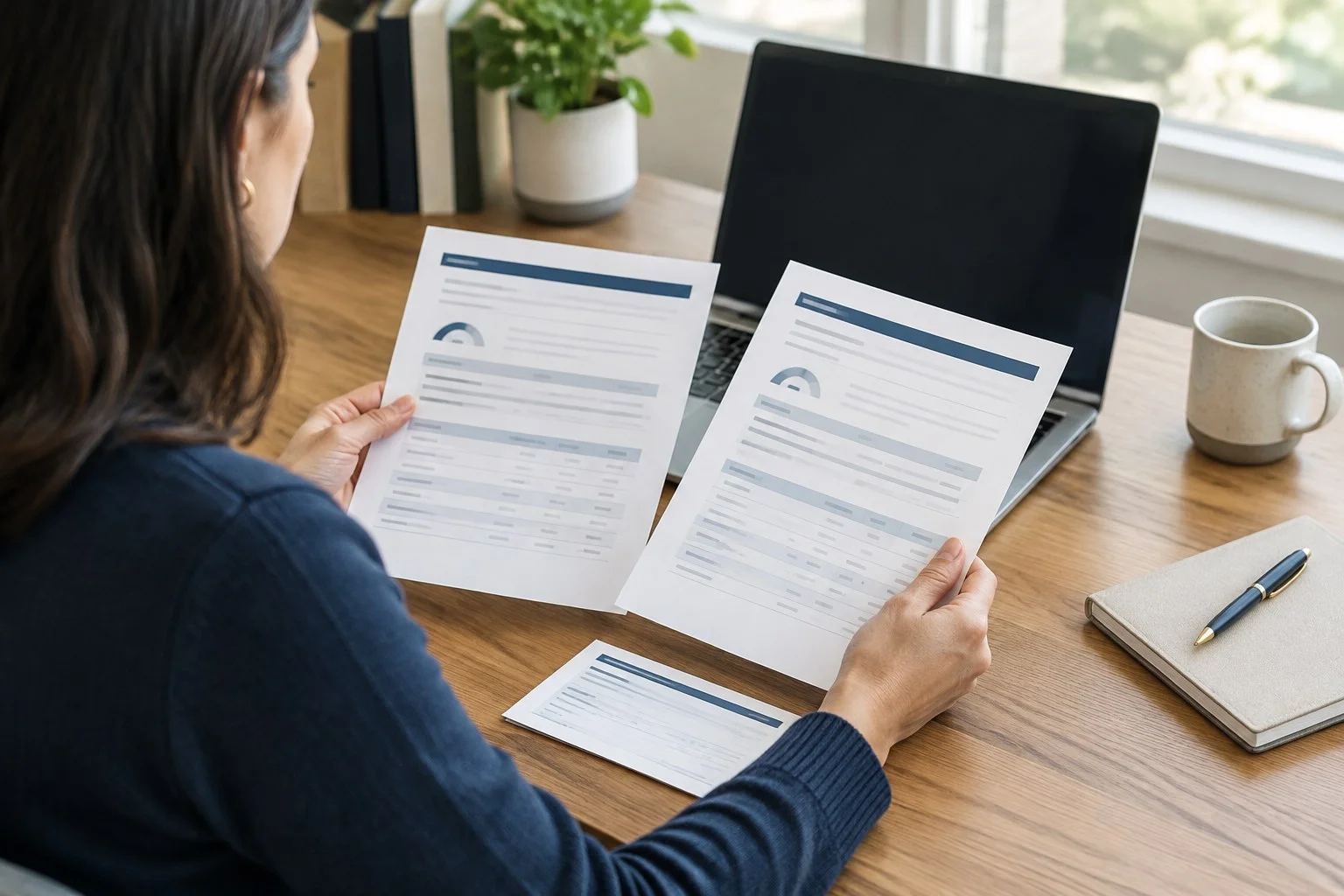
Start with the credit report itself, not only a credit-score app. Review every bureau report that contains the questionable information and write down the exact field you believe is inaccurate or incomplete.
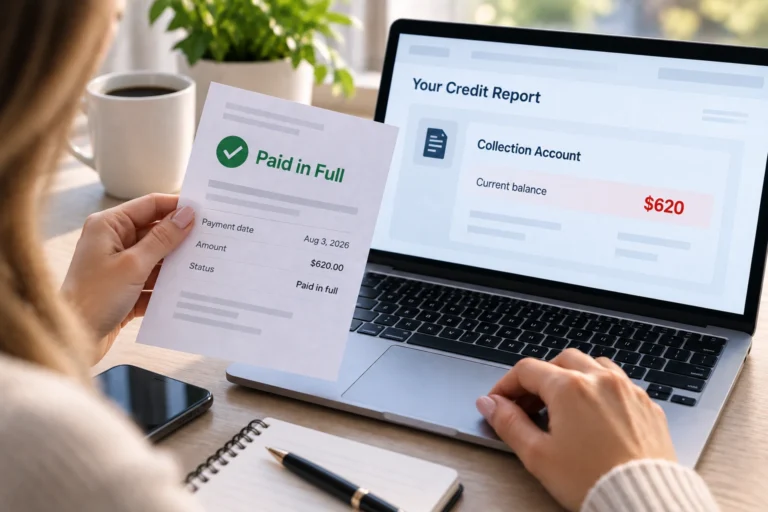
Common errors identified by the CFPB include accounts that belong to someone else, payments incorrectly reported as late, wrong balances or credit limits, incorrect account status, incorrect dates, and the same debt listed more than once. If a collection was paid in full or fully resolved through a settlement but still shows money owed, see what to check when a paid collection still shows a balance.
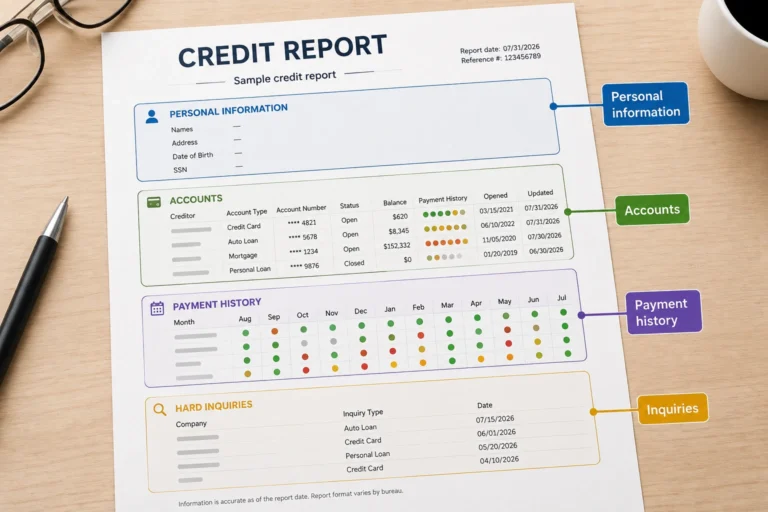
If you are not sure how to interpret an account entry, first use our step-by-step guide to reading your credit report.

| What you found | Potential error? | What to check |
|---|---|---|
| Account you never opened | Yes — investigate | Ownership, creditor name, identity-theft or mixed-file possibility |
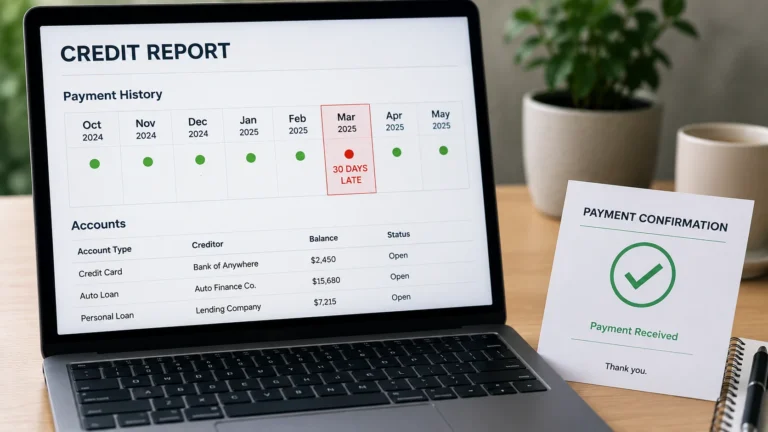
| Payment marked late but your records show it was on time | Yes | Due date, payment confirmation, account history, bank record |
| Balance differs from today’s balance | Not necessarily | Reporting date and the statement for that period |
| Closed account shown as open | Possibly | Closure confirmation and creditor records |
| Same debt appears twice | Possibly | Account numbers, furnishers, balances, dates and status |
| Accurate late payment or accurate high balance | No, not merely because it is negative | Confirm accuracy before taking another approach |
Step 2: identify the exact correction and matching evidence
For a strong credit report dispute, name the field, month, or amount you believe is wrong—not just the entire account. Compare the report with records from the same period. The examples below show how to turn an observation into a precise request.
| What the report shows | Evidence to compare | What to request |
|---|---|---|
| March 2026: 30 days late | Statement due March 10; lender ledger shows payment posted March 8 with no prior amount overdue | Investigate and correct the March late-payment status if the records confirm the error |
| $2,480 balance, last updated March 31 | Lender’s statement for the same reporting period shows $480 | Investigate the $2,000 difference; correct the reported balance if it is inaccurate |
| Account shown open as of July 15 | Closure confirmation dated July 1 and creditor account records | Correct the account status if it should already be shown as closed |
| An account you do not recognize | Creditor’s legal name, account-opening records, possible servicer or collector; identity-theft records if relevant | Investigate ownership; correct or remove information that is not yours, where appropriate |
Illustrative examples, not actual consumer accounts. A newer banking-app balance or an unfamiliar creditor name is not by itself proof of a credit-report mistake. Check the reporting date and the creditor’s identity first.
Step 3: assemble a focused dispute evidence package
Prepare four items before filing a credit report dispute: (1) a saved copy or screenshot of the specific disputed report entry; (2) relevant statements, payment ledgers, closure letters, or other documents matching the disputed fact; (3) your written explanation and requested correction, using the credit report dispute letter template below; and (4) a place to keep filing confirmations and delivery records once submitted.
Keep originals and send copies through official secure upload channels or verified mailing addresses. Do not include unrelated bank records. If documentation is missing, you may still explain a genuine inaccuracy with the evidence reasonably available; see which records can support a dispute.
If two entries appear to involve one loan or credit card, first compare account numbers, creditors, dates, and balances: two tradelines are not automatically duplicate errors. Our duplicate-account guide covers that separate case.
Step 4: identify the bureaus and the company that supplied the data
Dispute the inaccurate entry with each bureau where it appears. If only Experian shows the error, start there; if two bureaus show it, dispute separately with both. For an account-reporting error, also contact the lender, issuer, servicer, or collector that supplied the data when appropriate.
Check the furnisher’s designated dispute address—not merely its payment address. Regulation V § 1022.43 sets subject-matter and address rules for direct disputes, with exceptions for certain information. See how to dispute a reporting error directly with a lender.
Step 5: file your dispute online, by mail, or by phone
You can dispute credit report errors online through the bureaus’ official dispute centers, or use their mail or phone channels. Online filing can simplify document uploads and status tracking; a mailed credit report dispute letter gives you a physical record of the exact request. For mail, consider certified delivery with return receipt. See our online-versus-mail comparison if you need help deciding.
State the exact account and incorrect field, why it is wrong, the dates or balances that support your explanation, and the correction you request. Keep copies of the report, your letter, supporting records, and submission confirmation.
Free credit report dispute letter template (copy and customize)
Use this for a dispute sent to a credit reporting company. Replace every bracketed field with your own accurate details. For a separate dispute to the lender or other furnisher, use the FTC’s furnisher dispute letter example.
[Your full name]
[Your mailing address]
[City, State ZIP]
[Your phone number]
[Date]
[Credit reporting company name]
[Current dispute mailing address]
Re: Dispute of inaccurate or incomplete credit report information
Dear Dispute Department:
I am writing to dispute information in my credit report that I believe is inaccurate or incomplete. My credit report confirmation number is [number, if available].
Disputed item: [Company or furnisher name and account number as shown on the report, if applicable].
Information shown on the report: [Exact disputed field, status, balance, or payment month].
Why it is inaccurate or incomplete: [Factual explanation, with dates].
What my records show: [Correct information and the evidence supporting it].
Please investigate this item and correct the inaccurate or incomplete information, or remove the disputed information where appropriate under the law. I have enclosed a copy of the relevant portion of my credit report with the item marked, together with copies of the supporting documents listed below.
Please send me the investigation results and an updated credit report if the report changes.
Sincerely,
[Your full name]
Enclosures: [Marked credit report excerpt; payment confirmation; statement; other supporting copies, as applicable]
Want a usable copy? Copy the letter above as plain text and replace all bracketed placeholders with your own accurate details before submitting it through an official bureau channel.
The template contains placeholders only; do not paste account numbers or personal documents into this website.
Before sending: Check the bureau’s current address or secure upload instructions, keep originals, and save copies of everything submitted. Use certified mail with return receipt if you want mailing proof. Share sensitive documents only through the bureau’s official secure channels or mailing address. See the FTC’s sample bureau dispute letter for another example.
Example of a specific reason: “My May 2026 payment is reported as 30 days late. The attached statement shows a May 10 due date, and the payment confirmation shows that payment was received May 5. Please investigate and correct the reported payment status.” (Illustrative example only; substitute your own verified dates and records.)

Step 6: track the investigation deadline
How long does a credit report dispute take? A credit reporting company generally has 30 days after receiving your dispute to investigate. Some cases may take up to 45 days, including certain disputes involving free reports or relevant new information received during the investigation. Written results generally follow within five business days after completion. Record the date the bureau received your dispute, the case number, and the documents you submitted. Review the CFPB’s deadline explanation.
These are legal investigation periods, not guaranteed deletion dates. If you have no result, verify the receipt date and possible extension before using our no-response guide.
Free credit report dispute tracker
Track one bureau dispute at a time. Enter the date the bureau received your dispute (not merely the date you drafted it) to see a general 30-day checkpoint and a possible 45-day checkpoint. You can save the bureau, date and status on this device to check again later. Do not enter account numbers, your name, your Social Security number, or any documents here.
Enter a received date and choose Calculate checkpoints to plan your follow-up.
How this estimate works — and what it does not mean
The tool adds 30 and 45 calendar days to your entered receipt date. A credit bureau usually investigates within 30 days; only specified circumstances allow up to 45 days. The bureau generally has five business days after completing its investigation to send results. The dates are planning checkpoints, not a ruling that an extension applies or an automatic deletion deadline. Check your records and the CFPB explanation.
Privacy: This tool never requests personal identifiers or sends your entries to this website. Saving is optional and uses only this browser’s local storage. Anyone using the same browser profile may be able to see the saved status; use Clear saved data on a shared device.
If JavaScript is unavailable, use the printable credit-report cleanup checklist and consult the CFPB’s dispute timing guidance.
Step 7: verify the actual result on the report
Do not stop when a portal says “completed.” Open the updated credit report and compare the exact disputed field with your original report and supporting records.
| Result | What to check next |
|---|---|
| Corrected | Confirm the corrected field now matches the underlying records. |
| Removed | Confirm the item is actually gone and check other bureau reports where relevant. |
| Verified as accurate | Review the result and your evidence before deciding whether another supported step is appropriate. |
| Denied or unresolved | Determine why the requested correction did not happen and whether new evidence or a furnisher dispute is appropriate. |
| Removed and later reappeared | Check reinsertion details and any notice you received. |
What to do after your dispute result
Different outcomes need different follow-ups. Choose what the bureau told you and compare the guidance with your written investigation notice. This tool does not determine whether the bureau or lender complied with the law.
Select a result to see a focused next step.
Your selection is not saved or sent to the website. Keep the notice and your supporting evidence privately.
If the error remains unresolved, you can review options after a denied dispute. Before making a CFPB complaint about inaccurate credit-report information, generally dispute with the bureau first; if that dispute is still pending, check the CFPB’s conditions and 45-day guidance.
Two useful rights after a completed credit report dispute
If the bureau says it verified the information: Under 15 U.S.C. § 1681i(a)(6)–(7), you can ask the bureau for a description of the procedure it used to determine accuracy, including the name and address of any furnisher it contacted (and phone number if reasonably available). Except for certain expedited resolutions, the bureau must provide that description within 15 days after receiving your request. A concise request is: “Please provide the description of your reinvestigation procedure for the disputed account, including any furnisher you contacted, under 15 U.S.C. § 1681i(a)(7).” This can help you identify what to clarify next; it does not guarantee a different outcome.
If incorrect information was deleted, or a dispute statement was added: Under 15 U.S.C. § 1681i(d), you may ask the bureau to notify specific past report recipients you designate, generally covering reports supplied in the preceding six months for nonemployment purposes or two years for employment purposes. This is not an automatic notice to every lender. For unresolved disagreements, the law also provides for a brief consumer dispute statement; see the CFPB’s explanation.
Worked example: disputing an incorrect late payment from start to finish
Hypothetical example, not an actual consumer case or a guaranteed result. Imagine your Experian report says a credit-card payment was 30 days late in March 2026. Your March statement shows a March 10 due date; the lender’s payment ledger shows it posted on March 8, with no earlier overdue payment. Equifax and TransUnion do not show the same late mark.
- Check the report. Save the Experian entry and identify the exact March payment-history field. Confirm the other reports do not show the error.
- Gather proof. Keep copies of the statement showing the due date, the lender’s ledger showing posting date and account status, and any relevant payment confirmation. Do not send originals.
- State the correction. Your dispute might say: “My March 2026 payment is shown as 30 days late. My statement lists March 10 as the due date, and the attached lender ledger shows the payment posted March 8 with no prior overdue amount. Please investigate and correct the March payment status.” Submit to Experian and the relevant furnisher using their official channels.
- Track receipt. If Experian received your dispute April 6, the usual 30-day checkpoint would be May 6; May 21 would be a possible 45-day checkpoint only if an applicable exception allows it. The bureau generally sends results within five business days after its investigation ends.
- Check the actual result. If the mark is corrected, verify the new report. If the bureau verifies it as accurate, compare the response with the lender’s records and review next steps instead of resubmitting an unsupported claim. No credit-score increase is guaranteed.
The important distinction is that the evidence relates to the same payment and reporting period. An app balance today, without matching reporting dates, would not prove the same error.
Official dispute links for Experian, Equifax, and TransUnion
Use the official dispute channel for each bureau that reports the wrong information. Save the submission confirmation and check the updated report for that same bureau after the investigation.
Choose the correct dispute process
A credit-report dispute challenges inaccurate or incomplete information in the report. If the actual mistake is a charge on your card statement, follow the different rules for a credit-card billing dispute. If the issue is a debt collector’s notice, debt validation and credit reporting disputes serve different purposes and may require separate steps.
An accurate late payment, collection, or other unfavorable fact generally cannot be removed through an accuracy dispute merely because it hurts your credit. A lower-than-expected score alone is not evidence that the report is wrong.
What if an account does not belong to you?
An account you do not recognize deserves closer review, but an unfamiliar creditor name does not always mean fraud. Accounts can be sold, serviced by another company, or collected under a name you do not immediately recognize.
If you confirm that the account is not yours, identity theft or a mixed-file problem may be involved. Save the report and document the account before deciding which process fits the evidence. A mixed-file error is not automatically identity theft.
If identity theft is involved: Report it at IdentityTheft.gov to get an FTC Identity Theft Report and recovery guidance. Contact the affected company, secure compromised accounts, and consider a free credit freeze or fraud alert. Under FCRA section 605B, a qualifying identity-theft blocking request to a credit bureau generally requires it to block identified fraud-related information within four business days after receiving the required materials, subject to statutory exceptions. See the FTC identity-theft blocking letter for the required report and proof-of-identity information. This process differs from an ordinary credit-report accuracy dispute; do not file a false identity-theft report.
Four mistakes that can weaken a credit-report dispute
- Comparing different dates. A lender’s current app balance and an older reported balance may both be correct.
- Disputing the score rather than an error. Identify the inaccurate account, field, or month instead.
- Sending originals or excess personal records. Keep originals and share only relevant copies through official channels.
- Assuming the investigation guarantees deletion. A deadline is not an automatic removal order; review the actual findings.
Credit report dispute preparation worksheet
Use this private worksheet to organize each bureau, error, requested correction, and supporting record. After filing, add the case number and date received. For a printable version, see our credit report cleanup checklist. Do not enter personal account information into this website.
| Field | Your notes |
|---|---|
| Credit bureau reporting the error | ____________________________ |
| Account or item involved | ____________________________ |
| What the report currently says | ____________________________ |
| What you believe is correct | ____________________________ |
| Evidence that supports the correction | ____________________________ |
| Furnisher and designated dispute address, if applicable | ____________________________ |
| Date submitted / case confirmation | ____________________________ |
| Date received by bureau / results checked | ____________________________ |
Frequently asked questions
Can a bureau decline to investigate?
Under 15 U.S.C. § 1681i(a)(3), a credit bureau may determine that a dispute is frivolous or irrelevant, including when it lacks enough information to investigate the specific item. It generally must notify you within five business days after that determination, explain the reason, and identify information needed to investigate. Review the notice and submit missing facts or relevant evidence. See the CFPB’s current credit-report dispute instructions.
Will correcting an error increase my credit score?
Not necessarily. Any change depends on the corrected information, the scoring model, and the rest of your file. Compare scores only when their bureau data and model are comparable.
What if I do not have every supporting document?
You may still identify and explain a specific error. Send the records you reasonably have that directly support the disputed fact; do not invent or misrepresent missing evidence.
Bottom line: Dispute facts you can identify, save the evidence, follow the investigation, and verify the actual report afterward—not a promised score increase.
Related guides
- Which dispute documents to gather — build your evidence package.
- Credit dispute denied: next steps — review an unresolved decision.
- Why your credit report is not updating — distinguish a normal reporting delay from an actual error.
Other situations needing a different approach
Sources and editorial information
Official sources
- Consumer Financial Protection Bureau — How to dispute an error on your credit report
- Consumer Financial Protection Bureau — Common credit report errors
- Consumer Financial Protection Bureau — Credit-report dispute timing
- Consumer Financial Protection Bureau — If you disagree with the results of a credit report dispute
- Federal Trade Commission — Disputing errors on your credit reports
- Regulation V § 1022.43 — Direct disputes to information furnishers
- 15 U.S.C. § 1681i — Procedure in case of disputed accuracy
- Experian — Official dispute center
- Equifax — Official dispute resource
- TransUnion — Official dispute resource
- FTC — How to get free weekly credit reports
- FTC — Sample dispute letter to a credit bureau
- IdentityTheft.gov — Identity-theft blocking letter
- CFPB — Important conditions before submitting a credit-report complaint
Financial and legal disclaimer
This article provides general U.S. educational information about credit reporting and disputes. It is not individualized legal, financial, tax, or credit-repair advice. The facts of a dispute and applicable rights can vary. No dispute outcome, deletion, or credit-score change is guaranteed.