In this guide
- How can a 120-day late payment affect your credit score?
- What does 120 days late actually mean?
- 120-day late payment status check
- What should you do if the account is still 120 days past due?
- Before-you-pay checklist at 120 days late
- What happens at 120 days late by account type?
- Is 120 days late the same as a charge-off?
- How long can a 120-day late payment stay on your credit report?
- What if the 120-day late payment is wrong?
- Can a 120-day late payment be removed?
- What if a collection company contacts you?
- Can you rebuild credit after a 120-day late payment?
- 120-day late payment decision tree
- Frequently asked questions
- Sources
- Financial disclaimer
Being 120 days late on a payment can seriously damage your credit score, but there is no fixed point drop for everyone. It means an account reached a severe stage of delinquency. Paying enough to bring it current can stop the ongoing delinquency, but it does not automatically erase accurate late-payment history or restore your previous score.
Start by checking two things: is “120 days late” the account’s current status or a past month in its payment history, and is the reporting accurate? Those answers determine whether you need to contact the creditor about catching up, resolve a charged-off debt, dispute an error, or focus on rebuilding.
At a glance
- Credit score: a serious negative mark; the effect depends on your full credit file and scoring model.
- Credit report: accurate late-payment history can generally remain for up to seven years.
- Charge-off: 120 days late does not mean every type of account is automatically charged off.
- Next step: contact the creditor promptly to confirm the account status and available options. Do not assume a partial payment brings it current.
How can a 120-day late payment affect your credit score?
FICO evaluates negative information by its severity, recency, and frequency. A recent 120-day delinquency is a serious problem, particularly in a file that previously had little negative history. Your other accounts and balances also influence the resulting score.
How many points does your credit score drop?
You cannot calculate a reliable point loss from “120 days late” alone. Your score may already reflect the earlier 30-, 60-, and 90-day stages. Comparing your score before the first missed payment with today’s score is different from comparing the 90-day and 120-day updates. Other changes during that period can affect the comparison, too: FICO scores use the entire report, not just the event in an alert.
| What you are comparing | What the change can tell you |
|---|---|
| Before the first missed payment vs. 120 days late | The difference may include several delinquency updates and other credit-file changes. |
| 90 days late vs. 120 days late | Earlier serious delinquency is already present. Do not expect a universal additional point drop. |
| 120 days late vs. brought current | The active status may improve while the historical late payments still affect the score. |
TransUnion explains that later delinquency stages can cause further score declines, while the first reported late payment often has the largest initial effect. A website promising a specific loss or recovery for every borrower is oversimplifying the scoring process.
What does 120 days late actually mean?
A 120-day late payment means a required payment became at least 120 days overdue. For an account billed monthly, that is roughly four months behind, although calendar months vary in length and the creditor’s payment allocation matters. On a credit report, the payment history may show a sequence such as 30 → 60 → 90 → 120.
“120” describes days overdue, not a credit score of 120. That sequence is historical. An account can later become current while the earlier late-payment entries remain visible in its payment history.

If the account was previously 90 days late, a 120-day status usually means the delinquency continued instead of being resolved at the earlier stage.
120-day late payment status check
Use the current account status—not only the number of days late—to decide what to do next.
| What you see now | What it means | Best next check |
|---|---|---|
| 120 days past due | The account is still seriously delinquent. | Ask whether it can still be brought current and the exact amount or arrangement required. |
| Closed | Normal account use has ended, but a balance may remain. | Confirm the balance, who services the account, and whether it is also charged off. |
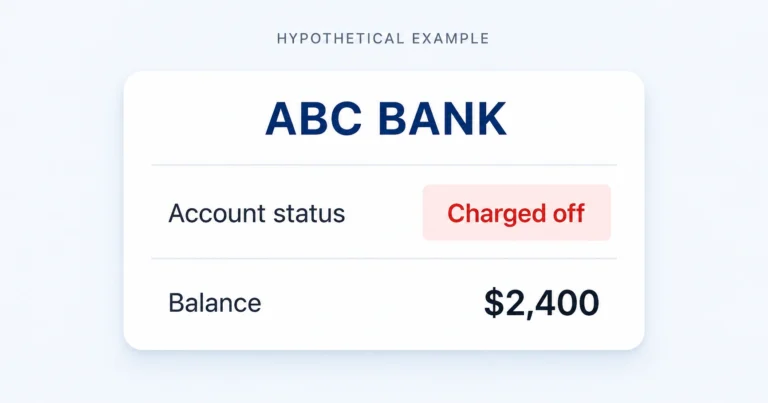
| Charged off | The creditor has classified the account as a loss for accounting purposes. | Confirm who currently owns or services the debt and the amount claimed before paying. |
| Collection company involved | Another company may be collecting for the creditor or may own the debt. | Verify the creditor, collector, ownership, and amount before sending money. |
| Current | The active delinquency has been resolved. | Verify that the balance and current status are accurate; historical late payments can still remain. |
| 120-day status appears wrong | The payment history may be inaccurate or incomplete. | Compare the report with statements and payment records before disputing the specific error. |
What should you do if the account is still 120 days past due?
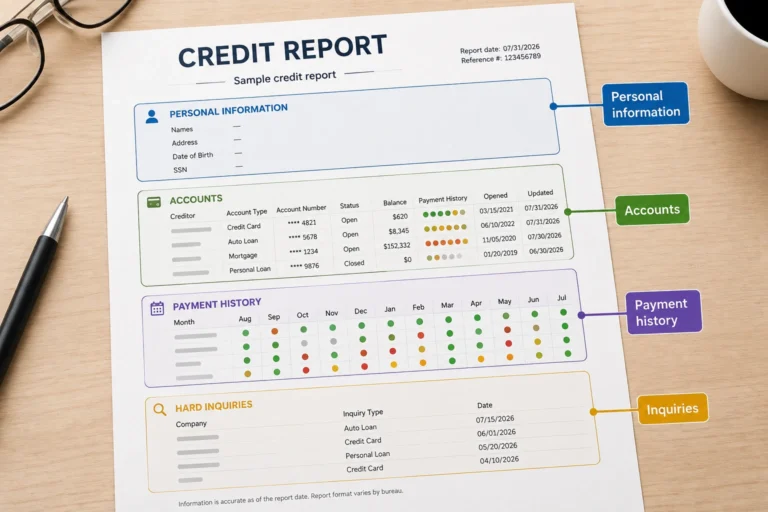
- Check the current status. Review the balance, amount past due, payment history, and whether the account shows open, closed, charged off, transferred, or collection-related information. If you are unsure what those fields mean, use this guide on how to read your credit report.
- Confirm who currently handles the debt. Ask the original creditor whether it still owns or services the account and whether another company is involved.
- Ask whether the delinquency can still be cured. Do not assume a normal minimum payment will bring a four-month delinquency current.
- Ask about hardship or repayment options. If you cannot catch up in full, ask what account-specific options remain available.
- Get important terms in writing. Save the amount, due dates, duration, interest or fees, and what the arrangement changes about the account status.
What to say when you call the creditor
Use the phone number on a verified statement or the creditor’s official website. This example is for an account you recognize and believe you owe:
“I’m calling about my account ending in [last four digits]. What is its current status, and do you still own or service it? What amount, paid by what date, would bring it current? If I cannot afford that amount, what hardship or repayment options are available? Please explain the costs, how payments will be applied, and how the account will be reported. Can you send the terms in writing?”
Record the representative’s name, the date, any reference number, and the next payment deadline. Agree only to an amount your budget can support.
Before-you-pay checklist at 120 days late
Before relying on a payment to fix the delinquency, confirm:
- Who currently owns or services the debt?
- What is the current balance and amount past due?
- Is the account still delinquent, closed, charged off, or with a collector?
- If it is still delinquent, what exact amount would bring it current?
- If you make a partial payment, what will it actually change?
- Is a hardship, repayment, or settlement arrangement being offered?
- How does the creditor say the account will be reported after the payment?
- Can the important terms be provided in writing?
For example, if an account is $900 past due and you send $300, the balance may fall without the account becoming current. Ask what the payment accomplishes before you rely on it as a cure.
What happens at 120 days late by account type?
A credit-report label does not tell you every consequence of missing payments. Check the rules for your particular debt:
| Account type | What to check now |
|---|---|
| Credit card | Ask whether the card is restricted or closed and whether a hardship arrangement remains available. Many open-end retail accounts use a 180-day charge-off threshold under the federal supervisory policy, but this is not permission to wait. |
| Personal installment loan | Closed-end retail loans generally reach that policy’s charge-off threshold at 120 cumulative days past due, subject to its exceptions. Confirm the lender’s current account status. |
| Mortgage | Contact the servicer about loss mitigation immediately. Under federal rules, the first foreclosure notice or filing generally cannot occur until the loan is more than 120 days delinquent; exceptions and additional protections can apply. Foreclosure is not automatic on day 120. |
| Auto loan | Ask immediately about repossession risk and available arrangements. State law and your contract matter; a charge-off timetable does not give you a guaranteed 120-day period before repossession. |
| Federal student loan | Confirm the loan program and repayment status with the servicer. Many federal student loans generally default after at least 270 days of missed scheduled payments, so 120-day delinquency and default are different statuses. Private student loan terms can differ. |
Sources: Federal Reserve retail-credit policy; CFPB guidance on avoiding foreclosure and vehicle repossession; Federal Student Aid repayment guidance.
If your home is at risk, a HUD-approved housing counselor can help you work through the servicer’s options. The CFPB’s foreclosure guide explains how to find one.
Is 120 days late the same as a charge-off?
No. “120 days late” describes delinquency. “Charge-off” is a separate accounting status.
Federal Reserve interagency guidance says closed-end retail loans at financial institutions that become 120 cumulative days past due generally should be classified loss and charged off. Open-end retail loans, such as many credit card accounts, generally use a 180-day threshold. Open-end accounts placed on a fixed repayment schedule follow the closed-end time frame under that policy, and loans secured by residential real estate have separate collateral-based treatment. This supervisory policy is not a universal deadline for every lender action.

A charge-off does not automatically erase the debt. If your report already shows that status, see what a charge-off means on your credit report.
How long can a 120-day late payment stay on your credit report?
Paying today does not restart the original late-payment history’s reporting period. Check the delinquency dates and any estimated removal date on each report. If the account later becomes a charge-off or collection, its reporting dates require separate attention.
CFPB guidance says negative information about account payment history can generally remain on a credit report for up to seven years. Bringing the account current or paying it later does not automatically remove accurate historical late-payment information.
Reporting duration and score impact are not the same thing. The entry can remain visible even while its effect on a particular score changes as it ages and as newer information is added. See how long a late payment can affect your credit score for the broader timeline.
What if the 120-day late payment is wrong?
If the account was not actually 120 days late, the wrong month is reported, the delinquency level is wrong, the balance or status is inaccurate, or the account does not belong to you, gather records that show the specific problem.
| Possible error | Useful records to compare |
|---|---|
| Wrong month marked 120 days late | Statements and payment history for that month and surrounding months |
| Wrong delinquency level | Due dates, payment dates, creditor payment history |
| Account is not yours | Account identifiers and identity-theft documentation if relevant |
| Balance or current status is wrong | Recent statements, payoff/catch-up confirmation, written agreement |
| Reporting conflicts with a written hardship arrangement | The agreement plus payment confirmations |
CFPB recommends disputing inaccurate information with the credit reporting company and the company that furnished the information. For the step-by-step process, see how to dispute a late payment. Do not dispute an accurate 120-day late payment merely because it is damaging your credit.
For example, if a May entry says 120 days late but your records show the account had been brought current in April, identify the May entry and attach the catch-up confirmation and relevant statements. Keep your originals. A collector’s debt-validation process is separate from disputing an error with a credit bureau.
Can a 120-day late payment be removed?
An inaccurate or outdated entry can be challenged. An accurate late payment within the reporting period generally cannot be removed just because you paid the debt. A correction may change the month or delinquency level without deleting the whole account.
You can ask a creditor to consider a goodwill adjustment for accurate history, but the creditor may decline. Do not pay anyone who guarantees deletion of accurate negative information, and do not file false disputes. The FTC warns about these credit-repair promises.
What if a collection company contacts you?
Do not assume a collection contact means the company purchased the debt. It may be collecting for the original creditor, or ownership may have changed.
CFPB guidance says validation information from a debt collector can help you identify the creditor, amount claimed, and your dispute rights. If you believe the amount is wrong, the debt is already paid, or it is not yours, keep records and use the applicable debt-validation or dispute process before sending money.
If you dispute a debt in writing within the validation notice’s 30-day dispute period, the collector generally must stop collecting the disputed debt until it provides verification. Follow the notice’s deadline and keep proof of delivery. Do not ignore court papers; their response deadline is a separate issue.
Can you rebuild credit after a 120-day late payment?
Yes, improvement is possible before the late payment leaves your report, but there is no guaranteed recovery date. FICO explains that getting and staying current before charge-off supports recovery. That does not promise an immediate score increase.
The CFPB rebuilding guide supports the core habits below.
- Resolve the active account problem. Confirm an affordable catch-up arrangement if the account can still be brought current. If it is charged off or in collections, verify the owner, balance, and available options.
- Protect your next due dates. Keep other accounts from becoming late. Use reminders; use autopay only with enough money in the payment account, and confirm that payments actually post.
- Review the next reported update. Check the balance, amount past due, status, and reporting date at each bureau. A payment receipt and a credit-report update are different records.
- Lower revolving balances when affordable. Preserve money for essentials and required payments. You do not need to carry interest-bearing debt to rebuild credit.
- Track the same score over time. Compare the same scoring model, version, and bureau where available. A different app may show a different score.
Measure progress by the account first: an agreed payment posted, an accurate updated balance, no new late payment, and a sustainable next due date are useful milestones even when the score has not moved. Continue with the full plan for rebuilding credit after late payments.
120-day late payment decision tree
Use this decision tree to choose your next step based on what your credit report and creditor records actually show. Start with accuracy, then check the account’s current status before deciding whether to pay, dispute, or focus on recovery.

Frequently asked questions
Is 120 days late worse than 90 days late?
It describes a longer delinquency and may have further credit and account consequences. There is no fixed extra point loss for going from 90 to 120 days: the earlier late history is already in the file, and the model and other account changes matter.
Will paying a 120-day late account immediately raise my score?
Not necessarily. The creditor must first report the updated information, and the score must be calculated from that updated report. Accurate historical late payments can remain. Bringing the account current is still useful because it addresses the ongoing delinquency.
Why does my report still say 120 days late after I paid?
Check where the label appears. A past month’s payment-history entry can remain accurate after payment. A current status or past-due balance that has not been updated needs a closer look: compare the reporting date and whether your payment actually brought the account current.
Can I reach a good credit score again?
It is possible, but neither a target score nor a recovery date can be promised from this one entry. Continued on-time payments, manageable balances, the age of the delinquency, and the rest of the credit file all matter.
Does a 120-day late payment automatically go to collections?
No. An account may stay with the original creditor, be assigned to a collector, or be sold. Confirm who owns and services the debt; do not assume the company contacting you owns it.
Can I still bring the account current?
Possibly, if the creditor still offers that option. Ask for the required amount and deadline or the terms of an approved arrangement. A regular minimum or small partial payment may reduce what you owe without curing the delinquency.
Explore related guides on late payments.
For a broader look at your options, read how to address late or missed payments on a credit report. Disputing inaccurate reporting and asking for goodwill on accurate history are different processes.
Sources
- Federal Reserve — Uniform Retail Credit Classification and Account Management Policy
- Consumer Financial Protection Bureau — How long information stays on a credit report
- Consumer Financial Protection Bureau — How to dispute a credit-report error
- Consumer Financial Protection Bureau — Responding to a debt collector
- FICO — Severity, recency, and frequency of negative information
- Federal Trade Commission — Spot the scams when fixing your credit
- AnnualCreditReport.com — Official site for free credit reports
- FICO — How FICO considers late payments
- TransUnion — Late-payment reporting and score impact
- CFPB — How to avoid foreclosure
- 12 CFR 1024.41 — Mortgage loss mitigation procedures
- CFPB — Vehicle repossession protections
- Federal Student Aid — Preparing for student loan payments
Financial disclaimer
This article provides general U.S. educational information and is not individualized legal, financial, debt-settlement, lending, or credit-repair advice. Account treatment can depend on the type of debt, creditor, contract, collateral, current owner or servicer, state law, and individual circumstances.