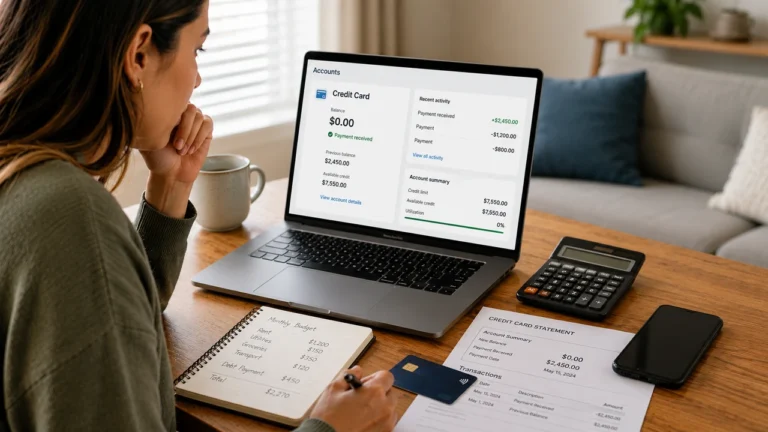
You paid off debt because you wanted relief. You expected your credit score to finally move in the right direction. Maybe you paid off a credit card, a personal loan, a collection, or another balance that had been sitting on your report for too long. You did the responsible thing. You made the payment. You waited for the number to change.
But now your credit score is still low, stuck, or maybe even lower than before. That can feel incredibly unfair. If you are thinking, “I paid off debt but my credit score is still bad,” you are not alone. Many people expect an instant reward after paying off debt, only to open a credit app and see that nothing changed.
That is where the frustration starts. You may wonder why your credit score did not go up, why your score dropped after paying off debt, or whether paying off debt was a mistake. It can feel like you did what you were supposed to do, but the credit system did not reward you right away.
I paid off debt, but I still feel stuck.
If that is how you feel, this guide will help you understand what may be happening. Paying off debt can improve your real financial life before it improves your credit score. Your score may still be reacting to credit utilization, closed accounts, reporting delays, old negative marks, or errors on your credit report. The goal now is to understand what changed, what still looks risky, and how to fix your credit score after paying off debt.
- Quick answer
- First, paying off debt was not a mistake
- Why your credit score may still be low after paying off debt
- Your payoff may not have been reported yet
- Your credit utilization may have changed
- Your credit mix may be weaker now
- Old negative marks may still be holding you back
- The type of debt you paid off matters
- Step 1: Check if the account was closed
- Step 2: Review your credit utilization
- Step 3: Keep old credit cards open
- Step 4: Check your credit report for errors
- What your credit report should show after paying off debt
- When should you dispute a paid-off debt?
- Step 5: Wait for the next reporting cycle
- Step 6: Avoid new hard inquiries
- Step 7: Build positive payment history
- What can move your credit score faster after paying off debt?
- How long does it take to fix your score after paying off debt?
- How to know if your credit score is recovering after paying off debt
- Can paying off debt fix your credit by itself?
- When paying off debt helps your score the most
- What will not fix your score after paying off debt?
- What not to do after paying off debt
- After-payoff credit score checklist
- Frequently asked questions
- How to get your credit score back up after paying off debt?
- How long does it take to fix your credit score after paying off debt?
- Can I fix my credit by paying off debt?
- How to get a 700 credit score in 30 days fast?
- Why is my credit score still low after paying off debt?
- Should I close a credit card after paying it off?
- Can paying off debt hurt my credit score?
- What should I do if my score does not improve after paying off debt?
- What to do next
Quick answer
To fix your credit score after paying off debt, first check whether the paid-off account was reported correctly. Look at your credit utilization, account status, available credit, credit mix, and payment history. If your score stayed low or dropped, the payoff may not have reached the credit bureaus yet, the account may have become a closed account, your available credit may have changed, or old negative marks may still be hurting your profile. You should also check for credit report errors, such as a wrong balance, incorrect payment status, duplicate collection, or an account still showing unpaid. In many cases, your score may start to update after the next reporting cycle, often within 30 to 45 days. To get your credit score back up after paying off debt, keep balances low, avoid new hard inquiries, and keep building positive payment history.
This article is for educational purposes only and is not financial advice. Your credit score can change differently depending on your full credit profile, lender reporting, the reporting cycle, and the scoring model used. Always review your own credit report before making financial decisions.
First, paying off debt was not a mistake
If your credit score stayed low or dropped after paying off debt, it can feel like you made the wrong move. You may be asking yourself, was paying off debt a mistake? The answer is no. Paying off debt was still a responsible financial decision. It can lower what you owe, reduce monthly pressure, and put you in a stronger position, even if your credit score has not rewarded you yet.
The frustrating part is that credit scores do not react to effort. They react to data. Your score may change based on lender reporting, account status, credit utilization, credit mix, payment history, available credit, and old negative marks. So if you are wondering, why did paying off debt not help my credit score?, the answer may be that the payoff fixed one part of your profile, but other risk factors are still showing on your credit report.
Sometimes people also ask, can paying off debt hurt my credit score? In some cases, your score can drop temporarily after a payoff. This may happen if an account closes, your available credit changes, or an installment loan is no longer active. That does not mean paying off debt was bad. It means the scoring system reacted to a change in your credit profile.
So yes, paying off debt can help your credit score, especially when it lowers high credit card balances and improves utilization. But it is not always the whole recovery plan. If you want to understand what kind of score change may be realistic after a payoff, read how much your credit score may increase if you pay off debt.
The goal now is not to regret the payoff. The goal is to check what your credit report shows, what still looks risky, and what steps can help your score move in the right direction.
Why your credit score may still be low after paying off debt
If you are asking, why is my credit score still low after paying off debt?, the answer is usually that the payoff fixed one part of your credit profile, but not the whole picture. Credit scoring looks at more than one balance. It also looks at your payment history, credit utilization, account status, credit age, credit mix, recent hard inquiries, and negative marks on your credit report.
This is why your credit score can still be low after debt payoff. You may have paid one account, but other balances may still be high. You may have a collection account still on your credit report after paid. You may have late payments still affecting your credit score. Or your payoff may simply not have been reported to the credit bureaus yet.
Paying off one debt does not automatically erase the past. If you had late payments, collections, charge-offs, or other negative marks before the payoff, those items may still affect your score if they are accurate. A paid off collection but credit score still low situation can happen because the account may show as paid, but the negative history may still remain. The same can happen with a paid off charge-off but credit score still low problem.
Your score may also stay stuck if your credit file is thin. For example, if you do not have many active positive accounts, the system may not have enough strong recent history to reward you quickly. A payoff helps reduce debt, but your score may still need time and consistent positive behavior before it starts moving.
| Reason your score is still low | What it means | What to do next |
|---|---|---|
| The payoff was not reported yet | Your credit report may still show the old balance | Wait for the next reporting cycle and check your report again |
| The account was closed | Your available credit or credit mix may have changed | Check whether the account is listed as open or closed |
| Other balances are still high | Your utilization may still look risky | Focus on lowering remaining credit card balances |
| Old negative marks remain | Late payments, collections, or charge-offs may still hurt your score | Review your report and dispute only inaccurate information |
| Your credit file is thin | You may not have enough positive active history yet | Keep building on-time payment history |
If your credit score is not improving after paying off debt, do not assume the payoff failed. Treat it as a signal to inspect the rest of your credit profile. Look at what is still being reported, what balances remain, whether the paid account was closed, and whether any information is wrong.
If your score is not moving at all, the problem may be bigger than the payoff itself. You may also want to check why your credit score is not increasing to see what else may be keeping your score stuck.
Your payoff may not have been reported yet
One reason your credit score may not improve right away is simple: the payoff may not have been reported yet. Credit scores usually change after lenders send updated account information to the credit bureaus. That does not always happen the same day you make a payment, even if the money already left your bank account.
If you are wondering, how long does it take for paid off debt to show on credit report, the answer usually depends on the lender’s reporting schedule. Many lenders report account updates about once a month. That means your old balance may stay on your report until the next lender reporting cycle after paying off debt.
This is why you may see your credit report not updated after paying off debt for a few days or even a few weeks. Your credit score is not ignoring your payoff. It may simply be using the last information that was reported. Until the new balance, account status, or paid status reaches the credit bureaus, your score may still reflect the old debt.
So if you are asking, when will my credit score update after paying off debt?, first check whether the payoff is showing on your credit report. If the old balance is still there, wait for the next credit bureau reporting cycle after payoff before panicking. Checking too early can make it look like nothing worked, when the system may just be late.
Your credit utilization may have changed
Your credit utilization after paying off debt can have a big effect on your score, especially if the debt you paid was a credit card balance. Credit utilization means how much of your available revolving credit you are using. If you lower credit card balances and the account stays open, your utilization may improve, and that can help your score once the new balance is reported.
But sometimes people say, I paid off credit card but score did not improve, or even, I paid off credit card but credit score dropped. One possible reason is that the card was closed after payoff. If a paid-off card closes, your total available credit after paying off debt may go down. When available credit drops, your remaining balances can look larger compared with your total limits.
For example, if you had $10,000 in total credit limits and used $3,000, your utilization was 30%. If one paid-off card closes and your total limit drops to $5,000, that same $3,000 now looks like 60% utilization. That can hurt your score, even though you owe less overall.
This is why how credit utilization affects credit score after payoff depends on more than the payment itself. The system looks at reported balances, open credit limits, and remaining card balances. To support lower credit utilization after paying off debt, keep old cards open when possible, avoid running up other balances, and check your credit limit after paying off credit card to make sure your available credit did not shrink.
Your credit mix may be weaker now
Your credit mix may also change after paying off debt, especially if you paid off an installment loan. This can happen with a personal loan, auto loan, student loan, or another fixed-payment account. Once the loan is fully paid, the account may become closed because the debt is complete. That is normal, but it can still change how your credit profile looks.
If you searched for paid off loan and credit score dropped, this may be one reason. A score can dip when an active installment loan becomes a closed account. The same thing can happen if your credit score dropped after paying off installment loan, credit score dropped after paying off personal loan, credit score dropped after paying off car loan, or credit score dropped after paying off student loan. It does not mean the payoff was bad. It means the scoring model is reacting to a change in your active accounts.
Credit scoring systems often look at whether you have experience with different types of credit, such as revolving credit cards and installment loans. If your only installment loan closes, your credit mix changed after paying off debt. That may create a temporary score movement, especially if the rest of your credit profile is thin or still has other risk factors.
A paid off installment loan credit score dropped situation can feel frustrating, but it is usually not a reason to regret the payoff. You now owe less money, and that matters in real life. The next step is to keep other accounts in good standing, avoid new unnecessary debt, and build strong positive payment history over time.
Old negative marks may still be holding you back
Another reason your score may stay low is that old negative marks on your credit report may still be affecting your profile. Paying off debt can update the balance or account status, but it does not automatically erase accurate negative history. If you missed payments before the payoff, you may still have late payments still affecting your credit score.
This is especially common with collections and charge-offs. You may have a paid off collection but credit score still low because the collection account may still appear on your report, even after the balance changes to paid. A collection account still on credit report after paid can continue to hurt your score if the reporting is accurate and still within the allowed reporting period.
The same problem can happen with a charge-off. A paid off charge-off but credit score still low situation does not always mean the payment failed. It may mean the account now shows as paid, but the negative account history is still being counted. Paid is usually better than unpaid, but it is not the same as deleted.
If you see a paid collection still showing on your credit report, check the details carefully. Look at the balance, account status, dates, payment history, and whether the same debt appears more than once. If something is wrong, incomplete, duplicated, outdated, or does not belong to you, you may need to dispute it.
But do not dispute accurate information just because your score did not improve. Disputes work best when there is a real reporting problem. If the negative mark is accurate, your best next step is to keep building positive payment history, lower remaining balances, and give your credit profile time to recover.
The type of debt you paid off matters
The type of debt you paid off can change how your score reacts. Not all debt works the same way in a credit scoring model. Credit card debt, personal loans, auto loans, student loans, medical debt, collections, and charge-offs can all affect your report differently after payoff.
If you have a paid off credit card credit score still low situation, the issue may be your remaining credit utilization. Paying off a credit card can help if the card stays open and the lower balance is reported. But if other cards still have high balances, or if the paid-off card was closed, your score may not rise the way you expected.
Installment loans can behave differently. If you searched for paid off personal loan credit score dropped, paid off auto loan credit score dropped, or paid off student loan credit score dropped, the reason may be that the active loan became a closed account. That can change your credit mix, even though paying off the loan was still a smart financial move.
Collections and charge-offs are another story. A paid off collection but credit score still low or paid off charge off credit score still low problem can happen because paid status does not always remove the negative account history. The debt may show as paid, but the old mark may still affect your score if it is accurate.
Medical debt can also be confusing. A paid off medical debt credit score still low situation may depend on how the account was reported, whether it was sent to collections, and whether the report has updated correctly. The main point is simple: paying off debt is good, but the score reaction depends on what kind of debt it was and how it reports.
| Debt type | Possible score reaction | What to check |
|---|---|---|
| Credit card debt | Your score may improve if utilization drops | Check whether the card stayed open and the new balance was reported |
| Personal loan | Your score may dip if the active installment account closes | Check your credit mix and payment history |
| Auto loan | Your score may change when the loan is marked paid and closed | Check account status and reporting date |
| Student loan | Your score may not jump right away if other factors remain weak | Check whether late payments or old marks remain |
| Collection account | The debt may show as paid, but the collection may still appear | Check if the balance and status are accurate |
| Charge-off | Paid status may help your profile, but the negative mark can remain | Check whether the account is reporting correctly |
The biggest difference is usually between revolving debt and installment debt. Paying off revolving debt, like credit cards, may help faster if it lowers utilization. Paying off installment debt, like a loan, may reduce what you owe but also close an active account. If you want a deeper timeline for when changes may show, read how long it takes to fix your credit score.
Step 1: Check if the account was closed
The first step is to check whether the paid-off account is still open or closed. This matters because a closed account after paying off debt can change how your credit profile looks. Your score may react differently depending on whether you paid off a credit card, personal loan, auto loan, student loan, collection, or another type of account.
If you have a paid off debt but account closed situation, do not panic right away. Some accounts naturally close after payoff. For example, a personal loan, car loan, or student loan is usually marked closed once the balance is fully paid. A paid off loan account closed status is not automatically bad. It usually means the loan is complete. But it can still affect your credit mix because the active installment account is no longer open.
Credit cards are different. If your credit card closed after paying off balance, your total available credit may drop. That can hurt your credit utilization if you still have balances on other cards. For example, if your available credit dropped after paying off debt, your remaining balances may look larger compared with your lower total credit limit. That can make your score stay low or even dip, even though you now owe less money overall.
Open accounts can help your profile when they are managed well. A paid-off credit card that stays open may support your available credit, credit age, and utilization ratio. A closed account may still remain on your report, but it may no longer help your available credit the same way.
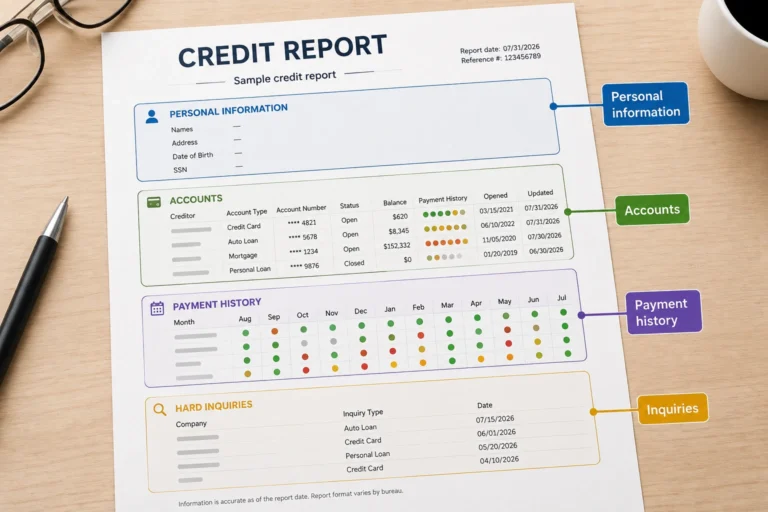
On your credit report, look for the account status, balance, credit limit, payment history, and reporting date. Make sure the balance is correct and the account is not wrongly marked as unpaid. If the status, balance, or history looks wrong, you may need to review the issue more closely before assuming the payoff did not help.
Step 2: Review your credit utilization
The next step is to review your credit utilization after paying off debt. Credit utilization means how much of your available revolving credit you are using. In simple terms, it compares your credit card balances to your credit limits. If you have a $1,000 balance on a card with a $5,000 limit, your utilization on that card is 20%.
This matters because utilization can have a strong effect on your score. If you want to know how to raise credit score after paying off debt, this is one of the first places to look. Paying off a credit card can help when the lower balance is reported and the account stays open. But if you paid off credit card but score did not improve, your remaining balances may still be too high, or your available credit may have changed.
There are two types of utilization to check: total utilization and per-card utilization. Total utilization looks at all your credit card balances compared with all your credit limits. Per-card utilization looks at each card by itself. You may have low total utilization, but one card may still look maxed out. That can still make your profile look risky.
Also, remember that credit scores usually use reported balances, not your live balance today. If you pay after your statement closes, the higher balance may already have been reported. To support lower credit utilization after paying off debt, try paying before the statement closing date, not only before the due date.
| Situation after payoff | What it can mean for your score | Best next step |
|---|---|---|
| You paid off one card, but other cards are still high | Your score may not improve much yet | Lower the remaining balances first |
| You paid off a card and kept it open | Your utilization may improve | Keep the card open and use it lightly |
| You paid off a card and it was closed | Your available credit may drop | Check your total utilization again |
| You paid off an installment loan | Your debt is lower, but your credit mix may change | Keep other accounts positive and active |
If your available credit after paying off debt dropped because an account closed, your utilization may look worse even though you owe less. That is why the goal is not just to pay one balance. The goal is to make sure your remaining reported balances look low compared with your open credit limits.
If your main problem is high card balances, read how to improve your credit score fast and focus on the actions that can create visible movement first.
Step 3: Keep old credit cards open
If you are asking, should I keep credit card open after paying it off?, the answer is usually yes if the card has no annual fee and you can manage it responsibly. An old open credit card can help your credit profile because it may support your available credit, credit history, and utilization ratio.
This matters because closing credit card after paying off debt can sometimes work against you. When you close a card, you may lose that card’s credit limit from your total available credit. If you still have balances on other cards, your overall utilization can rise. That means your available credit after paying off debt may go down, even though you did something responsible by paying the card off.
Another thing to think about is credit age after closing account. Older accounts can help show a longer credit history. A closed account may still stay on your report for a while, but it may no longer help your active credit profile the same way an open, well-managed account can.
That does not mean you should use the card heavily. You also do not need to carry a balance on purpose to build credit. That is an expensive myth. If you keep an old card open, use it lightly for a small purchase and pay it off in full. The goal is positive activity, not new debt.
So, should I close a credit card after paying it off? Sometimes closing may make sense if the card has a high annual fee, poor terms, or makes overspending too tempting. But if the card is free, old, and easy to control, keeping it open may help your recovery more than closing it. Be careful with closing old accounts after paying off debt, especially if your score is already low or your credit file is thin.
Step 4: Check your credit report for errors
If your score is still low after payoff, check your credit report carefully. Sometimes the problem is not your payment. Sometimes the problem is a credit report error after paying off debt. A wrong balance, wrong account status, duplicate collection, or incorrect late payment can keep your score lower than it should be.
One common issue is paid off debt still showing balance. This can happen if the lender has not reported the update yet, but it can also be a reporting mistake if enough time has passed. Another problem is a paid off account still showing unpaid. That can make your credit profile look more risky, even though you already handled the debt.
Also look for a wrong balance on credit report after payment, a paid collection still showing unpaid, incorrect late payments, accounts that do not belong to you, or the same collection account listed more than once. Duplicate collections are especially frustrating because the same debt may appear to hurt you more than it should. Very cute of the system, right? Not cute at all.
If your credit report is not updated after paying off debt, first check the reporting date. If the payoff was recent, the lender may simply not have sent the new information yet. But if the account still looks wrong after the next reporting cycle, you may need to take action.
When possible, check your reports from all three major credit bureaus. One bureau may show the correct balance while another still shows old or incorrect information. Do not assume all reports are the same.
If the balance, payment status, or account history looks wrong, follow this guide on how to dispute errors on your credit report.
Before you file a dispute, collect proof. This guide explains what documents help support a credit report dispute.
The key is simple: dispute inaccurate information, not accurate negative history. If something is truly wrong, a dispute can help clean up your report. If the information is accurate, your next move is to keep building stronger credit behavior over time.
What your credit report should show after paying off debt
After paying off debt, your credit report should eventually show the correct balance, account status, and payment history. If you see paid off debt still showing balance, do not panic immediately. The lender may not have reported the update yet. But if the old balance stays after the next reporting cycle, it may be a sign that something needs to be checked.
The most important thing to confirm is the balance. If the account was paid in full, the balance should usually show as $0 or the correct updated amount. A wrong balance on credit report after payment can make your debt level or credit utilization look higher than it really is, which may keep your score lower than expected.
Next, look at the account status after payoff. The account should not look unpaid if you already paid it. A paid off account still showing unpaid can hurt your profile because it may look like the debt is still active, past due, or unresolved. If the account is closed, it should be marked correctly. If it is open, the status should also match reality.
Collections need extra attention. A paid collection still showing unpaid is different from a paid collection that still appears on your report. A collection can remain listed after payment, but the balance and status should be accurate. Also check that the same collection is not listed twice.
| What to check | What it should show | Why it matters |
|---|---|---|
| Balance | $0 or the correct updated balance | A wrong balance can keep utilization or debt level too high |
| Account status | Paid, current, closed, or open correctly | Wrong status can make the account look more negative than it is |
| Payment history | No incorrect late payments | Wrong late payments can hurt your score badly |
| Collection accounts | No duplicate or incorrect collection entries | Duplicate collections can make the same debt hurt more than once |
| Account ownership | Only accounts that belong to you | Accounts that are not yours should be reviewed and disputed |
If your credit report is not updated after paying off debt, check the reporting date before taking action. If enough time has passed and the information is still wrong, gather proof of payment and review your dispute options. Your credit report should tell the truth: what you paid, what you still owe, and which accounts actually belong to you.
When should you dispute a paid-off debt?
You should dispute a paid-off debt when the information on your credit report is wrong, incomplete, outdated, duplicated, or does not belong to you. A dispute is not a magic delete button. It is a tool for correcting inaccurate reporting. So if you are trying to understand how to dispute paid off debt on credit report, the first step is to find the exact error.
For example, you may need to dispute if you see paid off debt still showing balance after the lender had enough time to report the update. You may also need to act if you see a paid off account still showing unpaid, a wrong payment status, a duplicate collection account, or an incorrect late payment. Those errors can make your credit profile look worse than it really is.
If the issue is a wrong balance, focus on how to dispute wrong balance on credit report with proof. Useful proof may include a payment confirmation, settlement letter, account statement, bank record, or a letter from the lender showing the updated balance. Do not just say, “This is wrong.” Show why it is wrong. Credit bureaus and furnishers need clear details to investigate.
| Dispute when | Do not dispute just because |
|---|---|
| The balance is wrong | You paid the debt and want it removed |
| The account is marked unpaid after payoff | The negative mark is accurate |
| The payment status is incorrect | Your score did not improve yet |
| The same collection appears twice | You are frustrated with the score |
| The account does not belong to you | You want a faster score increase |
Do not dispute accurate negative information only because your score stayed low. If a late payment, collection, or charge-off is accurate, paying the debt does not always remove the old history. Annoying? Yes. But that is how credit reporting often works.
If something is truly wrong, follow this guide on how to dispute errors on your credit report. Before you file, gather proof using this guide on what documents help support a credit report dispute.
Step 5: Wait for the next reporting cycle
After paying off debt, one of the hardest steps is waiting. You may want your score to change immediately, but credit scores usually do not update in real time. If you are wondering, how long after paying off debt will credit score improve, the answer often depends on when your lender reports the new information.
Many lenders report account updates about once a month. That means your payment may be complete on the lender’s side, but your credit report may still show the old balance until the next reporting cycle. This is why people often ask, how long does it take for paid off debt to show on credit report. In many cases, 30 to 45 days can be a normal window before the updated balance, account status, or paid status appears.
Your credit score also depends on what your credit report shows. If the balance has not updated yet, your score may still be using the old data. So if you are checking your score one week after payoff and nothing changed, that does not always mean the payoff failed. It may only mean the system has not caught up yet.
Score apps can also lag or show updates at different times. One app may update before another. One bureau may receive new data before the others. So if you are asking, when will my credit score update after paying off debt?, start by checking whether the new balance is actually showing on your credit report.
A 30 days after paying off debt credit score update or a 45 days after paying off debt credit score update may be more realistic than expecting movement overnight. Do not panic too early. First, wait for the next credit bureau reporting cycle after payoff, then review the balance, status, and payment history.
If you are not sure how long the recovery should take, read how long it takes to fix your credit score so you know what kind of timeline is realistic.
Step 6: Avoid new hard inquiries
After paying off debt, you may feel motivated to apply for a new credit card, personal loan, auto loan, or financing offer. That motivation makes sense. You handled a debt, and now you may want a fresh start. But if you are asking, should I apply for new credit after paying off debt?, the safer answer is usually to wait until your credit profile has updated and stabilized.
A new hard inquiry after paying off debt can add extra pressure to a score that is already trying to recover. Hard inquiries happen when a lender checks your credit for a new application. One inquiry may not destroy your score, but several applications in a short period can make you look risky to lenders.
This is one of the most common mistakes after paying off debt. People pay off debt, feel excited, and immediately apply for new credit because they expect approval to be easier. But if your old balance has not updated yet, your utilization is still high, or your score is still low, the timing may work against you.
Hard inquiries after debt payoff can slow recovery because they add a new risk signal while your report may still be catching up. Instead of applying right away, check whether the payoff is reported, review your utilization, confirm your account status, and wait for your score to settle.
If you are wondering what not to do after paying off debt, this is a big one: do not apply for several new cards or loans just because you feel ready. Let your credit report update first. Then make any new credit decision based on your actual score, not on the score you expected to have.
Step 7: Build positive payment history
Paying off debt is one strong step, but it is not the end of credit recovery. If you want to know how to rebuild credit after paying off debt, the next goal is to build a steady record of on-time payments. Credit scores do not only look at what you paid off. They also look at how you manage the accounts that remain open.
Your positive payment history is one of the strongest signals in your credit profile. It tells lenders that your payoff was not a one-time clean-up move. It shows that your habits are changing and that you can manage credit consistently over time.
This is why one missed payment after payoff can hurt so much. You may have worked hard to pay down debt, but one late payment can slow your recovery and make your profile look risky again. Brutal? Yes. But the credit system loves consistency more than dramatic comeback moments.
If you are trying to understand how to improve credit after paying off debt, keep every active account current. Use autopay if it helps. Set calendar reminders before due dates. Keep a small emergency buffer if possible, so one tight month does not turn into a missed payment.
The best steps to fix credit after paying off debt are usually simple, but not always exciting: pay on time, keep balances low, avoid unnecessary applications, and check your report for errors. Over time, those actions can help you recover credit score after paying off debt more safely than chasing quick tricks.
Your score may not jump overnight, but a clean payment pattern over several months can make your profile stronger. The goal is not just to prove that you paid one debt. The goal is to show that your whole financial behavior is now more stable.
What can move your credit score faster after paying off debt?
If you want to know how to get credit score back up after paying off debt, focus on the parts of your credit profile that can change the fastest. Usually, the fastest movement comes from lower reported credit card balances, corrected credit report errors, and avoiding new damage while your score is recovering.
The first place to look is your remaining credit card balances. If you paid off one debt but still have high balances on other cards, your score may stay low because your utilization still looks risky. To raise credit score after paying off debt, try to lower your remaining revolving balances and keep them low when the lender reports to the credit bureaus.
The second fast-moving area is incorrect reporting. If your credit report still shows a wrong balance, an unpaid status, duplicate collection, or incorrect late payment, fixing that error may help your score once the dispute is resolved. This is one of the clearest ways to increase credit score after debt payoff when the issue is not your behavior, but bad data.
Keeping old accounts open can also help, especially if they protect your available credit and account age. You do not need to carry a balance. You only need to manage the account responsibly, use it lightly if needed, and pay it in full.
| Action | Why it may help | How fast it may show |
|---|---|---|
| Lower remaining credit card balances | Can improve utilization | After the next reporting cycle |
| Fix credit report errors | Can remove inaccurate negative or wrong balance data | After the dispute is resolved |
| Keep old accounts open | Can protect available credit and account age | Gradually |
| Avoid new hard inquiries | Prevents new score pressure | Immediately by avoiding damage |
| Make every payment on time | Builds stronger positive history | Over months |
If you want to improve credit after paying off debt, do not chase random tricks. Focus on what the scoring system can actually see: lower balances, accurate reporting, open positive accounts, fewer new inquiries, and steady on-time payments.
If you need more urgent steps, read how to improve your credit score fast and focus on the actions that can create visible movement first.
How long does it take to fix your score after paying off debt?
If you are asking, how long does it take to fix credit score after paying off debt, the honest answer is: it depends on what is holding your score down. Some people may see movement after the next reporting cycle. Others may need several months if their report still has high balances, late payments, collections, charge-offs, or a thin credit file.
In the first 1–7 days, your score may not change at all. That does not mean the payoff failed. It usually means the lender has not reported the updated balance yet. Credit scores rely on reported data, not just the payment you made yesterday.
For many people, the first realistic window is around 30 to 45 days. That is why searches like 30 days after paying off debt credit score and 45 days after paying off debt credit score are so common. By then, your lender may have reported the new balance, and your credit report may finally show the payoff.
If you are wondering, how long after paying off debt does credit score improve, look at what changed. If your credit card utilization dropped, you may see movement faster. If you paid off an installment loan, collection, or charge-off, the score reaction may be slower or less dramatic.
| Timeline | What may happen | What you should do |
|---|---|---|
| 1–7 days | Your score may not change yet because the payoff may not be reported | Do not panic or apply for new credit immediately |
| 30–45 days | Your credit report may update with the new balance | Check whether the balance and status are correct |
| 1–3 months | You may see movement if utilization improves | Keep balances low and accounts paid on time |
| 3–6 months | Your score may recover more if you build consistent positive history | Avoid late payments and unnecessary hard inquiries |
| 6–12 months | Deeper credit issues may need more time to improve | Keep following a full credit recovery plan |
So, when will my credit score update after paying off debt? First, wait for the new balance to appear on your credit report. Then watch whether your utilization, account status, and payment history are improving. If nothing changes after the report updates, the issue may not be the payoff itself. It may be another factor still holding your score down.
For a deeper timeline, read how long it takes to fix your credit score.
How to know if your credit score is recovering after paying off debt
Your score may not jump overnight, but that does not mean nothing is improving. If you want to know how to know if credit score is improving, look beyond the number for a moment. The score is important, but the signs behind the score often show progress first.
One of the clearest signs of credit score recovery after paying off debt is lower reported balances. If your credit report now shows less debt than before, your profile is moving in a better direction. This is especially important with credit cards because lower reported balances can lead to improved utilization.
Another good sign is a corrected account status. If a paid account now shows as paid, current, settled, or closed correctly, that is progress. If past-due accounts are no longer showing as currently late, that can also help your profile look more stable.
You should also watch your payment pattern. Steady on-time payments after payoff are one of the strongest signs that your credit behavior is improving. Even if the score moves slowly, a clean recent payment history can help rebuild trust over time.
Other signs your credit score is recovering include fewer high balances, no new late payments, no new collections, fewer recent hard inquiries, and more accurate reporting across your credit reports. Basically, your report should start looking calmer, cleaner, and less risky. That is the boring version of progress, but in credit, boring is powerful.
If you see your credit score improving after paying off debt, keep doing what is working. If the number is still stuck but your balances, utilization, and account statuses are improving, give the reporting cycle more time.
If you want to track the right signs, read how to know if your credit score is improving.
Can paying off debt fix your credit by itself?
If you are asking, can I fix my credit by paying off debt?, the honest answer is: sometimes it can help a lot, but it usually does not fix everything by itself. Paying off debt can be a powerful step, especially if it lowers high credit card balances and improves your credit utilization. But your credit score is based on the full credit profile, not just one payoff.
So, does paying off debt help credit score? Yes, it can. If you pay down revolving debt, keep the account open, and the lower balance gets reported, your score may move in the right direction. This is one of the clearest ways paying off debt can improve credit score.
But if your report still has late payments, collections, charge-offs, recent hard inquiries, a short credit history, or reporting errors, your score may stay low even after the debt is paid. That is why people often ask, will my credit score go up after paying off debt? The answer depends on what else is still showing on your credit report.
Think of payoff as one major step in credit recovery, not the entire plan. It can lower what you owe, reduce financial stress, and make your profile healthier. But you may still need to build positive payment history, keep utilization low, avoid unnecessary applications, and correct inaccurate reporting.
This is why paying off debt can fix your credit only when the main problem was the debt itself. If the deeper problem is old negative history, thin credit, wrong account status, or high balances on other cards, you will need more than one payoff to fully recover.
If you are trying to understand what kind of score increase is realistic, read how much your credit score may increase if you pay off debt.
When paying off debt helps your score the most
If you are asking, does paying off debt help credit score, the answer is usually yes when the payoff lowers the risk signals on your credit report. The biggest score improvement often comes from paying down high revolving balances, especially credit cards that are close to their limits.
This is where paying off credit cards can improve credit score more clearly than paying off some other types of debt. Credit cards are revolving accounts, and credit scoring models often pay close attention to how much of your available credit you are using. If your cards were almost maxed out and you paid them down, your profile may look less risky once the lower balances are reported.
Paying off debt helps the most when three things happen together: your balances drop, your accounts stay open, and the lower balances are reported to the credit bureaus. That combination can create lower credit utilization after paying off debt, which may help your score move in the right direction.
So if you are wondering, will my credit score go up after paying off debt?, look at what kind of debt you paid. If you paid off revolving debt, like credit card debt, and the account stayed open, the score reaction may be stronger. If you paid off an installment loan, like a car loan, student loan, or personal loan, the result may be slower or less dramatic because the account may close after payoff.
In simple terms, paying off revolving debt can improve credit score when it lowers utilization and reduces the amount of debt your report shows. Paying off installment debt can still be good for your financial life, but it may not always create the same fast score movement. The best result usually comes when your payoff makes your credit report look calmer, cleaner, and less risky to lenders.
What will not fix your score after paying off debt?
After paying off debt, it is easy to look for quick moves that feel productive. But not every action helps. Some choices can slow your recovery or make your credit profile look riskier. If you are wondering what will not fix credit score after paying off debt, start by avoiding the common mistakes that create more stress than progress.
One big mistake is checking credit score every day and expecting the number to change overnight. Your score usually updates after new information is reported to the credit bureaus. Refreshing the app five times a day will not speed up the reporting cycle. It will only make you more anxious.
Another mistake is closing every paid-off card. That may feel clean emotionally, but it can reduce your available credit and hurt your utilization ratio. If the card has no annual fee and you can control your spending, keeping it open may be smarter than closing it.
You also do not need to start carrying balance to build credit. That is one of the most expensive credit myths. You can build credit by using a card lightly and paying it off in full. Interest is not a membership fee for a better score.
- Checking your score every day will not make it update faster.
- Closing all paid-off credit cards can reduce your available credit.
- Carrying a balance on purpose is not necessary to build credit.
- Applying for multiple new cards can add hard inquiries.
- Random credit disputes can waste time if the information is accurate.
- Expecting instant results can lead to bad decisions.
The best move is boring but effective: wait for the report to update, keep balances low, pay on time, avoid unnecessary applications, and dispute only information that is actually wrong.
What not to do after paying off debt
Knowing what not to do after paying off debt is just as important as knowing what to do next. After a payoff, many people feel excited, relieved, or impatient. That is normal. But this is also the moment when small decisions can either support your recovery or slow it down.
One of the biggest mistakes after paying off debt is closing every old credit card just because the balance is now zero. If you are asking, should I close credit card after paying off debt?, be careful. Closing an old card can reduce your available credit and may raise your utilization if you still have balances on other cards. If the card has no annual fee and you can manage it responsibly, keeping it open may help your credit profile.
Another mistake is applying for several new accounts right away. If you are wondering, should I apply for new credit after paying off debt?, wait until your credit report updates first. New applications can create hard inquiries, and too many hard inquiries can make your profile look risky before your payoff has even helped you.
Also, do not ignore your credit report. If the paid balance is wrong, the account is still marked unpaid, or a collection appears twice, your score may stay lower than it should. You need to check what is being reported instead of guessing from the score alone.
And no, you should not start using credit again after paying off debt just to “prove” you can use it. You also do not need to carry a balance to build credit. Small controlled activity is enough. Use credit lightly, pay in full, keep balances low, and avoid going back into debt just to chase a score.
After-payoff credit score checklist
Use this after paying off debt checklist to make sure your credit profile is actually moving in the right direction. Your score may not update overnight, but you can still check the right details instead of guessing. This credit score checklist after paying off debt helps you see whether the payoff was reported correctly and whether anything else is still holding your score down.
- Check whether the paid-off account is open or closed.
- Confirm the balance shows as $0 or the correct updated balance on your credit report.
- Review your remaining credit card utilization.
- Look for wrong balances, duplicate accounts, or incorrect late payments.
- Wait for the next reporting cycle before panicking.
- Avoid new hard inquiries while your score is recovering.
- Keep making every active payment on time.
If you are not sure what to check after paying off debt, start with the basics: balance, account status, payment history, utilization, and errors. If those pieces look correct, your next job is to stay consistent. Keep balances low, pay on time, and give the credit system enough time to catch up.
Frequently asked questions
How to get your credit score back up after paying off debt?
To get your credit score back up after paying off debt, first make sure the payoff has been reported to the credit bureaus. Then review your credit utilization, check whether the paid-off account is open or closed, keep old credit cards open when possible, avoid new hard inquiries, and continue making every payment on time. If you want to get credit score up after paying off debt, also check your credit report for wrong balances, duplicate accounts, incorrect late payments, or old negative marks that may still be holding it down. The goal is to fix what still looks risky.
How long does it take to fix your credit score after paying off debt?
If you are asking, how long does it take to fix credit score after paying off debt, the first update may happen after your lender reports the new balance. For many people, a credit score update after paying off debt may take around 30 to 45 days. However, full recovery can take longer if your credit report still shows late payments, collections, charge-offs, high utilization, recent hard inquiries, or a short credit history. Your score cannot fully react until the new balance and account status appear on your credit report.
Can I fix my credit by paying off debt?
Yes, you can help fix your credit by paying off debt, especially if the payoff lowers high credit card balances and improves credit utilization. But paying off debt alone may not fix everything. Your score also depends on payment history, credit age, credit mix, hard inquiries, and whether your credit report is accurate. So, does paying off debt help credit score? It can, but it is one strong step in recovery, not the entire plan. You may still need time, clean reporting, and steady on-time payments.
How to get a 700 credit score in 30 days fast?
Getting a 700 credit score in 30 days is not guaranteed. It depends on your starting score, credit history, reported balances, negative marks, and how fast lenders update your report. If you want to improve credit score fast after paying off debt, focus on lowering credit card balances, paying before the statement closing date, disputing incorrect negative items, avoiding new hard inquiries, and keeping every account current. If your score is already close to 700, faster movement may be possible. If your starting score is very low, reaching 700 usually takes longer than 30 days.
Why is my credit score still low after paying off debt?
Your credit score may still be low after paying off debt if the payoff has not been reported yet, other balances are still high, old negative marks remain, the account was closed, or your credit report has errors. If you are asking, why is my credit score still low after paying off debt?, remember that paying off debt helps one part of your profile, but the score still looks at the full picture: utilization, payment history, account status, credit mix, credit age, hard inquiries, and reporting accuracy. One payoff may not erase every risk signal.
Should I close a credit card after paying it off?
If you are asking, should I close a credit card after paying it off?, usually it is better to keep an old card open if it has no annual fee and you can manage it responsibly. Keeping it open may help your available credit, credit age, and utilization ratio. Closing credit card after paying off debt may reduce your available credit and make your remaining balances look higher compared with your limits. You do not need to carry a balance to build credit. Use the card lightly, pay it in full, and avoid new debt.
Can paying off debt hurt my credit score?
Yes, paying off debt can hurt your credit score temporarily in some situations. If your credit score dropped after paying off debt, it may be because the account closed, your credit mix changed, or your available credit went down. A paid off loan and credit score dropped situation can happen when an active installment loan becomes a closed account. This does not mean paying off debt was a bad decision. It means the credit scoring system reacted to a change in your profile. In real life, owing less money is still progress.
What should I do if my score does not improve after paying off debt?
If you are wondering what to do if credit score does not improve after paying off debt, check your credit report first. Make sure the balance, account status, and payment history are correct. Then review your remaining credit utilization, avoid new hard inquiries, keep old accounts open when possible, and continue building positive payment history. If your credit score is not improving after paying off debt because something is wrong on your report, dispute the inaccurate information with proof. If everything is accurate, your score may simply need more time and stronger recent activity.
What to do next
If your credit score is still low after paying off debt, do not treat it like a failure. Treat it like a signal. Something in your credit profile still needs attention: reporting timing, credit utilization, closed accounts, old negative marks, or credit report errors. The payoff was still a smart move, but now you need to understand what the credit system still sees as risky.
If you are trying to figure out what to do after paying off debt, start with the problem in front of you. If your score dropped after the payoff, read why your credit score dropped after paying off debt. If your score is simply stuck and not moving, read why your credit score is not increasing.
Then move into action. If you want to know how to improve credit after paying off debt or how to rebuild credit after paying off debt, focus on the basics that actually matter: lower remaining balances, keep old accounts open when possible, avoid new hard inquiries, dispute inaccurate reporting, and keep every active payment on time.
If you need faster steps, read how to improve your credit score fast. If you want the full recovery plan, go back to how to improve your credit score step by step. That is how to fix your credit score after paying off debt without guessing, panicking, or making the same credit mistakes again.