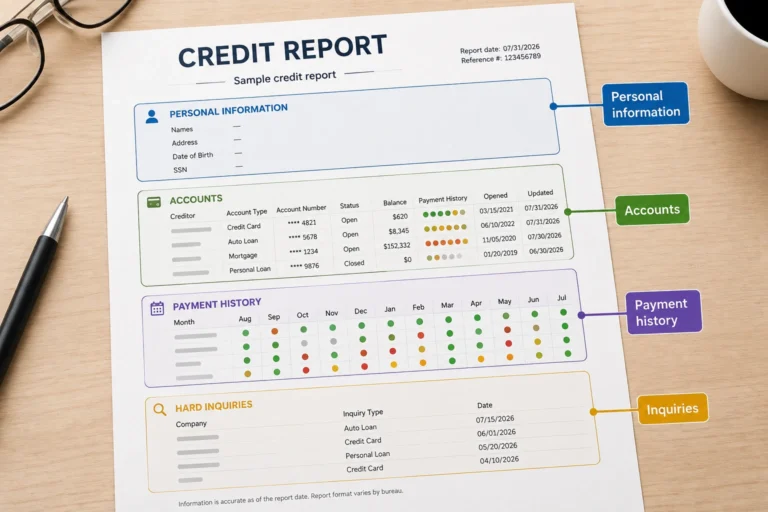
Why did my credit score drop for no reason

Credit score

You paid on time. You didn’t miss anything. And still, your credit score dropped. That is what makes it so frustrating. It feels random, unfair, and hard to explain — especially when nothing obvious changed.

This situation is more common than most people realize in the U.S. Many people see their credit score drop for no reason even when they did everything right. In most cases, the cause comes down to credit utilization, reporting timing, or a small update that happened quietly in the background.

The key thing to understand is this: a credit score almost never drops without a reason. There is always a specific trigger behind it — even if you cannot see it right away. Most of the time, the drop is not caused by a mistake, but by how your credit data was reported to the credit bureaus.

In this guide, you will learn exactly why your credit score dropped, the hidden factors most people miss, what to check first, and how to start fixing it step by step — so you can take back control of your credit score quickly.

Contents
  1. Quick answer: why did my credit score drop for no reason
  2. Why your credit score looks different on different apps
  3. Different credit bureaus
  4. Different update timing
  5. Different scoring models (FICO vs VantageScore)
  6. What this means for you
  7. Why your credit score dropped suddenly
  8. Credit utilization increased
  9. Missed or late payment
  10. Hard inquiry
  11. New account
  12. Negative mark
  13. Why your credit score dropped even though you did nothing wrong
  14. What this looks like in real life
  15. Why this happens so often
  16. What this means for you
  17. Hidden reasons people do not notice after a credit score drop
  18. Reporting cycle
  19. Balance fluctuations
  20. Bureau differences
  21. Authorized user changes
  22. Credit report errors
  23. What this means for you
  24. Why did my credit score drop 3, 10, 20, 50, or even 200 points
  25. Why did my credit score drop 3 or 10 points
  26. Why did my credit score drop 20 points
  27. Why did my credit score drop 50 points
  28. Why did my credit score drop 100 to 200 points
  29. What this means for you
  30. How serious is your credit score drop
  31. When to worry — and when not to worry about a credit score drop
  32. When a credit score drop is not a big deal
  33. When a credit score drop needs immediate attention
  34. Quick takeaway
  35. The biggest mistake people make after a credit score drop
  36. Mistake #1: panic and overreact
  37. Mistake #2: do nothing
  38. The real problem: guessing instead of checking
  39. What you should do instead
  40. Why this matters
  41. What to do in the first 24 hours after your credit score drops
  42. Step 1: check your credit card balances
  43. Step 2: check your statement closing dates
  44. Step 3: pull your full credit report
  45. Step 4: check for hard inquiries
  46. Step 5: look for account or limit changes
  47. Step 6: check for errors or suspicious activity
  48. Step 7: take the right action — not random action
  49. What happens next
  50. Why did my credit score drop after paying off debt or a credit card
  51. Why this happens
  52. The most common reasons your score drops after paying off debt
  53. Why this feels unfair
  54. Real scenarios where this happens
  55. Is this drop permanent?
  56. What you should do next
  57. What this means for you
  58. How to recover after a sudden credit score drop
  59. Lower your credit utilization
  60. Fix any payment issues immediately
  61. Dispute errors and incorrect data
  62. Pause new credit applications
  63. Let the reporting cycle catch up
  64. What most people get wrong
  65. What happens next
  66. What to do next
  67. When a credit score drop is temporary — and when it is serious
  68. When a credit score drop is temporary
  69. When a credit score drop is serious
  70. How to understand which one you are dealing with
  71. What this means for you
  72. How long does it take to recover from a credit score drop
  73. Fast recovery (a few weeks)
  74. Moderate recovery (1–3 months)
  75. Longer recovery (3–12+ months)
  76. Why recovery timing feels unpredictable
  77. What actually speeds up recovery
  78. What this means for you
  79. FAQ: credit score dropped for no reason
  80. Why did my credit score drop 50 points for no reason
  81. Why did my credit score drop 10 points
  82. Why did my credit score drop overnight
  83. Why did my credit score drop even though I paid on time
  84. Why did my credit score drop even though I did not miss a payment
  85. Does checking my credit score lower it
  86. Will my credit score go back up
  87. Why is my credit score different on different apps
  88. Why did my credit score drop 200 points
  89. Related guides to fix and improve your credit score
  90. Final thoughts

Quick answer: why did my credit score drop for no reason

A credit score almost never drops for no reason. If your credit score dropped for no reason, there is always a specific trigger behind it — even if you have not noticed it yet. In most cases, the drop is caused by higher credit utilization, reporting timing, a hard inquiry, a missed or late payment, or a change in your accounts such as a closed credit card or reduced credit limit.

This is why a sudden credit score drop feels confusing. From your side, nothing changed. But from the system’s side, your credit data was updated — and your score reacted immediately. One of the most common reasons is when a balance is reported before your payment is processed, making your utilization look higher than it actually is.

The fastest way to understand why your credit score dropped is to check your balances, payment history, recent inquiries, and full credit report. Once you identify the cause, you can fix it quickly — and in many cases, the drop is temporary and your score can recover within the next reporting cycle.

If you want a clear recovery plan, read this step-by-step guide to improving your credit score.

Why your credit score looks different on different apps

If your credit score dropped and you checked it in multiple apps, you may notice something confusing — the numbers are not always the same. This is completely normal.

You are not seeing one score — you are seeing different versions of your credit profile, calculated in different ways.

There are a few reasons why your credit score can look different depending on where you check it.

Different credit bureaus

Not all lenders report to the same credit bureaus. Some report to Experian, others to Equifax or TransUnion. Each bureau may have slightly different data, which means your credit score can vary between them.

Different update timing

Credit reports do not update in real time. One app may show a recent change immediately, while another still reflects older data. This can make it look like your credit score dropped suddenly in one place but not in another.

Different scoring models (FICO vs VantageScore)

Many apps show your VantageScore, while most lenders use FICO when making real lending decisions. Even though both models use similar credit data, they calculate your score differently. That means the same change in your credit profile can lead to different score movements.

What this means for you

If your credit score dropped, do not rely on just one number. Look at the overall trend across your reports and focus on what changed in your credit data.

A drop in one app does not always mean all your scores dropped the same way. The most important thing is not the exact number in one place — it is the reason behind the change.

Why your credit score dropped suddenly

why did my credit score drop for no reason infographic showing low credit score in red zone with main causes

If your credit score dropped suddenly, there is always a reason behind it. Credit scores respond to changes in your credit data — and every credit report update can trigger a change in your score, even if nothing feels different from your side.

In most cases, the reason is something small that happened before you noticed the drop.

Even small updates in balances, payments, or accounts can trigger a noticeable shift. What feels random is usually tied to reporting timing and how your information was updated.

This is exactly how the credit scoring system works in the U.S. Lenders report data to credit bureaus, and your score adjusts based on what is reported at that moment. It does not wait for explanations — it reacts to the numbers it sees.

Credit utilization increased

One of the most common reasons for a sudden credit score drop is higher credit utilization. Even if you pay your balance in full, your issuer may report your balance before the payment is processed. If that reported number is high, your score can drop.

You can use credit responsibly and still see a drop. If your balance was higher on the reporting date, your credit utilization increases — and your score reacts almost immediately.

Missed or late payment

A missed or late payment is one of the fastest ways to lower your score. Payment history is a major factor, so even one delay can have a strong impact. This is not a minor fluctuation — it signals increased risk to the system.

Hard inquiry

A hard inquiry happens when you apply for new credit. One inquiry may cause a small dip, but multiple applications in a short time can lower your score more noticeably.

New account

Opening a new credit account can lower your score because it reduces the average age of your credit history and adds a hard inquiry. Even though approval feels like progress, the scoring model treats it as a change in behavior.

Negative mark

A negative mark is one of the most serious reasons for a credit score drop. This can include collections, charge-offs, or newly reported late payments. These are reported events that directly impact your score.

But timing is not the only reason a score can drop. Sometimes the biggest confusion starts when you did everything right.

Why your credit score dropped even though you did nothing wrong

why did my credit score drop for no reason timeline showing statement balance reporting and temporary drop after payment

You paid on time. You didn’t miss anything. And still, your credit score dropped. That is what makes it so frustrating. It feels like nothing changed — so why did your credit score drop for no reason?

This situation is more common than most people realize. Many people see a sudden credit score drop even when they did everything right. In most cases, the reason comes down to timing, reporting, or small changes in their credit profile — not a mistake they made.

The key thing to understand is this: your score reacts to reported data, not intent. It reflects a snapshot of your credit profile at a specific moment, not your real-time behavior.

That is why a credit score drop can feel unfair. From your side, nothing changed. But from the system’s side, updated data was reported — and your score reacted to it.

In other words, you did not necessarily do anything wrong. Your credit profile was simply captured at a moment that worked against you.

What this looks like in real life

Sometimes the easiest way to understand this is to see how it happens in real situations:

  • Payment timing mismatch: You paid your credit card on the 28th, but your issuer reported your balance on the 26th. Your utilization looked higher at the time of reporting.
  • High statement balance: Your statement closed while your balance was still high, even though you paid it off later.
  • Credit limit decrease: Your limit dropped without notice, increasing your utilization instantly.
  • Loan payoff effect: You paid off a loan, but your score dipped because your credit mix changed.
  • New inquiry or account: A financing check or Buy Now, Pay Later plan added a hard inquiry or new account.

None of these situations automatically mean you made a mistake. They show how sensitive a credit score can be to timing and structural changes in your credit profile.

Why this happens so often

Credit scoring systems are built to measure risk based on reported data — not effort, intention, or financial discipline in real time.

That means even responsible behavior can look risky if your data is captured at the wrong moment. This is why a credit score can seem to drop for no reason, even when the cause is simply not obvious at first.

What this means for you

A sudden credit score drop does not automatically mean you are doing something wrong. In many cases, it means your data was reported at a moment that did not reflect your actual behavior.

The real mistake is not the drop itself — it is panicking instead of checking the cause.

Once you understand how this works, you stop guessing. You start checking the right details — and take control of what happens next.

Hidden reasons people do not notice after a credit score drop

This is where things get confusing. If your credit score dropped and you cannot find a clear reason, the cause is often hidden in small updates most people never notice.

A credit score drop rarely happens without a trigger. In many cases, the change is subtle — timing, reporting, or small background updates that are easy to miss.

The key idea is simple: your score reacts to reported data, not what you intended to do. If your data changes at the wrong moment, your score can change with it.

Reporting cycle

One of the most common hidden reasons is the reporting cycle. Lenders report your balance on a specific date — not in real time.

If your balance was higher at that moment, that is what gets reported. Even if you paid your card right after, your score may still reflect the higher amount.

Example: You pay your card in full on the 30th, but your issuer reported your balance on the 27th. Your score reflects the earlier, higher balance.

Balance fluctuations

Your balance changes throughout the month, but your score reacts to the reported number — not the average and not the final amount you paid.

If your balance was temporarily higher when reported, your credit utilization increases, and your score may drop — even if your overall behavior is responsible.

Example: You usually use 20% of your limit, but it briefly reached 60% before you paid it off. If that higher balance was reported, your score reflects 60%, not 20%.

Bureau differences

Not all credit bureaus update at the same time. One app may show a drop while another still shows older data.

This does not always mean a new problem. In many cases, it is simply timing differences between bureaus.

Authorized user changes

If you were added or removed as an authorized user, your credit profile can change immediately.

This can affect your available credit, account age, and utilization — even if you did nothing directly.

Example: You were removed from a high-limit card. Your available credit drops, and your utilization increases instantly.

Credit report errors

Sometimes the cause is a mistake on your credit report.

An incorrect late payment, wrong balance, duplicate account, or an account that does not belong to you can lower your score.

These errors do not fix themselves. If something looks wrong, review your full credit report and act quickly.

What this means for you

If your credit score dropped for no reason, the answer is usually hidden in one of these details. The change was not random — it was just not obvious at first.

Once you identify the cause, the situation becomes much clearer — and much easier to fix.

The next step is simple: find what changed, confirm the cause, and take the right action.

Why did my credit score drop 3, 10, 20, 50, or even 200 points

why did my credit score drop for no reason points scale showing 3 10 20 50 and 100 200 point drop severity

If your credit score dropped, the size of the drop tells you a lot about what actually happened.

Not every credit score drop means the same thing. Some changes are normal and temporary. Others are a clear signal that something more serious changed in your credit profile.

The key is simple: the bigger the drop, the more important it is to check what changed immediately.

Why did my credit score drop 3 or 10 points

A drop of 3 to 10 points is usually minor and very common. In most cases, it is caused by normal balance fluctuations, a small increase in credit utilization, or a recent hard inquiry.

This type of change is usually temporary and not a sign of a real problem.

Example: Your balance was slightly higher when reported, or you applied for a new credit card. Your score reacts, but the impact is small and often reverses quickly.

If your credit score dropped suddenly by a few points, it is usually nothing to worry about — just monitor your balances and wait for the next update.

Why did my credit score drop 20 points

A 20-point drop is more noticeable, but still often fixable.

This can happen when your credit utilization increases, your balance is reported higher than usual, a new account appears, or your credit limit is reduced.

This is a signal that something changed — but not necessarily something serious.

Example: Your card balance jumped from 20% to 50% utilization before reporting, or you opened a new account. Your score reacts to the change, even if you are managing your credit responsibly.

At this level, it is a good idea to review your recent activity and check your credit report.

Why did my credit score drop 50 points

A 50-point drop is a warning sign that should not be ignored.

This kind of change is often linked to a missed or late payment, a major increase in balances, a closed account, or a stronger negative update in your credit report.

This is where you should stop guessing and start checking your data immediately.

Example: A payment was reported late, your credit limit was reduced significantly, or your balance spiked across multiple accounts.

A drop at this level may still be fixable — but it requires attention and action.

Why did my credit score drop 100 to 200 points

A drop of 100 to 200 points is usually serious and requires immediate attention.

This level of change is often caused by a collection account, a major delinquency, a charge-off, identity theft, or a significant error on your credit report.

A drop this large almost always means there is a clear and specific cause.

Example: A debt was sent to collections, a payment was severely late, or an account appeared that does not belong to you.

If your credit score dropped this much, your first step should be to review your full credit report and identify exactly what changed.

What this means for you

Not all credit score drops are a problem — but the size of the drop tells you how serious the situation may be.

Small drops are usually temporary. Large drops require immediate attention.

Once you understand what level you are dealing with, you stop guessing and start focusing on the right next step.

How serious is your credit score drop

Not all credit score drops mean the same thing. The size of the drop can give you a quick clue about what may have changed — and how fast you need to act.

Size of drop What it usually means How serious it is What to do next
3–10 points Normal fluctuation, small balance change, or recent inquiry Low Monitor your balances and wait for the next update
20–50 points Higher utilization, limit decrease, or new account Moderate Review your credit report and recent activity
50+ points Missed payment, closed account, or negative update Serious Check your full credit report immediately
100–200 points Collections, delinquency, fraud, or major error Very serious Act now — review, dispute, and protect your credit

When to worry — and when not to worry about a credit score drop

If your credit score dropped, the most important question is simple: is this a real problem or just a temporary change?

Not every drop means something is wrong. Some changes are normal and fix themselves. Others require immediate attention.

When a credit score drop is not a big deal

  • 3–10 point drop
  • Temporary increase in credit utilization
  • Recent hard inquiry
  • Balance reported before payment
  • Normal reporting delay

In these cases, your credit score may drop suddenly — but this is usually temporary.

Your score is reacting to timing, not to a real problem.

Example: Your balance was reported before your payment cleared, or one bureau updated earlier than another. The drop looks sudden — but it often corrects itself after the next reporting cycle.

You do not need to panic. Just monitor your balances and wait for updated data.

When a credit score drop needs immediate attention

  • 50+ point drop
  • Missed or late payment
  • Collection or negative mark
  • Unknown account or suspicious activity
  • Incorrect delinquency or reporting error

These situations usually mean something significant changed in your credit profile.

This is not about timing — this is a real issue that needs to be checked.

Example: A payment was reported late, a collection appeared, or an account shows up that you do not recognize.

At this point, do not wait. Check your full credit report and identify the exact cause immediately.

Quick takeaway

A credit score drop is not always a crisis — but ignoring the wrong type of drop can make things worse.

Small drops usually fix themselves. Large drops require action.

The faster you understand which one you are dealing with, the faster you can take control of your credit score.

The biggest mistake people make after a credit score drop

The biggest mistake people make after a credit score drop is not the drop itself — it is how they react to it.

Most people fall into one of two extremes:

  • They panic and start doing random things
  • They ignore it and hope it fixes itself

Both reactions slow down recovery — and in some cases, make the situation worse.

Mistake #1: panic and overreact

When a credit score drops suddenly, it feels urgent. People start applying for new credit, paying off everything at once without a plan, or making multiple changes at the same time.

This is where things go wrong.

Applying for new credit creates hard inquiries. Closing accounts can reduce your available credit. Moving money around without understanding the cause can make your utilization worse instead of better.

Instead of fixing the problem, panic creates more signals that can push your score down even further.

Mistake #2: do nothing

The opposite reaction is just as dangerous. Some people assume the drop is temporary and ignore it completely.

But small problems do not stay small:

  • a high balance stays reported
  • a missed payment becomes more damaging over time
  • an error stays on your report longer than it should

The system keeps updating whether you act or not. Waiting does not protect your score — it delays recovery.

The real problem: guessing instead of checking

A credit score drop is not random — it is data.

But most people try to fix it without knowing what actually changed.

They guess. They assume. They react emotionally.

And that is exactly why recovery takes longer than it should.

What you should do instead

A credit score drop is not a signal to panic — it is a signal to investigate.

The correct approach is simple:

  • check what changed in your balances
  • review your payment history
  • look for new inquiries or accounts
  • scan your credit report for errors

Once you find the cause, the situation becomes clear — and fixable.

Why this matters

The faster you identify the cause, the faster you can recover.

Most credit score drops are not permanent. But delays, wrong actions, and emotional decisions can turn a small issue into a bigger one.

When you stop guessing and start checking, everything changes. You move from confusion to control — and that is what actually improves your credit score.

What to do in the first 24 hours after your credit score drops

what to check immediately if your credit score dropped for no reason checklist balances payment history inquiries accounts report

If your credit score dropped, the first 24 hours matter more than you think. This is the moment where you either take control — or lose time guessing.

The goal is simple: find the cause fast and stop further damage.

Do not panic. Do not make random moves. Follow this exact step-by-step plan.

Step 1: check your credit card balances

Start with your current balances on every credit card.

Look for anything higher than usual. Even if you already made a payment, your issuer may have reported your balance before it was processed.

This is one of the most common reasons for a sudden credit score drop. A higher reported balance increases your credit utilization — and your score reacts to that number immediately.

Step 2: check your statement closing dates

Your credit score is based on what was reported — not what you paid later.

Find out when your statement closed and what balance was reported at that moment.

If your balance was high on that date, your score may drop even if you paid everything off right after.

Step 3: pull your full credit report

Do not rely only on apps or summary scores.

Open your full credit report and look at the actual data.

Focus on:

  • new accounts
  • updated balances
  • late payments
  • anything recently added or changed

This is where you will usually find the real reason behind the drop.

Step 4: check for hard inquiries

If you recently applied for a credit card, loan, financing, or even some Buy Now, Pay Later services, a hard inquiry may appear.

One inquiry is small — but multiple inquiries in a short time can lower your score more noticeably.

Check if anything was added without you paying attention.

Step 5: look for account or limit changes

Sometimes the change is not something you did — it is something that changed around you.

Look for:

  • a reduced credit limit
  • a closed account
  • a newly opened account

These changes affect your total available credit and can increase your utilization instantly — even if your spending did not change.

Step 6: check for errors or suspicious activity

Now look deeper.

Scan your report for anything that does not belong there:

  • incorrect late payments
  • wrong balances
  • duplicate accounts
  • accounts you do not recognize

If something looks wrong, do not wait. Errors and fraud can cause serious drops and should be handled immediately.

Step 7: take the right action — not random action

Once you find the cause, your next move becomes clear.

  • If it is utilization → lower your balance
  • If it is timing → wait for the next reporting cycle
  • If it is an error → dispute it immediately
  • If it is a missed payment → fix it and prevent it from happening again

The mistake is not the drop — the mistake is reacting without understanding the cause.

What happens next

Once you identify the reason, everything becomes easier. You stop guessing. You stop worrying. You start fixing.

But waiting too long can keep the problem active. A high balance keeps hurting your utilization, errors stay active until you dispute them, and fraud can get worse if you ignore it.

Most credit score drops are temporary — but only if you respond correctly.

The faster you act, the faster your score can recover.

Why did my credit score drop after paying off debt or a credit card

If your credit score dropped after paying off debt or after paying off a credit card, it can feel completely backward. You did exactly what you were supposed to do — you reduced your debt, paid everything off, and expected your score to go up.

But instead, your score dropped.

This is one of the most confusing situations in credit scoring — and it happens more often than people think.

Why this happens

A credit score does not only measure how much debt you have. It measures how your entire credit profile is structured.

When you pay something off, you are not just removing debt — you are changing your credit profile.

And sometimes, that change temporarily works against your score.

The most common reasons your score drops after paying off debt

  • Your credit mix changed. If you paid off a loan, you may now have fewer types of credit accounts. Credit scoring models reward a mix of credit types, so removing one can cause a small temporary drop.
  • An account was closed. When a loan is fully paid off, it is often marked as closed. Closed accounts can eventually reduce the strength of your credit history over time.
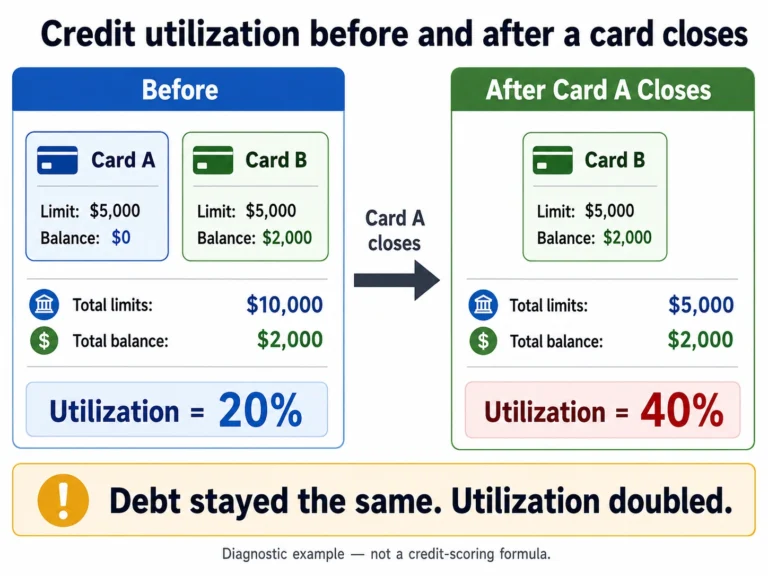
  • Your available credit decreased. If you paid off and then closed a credit card, your total available credit dropped. This can increase your credit utilization — even if your spending did not change.
  • Your balance updated at the wrong time. Sometimes your report reflects a transition period where the old balance is gone, but the new structure has not stabilized yet. This can cause a temporary dip.
  • Your average account age shifted. Changes in active accounts can slightly affect the overall age of your credit history.

Why this feels unfair

From your point of view, you improved your situation. You reduced risk. You paid off debt.

But the system is not reacting to the idea of “being responsible” — it is reacting to how your data changed.

That is why your credit score can drop even when your financial behavior improved.

Real scenarios where this happens

  • You paid off a personal loan — and your score dropped because your credit mix changed
  • You paid off a credit card and closed it — and your utilization increased because your available credit decreased
  • You paid everything off at once — and your report updated in a way that temporarily shifted your profile

In all of these cases, you did the right thing — but your score still reacted to the structural change.

Is this drop permanent?

In most cases, no.

If your credit score dropped after paying off debt, the change is often temporary. Once your credit report stabilizes and new data is reported, your score can adjust again.

This usually happens within the next reporting cycle.

What you should do next

If your credit score dropped after paying something off, do not panic.

  • check if an account was closed
  • review your total available credit
  • look at your updated utilization
  • make sure your report reflects the correct balances

In most cases, the best move is not to fix — but to understand and wait.

What this means for you

A credit score drop after paying off debt does not mean you made a mistake.

It means your credit profile changed — and the system is adjusting to that change.

Once you understand this, the situation becomes much less stressful. You stop questioning your actions — and start reading how the system responds.

How to recover after a sudden credit score drop

how to recover after a credit score drop step by step roadmap lower utilization fix payments dispute errors avoid new accounts wait

If your credit score dropped suddenly, the worst thing you can do is ignore it or guess what went wrong.

Credit scores react fast — and small issues can turn into bigger problems if you do not act.

The good news is that most credit score drops are not permanent. Once you identify the cause and respond correctly, your score can start improving faster than you expect.

The strategy is simple: find the cause and act on it immediately.

Lower your credit utilization

If your credit utilization increased, this is often the fastest issue to fix.

Focus on reducing your balances as soon as possible. Even one card with a high reported balance can affect your entire credit profile.

Once your lower balance is reported in the next cycle, your score can begin to recover quickly.

Fix any payment issues immediately

If the drop was caused by a missed or late payment, act right away.

Bring the account current as soon as possible. Payment history is one of the strongest factors in your score, and delays have a direct impact.

Then make sure it does not happen again — consistency is what rebuilds your score over time.

Dispute errors and incorrect data

If something on your credit report is wrong, it will continue to lower your score until it is fixed.

Check for incorrect balances, false late payments, duplicate accounts, or accounts that do not belong to you.

If the data is inaccurate, file a dispute with the credit bureau and the lender immediately. Errors do not correct themselves.

Pause new credit applications

If your credit score already dropped, avoid adding more pressure.

Do not apply for new credit unless absolutely necessary.

New applications create hard inquiries and can reduce the average age of your accounts — both of which can slow down recovery.

Let the reporting cycle catch up

Not every credit score drop needs an active fix.

If the cause was timing or a temporary balance increase, your score may recover on its own after the next reporting cycle.

This is especially common when balances were reported before payments were processed.

What most people get wrong

Many people try to fix everything at once — and end up making things worse.

The goal is not to react fast — it is to react correctly.

Once you understand what caused the drop, your next step becomes obvious.

What happens next

Once the right changes are made and new data is reported, your credit score can start moving in the right direction.

Recovery does not come from guessing — it comes from targeted action and consistent behavior.

In many cases, improvement begins within the next reporting cycle.

What to do next

If your credit score dropped, do not guess, do not wait. The faster you identify the cause and act, the faster you can start recovering.

Your next move should be simple: check what changed, fix what you can, and follow a clear recovery plan.

Start with the basics. Review your balances, check your full credit report, look for recent inquiries, and confirm whether the drop was caused by timing, utilization, an account change, or an actual negative mark.

If you wait too long, the problem can stay active longer than it should. A high balance keeps affecting your utilization. An error stays on your report. A missed payment becomes harder to recover from over time.

Small delays can turn into bigger setbacks if nothing changes.

That is why the best next step is not random action — it is a clear plan.

How to improve your credit score step by step

This guide will show you exactly what to do, in the right order, so you can rebuild your score, avoid the same mistakes in the future, and move your credit in the right direction with confidence.

When a credit score drop is temporary — and when it is serious

Not every credit score drop means the same thing. Some changes are short-term and fix themselves. Others signal a real issue that needs attention.

The key difference is simple: what caused the drop.

When a credit score drop is temporary

Temporary drops are usually linked to timing, reporting cycles, or short-term balance changes — not a problem with your behavior.

In most cases, your data was reported at a moment that made your profile look riskier than it actually is.

Common situations include:

  • Balance reported before payment — your utilization appears higher than it really is
  • Temporary increase in utilization — a short-term balance spike affects your score
  • High statement balance — the reported number is higher than your usual usage
  • Recent hard inquiry — applying for credit causes a small dip
  • Reporting timing differences — your data updates at different times across systems

In these cases, the drop may look sudden — but there is no long-term damage.

Once updated data is reported in the next cycle, your score can recover naturally without major action.

When a credit score drop is serious

Larger drops are usually tied to changes that directly affect how lenders evaluate your risk.

These are structural changes, not timing issues.

Watch closely if you notice:

  • Missed or late payment — one of the strongest negative signals
  • Collection or negative mark — indicates unresolved debt
  • Credit limit decrease — increases utilization immediately
  • Closed account — reduces available credit
  • Incorrect or suspicious data — errors or fraud can cause sharp drops

These situations usually do not fix themselves. They require action to stop further damage and start recovery.

How to understand which one you are dealing with

If you are unsure, focus on one question:

Did something structural change — or was it just timing?

  • If it is timing or balances → your score will likely recover on its own
  • If it is a negative mark or account change → you need to act

What this means for you

A credit score drop is not automatically bad news. In many cases, it is a temporary reaction, not a long-term problem.

The real mistake is not the drop — it is not checking the cause.

Once you understand what changed, you stop guessing — and start making the right decisions for your credit.

How long does it take to recover from a credit score drop

How long it takes to recover from a credit score drop depends entirely on what caused it.

Some drops recover quickly. Others take time.

The key difference is whether the change was temporary — or something that affects your credit history long-term.

Fast recovery (a few weeks)

If your credit score dropped because of timing or balance changes, recovery can happen relatively quickly.

This usually applies when the drop was caused by:

  • higher credit utilization
  • a balance reported before your payment was processed
  • short-term balance fluctuations
  • reporting timing differences

In these cases, your score may start improving as soon as updated data is reported.

This often happens within one reporting cycle — typically a few weeks.

Moderate recovery (1–3 months)

If the drop was caused by something slightly more impactful, recovery may take longer.

Common examples include:

  • hard inquiries from recent applications
  • opening a new account
  • a temporary change in your credit profile structure

These factors still improve over time — but they do not disappear immediately.

As your profile stabilizes and positive data is reported, your score gradually recovers.

Longer recovery (3–12+ months)

If your credit score dropped because of a negative event, recovery takes more time and consistency.

This includes:

  • missed or late payments
  • collections or charge-offs
  • serious negative marks

These events stay on your credit report and continue to affect your score.

Recovery is still possible — but it requires consistent on-time payments and stable credit behavior over time.

Why recovery timing feels unpredictable

One of the most confusing parts of a credit score drop is that recovery does not always happen instantly — even after you fix the issue.

This is because your score updates based on reporting cycles, not real-time actions.

You may fix a problem today, but your score will only reflect that change once new data is reported.

What actually speeds up recovery

You cannot force your score to go up overnight — but you can influence how fast it improves.

The key actions are:

  • lowering your credit utilization
  • making all payments on time
  • avoiding new unnecessary credit applications
  • correcting any errors on your credit report

These signals show stability — and that is what credit scoring models respond to.

What this means for you

A credit score drop is not permanent.

The timeline depends on the cause — but recovery always starts once the right changes are in place.

A small timing issue can recover quickly. A more serious problem takes patience and consistency.

But in both cases, the sooner you understand what caused the drop, the sooner your score can start moving in the right direction.

FAQ: credit score dropped for no reason

Why did my credit score drop 50 points for no reason

If your credit score dropped 50 points, there is almost always a clear reason — even if you have not noticed it yet.

This level of drop usually means something meaningful changed in your credit profile, such as:

  • a missed or late payment
  • a significant increase in credit utilization
  • a closed account or reduced credit limit
  • a new negative mark or collection

A drop of this size is not random — it is a signal to check your full credit report immediately.

Why did my credit score drop 10 points

A 10-point drop is usually minor and often temporary.

It can happen because of:

  • a small increase in your balance
  • a recent hard inquiry
  • a routine update in your credit data

This kind of change is normal and does not usually require urgent action.

Why did my credit score drop overnight

If your credit score dropped overnight, it likely did not happen instantly — it just updated all at once.

Credit scores change when new data is reported, not when you take action.

This may include:

  • a higher reported balance
  • a new inquiry
  • an account update
  • a late payment being reported

The drop feels sudden, but the change was already building in the background.

Why did my credit score drop even though I paid on time

If your credit score dropped even though you paid on time, the cause is usually timing — not your behavior.

Your balance may have been reported before your payment was processed.

This makes your credit utilization appear higher, which can temporarily lower your score.

This is one of the most common reasons people feel like their credit score dropped for no reason.

Why did my credit score drop even though I did not miss a payment

Payment history is important — but it is not the only factor.

Your score also reacts to balances, available credit, inquiries, and account changes.

That means your score can drop even with perfect payments if something else in your credit profile changed.

Most scoring models, including FICO, update your score based on reported data — which is why timing and structure matter.

Does checking my credit score lower it

No — checking your own credit score does not lower it.

This is called a soft inquiry and has no impact on your score.

Only hard inquiries from lenders (when you apply for credit) can cause a small drop.

Will my credit score go back up

Yes — in many cases, your credit score will go back up.

If the drop was caused by utilization, timing, or a small inquiry, recovery can happen quickly.

If the cause was a negative mark, recovery takes longer — but improvement is still possible with consistent positive behavior.

Why is my credit score different on different apps

Your credit score can look different across apps for three main reasons:

  • different credit bureaus (Experian, Equifax, TransUnion)
  • different update timing
  • different scoring models (FICO vs VantageScore)

A change in one app does not always mean all your scores dropped the same way.

Why did my credit score drop 200 points

A 200-point drop is usually serious and requires immediate attention.

This may be caused by:

  • a collection account
  • a major delinquency
  • a charge-off
  • identity theft or fraud
  • a significant error on your credit report

If this happens, check your full credit report immediately and act without delay.


If your credit score dropped for no reason, understanding the cause is only the first step. The next step is knowing exactly how to respond — and how to rebuild your score the right way.

Start with these guides:

The key is simple: do not guess, do not wait, and do not ignore the drop. The faster you move from confusion to action, the faster your credit score can recover.

Final thoughts

If your credit score dropped for no reason, it can feel random and unfair — but in reality, there is almost always a cause.

In most cases, the change comes down to timing, reporting, or small updates that were not obvious at first.

The key is simple: do not panic — check what changed. Your score reacts to data, and once you find the trigger, the situation becomes much clearer.

Sometimes the drop is temporary, caused by utilization or reporting timing. Other times, it signals a real issue like a missed payment, negative mark, or error that needs attention.

Either way, most situations are fixable once you understand the cause.

Your credit score is not permanent. It changes based on your data and your actions — which means you can influence what happens next.

The real mistake is not the drop — it is ignoring it or guessing instead of checking.

The faster you identify the cause, the faster you can recover and rebuild your score.

If you want a clear recovery plan, follow this step-by-step guide to improving your credit score.


Rate article
Fix My Money Life
Add a comment