In this guide
- Three-bureau paid charge-off worksheet
- Should a paid charge-off show a $0 balance?
- First, make sure you are looking at the current balance
- Why can a paid charge-off still show a balance?
- How long should you wait before taking action?
- What to do if a paid charge-off still shows a balance
- Evidence checklist for a wrong paid charge-off balance
- What to say when you call the creditor, collector, or debt buyer
- Sample wording for an incorrect paid charge-off balance
- What if only one credit bureau still shows a balance?
- What if the creditor says you still owe a balance?
- What if the original creditor and a collection agency both show a balance?
- Will correcting the balance improve your credit score?
- Does a $0 balance remove the charge-off?
- What if the balance is still wrong after a dispute?
- Common mistakes to avoid
- Frequently asked questions
- Bottom line
- Official sources
- Related guides
- About this guide
- Financial and legal disclaimer
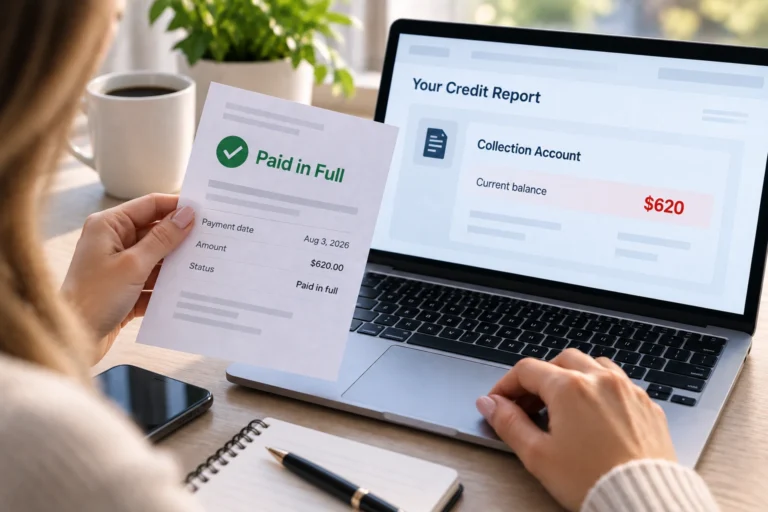
Paid charge-off still showing balance? If you paid a charged-off account in full, the current balance should generally update to $0 after the furnisher processes the payment and reports the change. If you completed a settlement and the written agreement says no additional amount is due, a continuing current balance may also need review. But a $0 balance does not mean the historical charge-off must disappear.
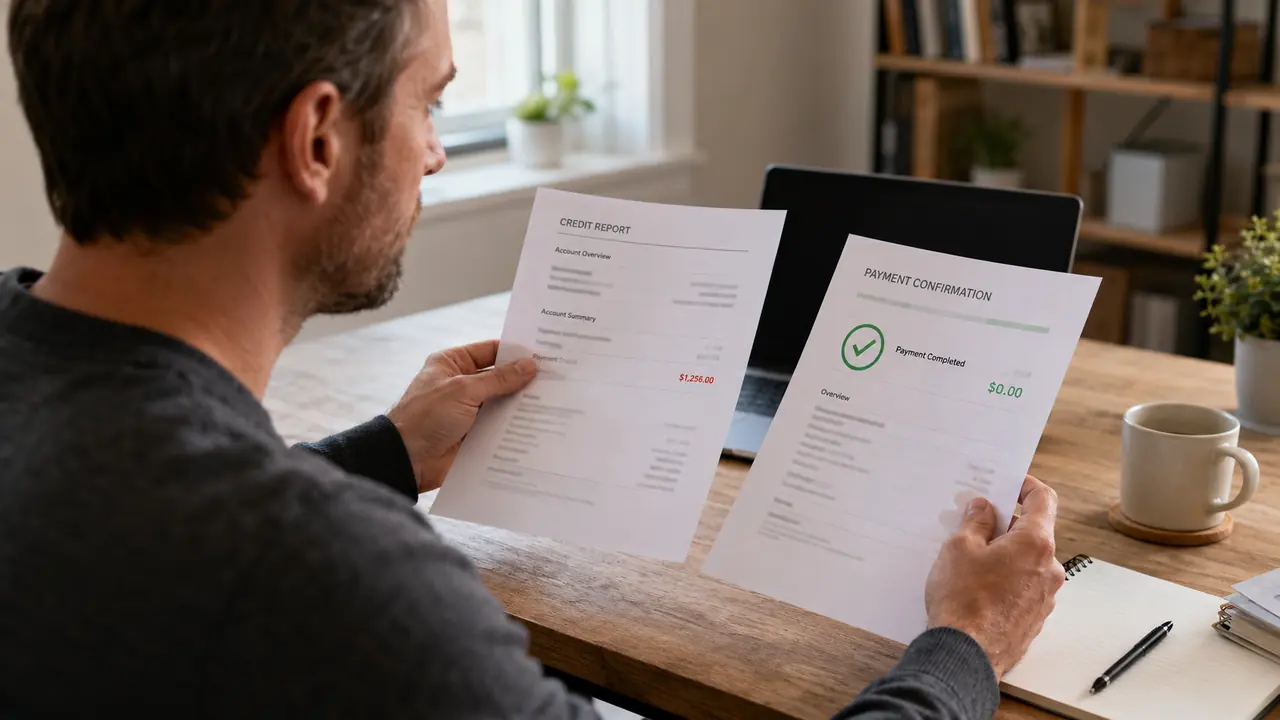
The first job is to confirm that the number you are seeing is actually the current balance, not the historical amount charged off. Then compare all three credit reports with your final statement, payment confirmation, or settlement agreement before deciding whether to wait, contact the furnisher, or dispute a specific error.
This article is about one narrow problem: a paid or resolved charge-off that still appears to show money currently owed. If the balance belongs to a separate collection tradeline rather than the original charged-off account, use the guide on a paid collection that still shows a balance. If you need a basic explanation of the charge-off status itself, start with what a charge-off means on your credit report. If you are deciding how the account should be described after payment, compare settled charge-off vs. paid in full. For the full topic cluster, browse the Charge-offs hub.
Three-bureau paid charge-off worksheet
Use this worksheet to compare the same fields across your reports and payment records. If your evidence identifies an error, you can dispute it without waiting for a phone call or an arbitrary number of days.
| Field | Equifax | Experian | TransUnion | Your records |
|---|---|---|---|---|
| Current balance | ___ | ___ | ___ | ___ |
| Amount past due | ___ | ___ | ___ | ___ |
| Payment status | ___ | ___ | ___ | ___ |
| Account status | ___ | ___ | ___ | ___ |
| Date last updated | ___ | ___ | ___ | ___ |
| Creditor or current owner | ___ | ___ | ___ | ___ |
| Remarks | ___ | ___ | ___ | ___ |
If all three reports show a $0 current balance but continue to show the historical charge-off, you may not have a balance error. If your final account records show $0 and one report still shows money currently owed, you have a much more specific issue to investigate.
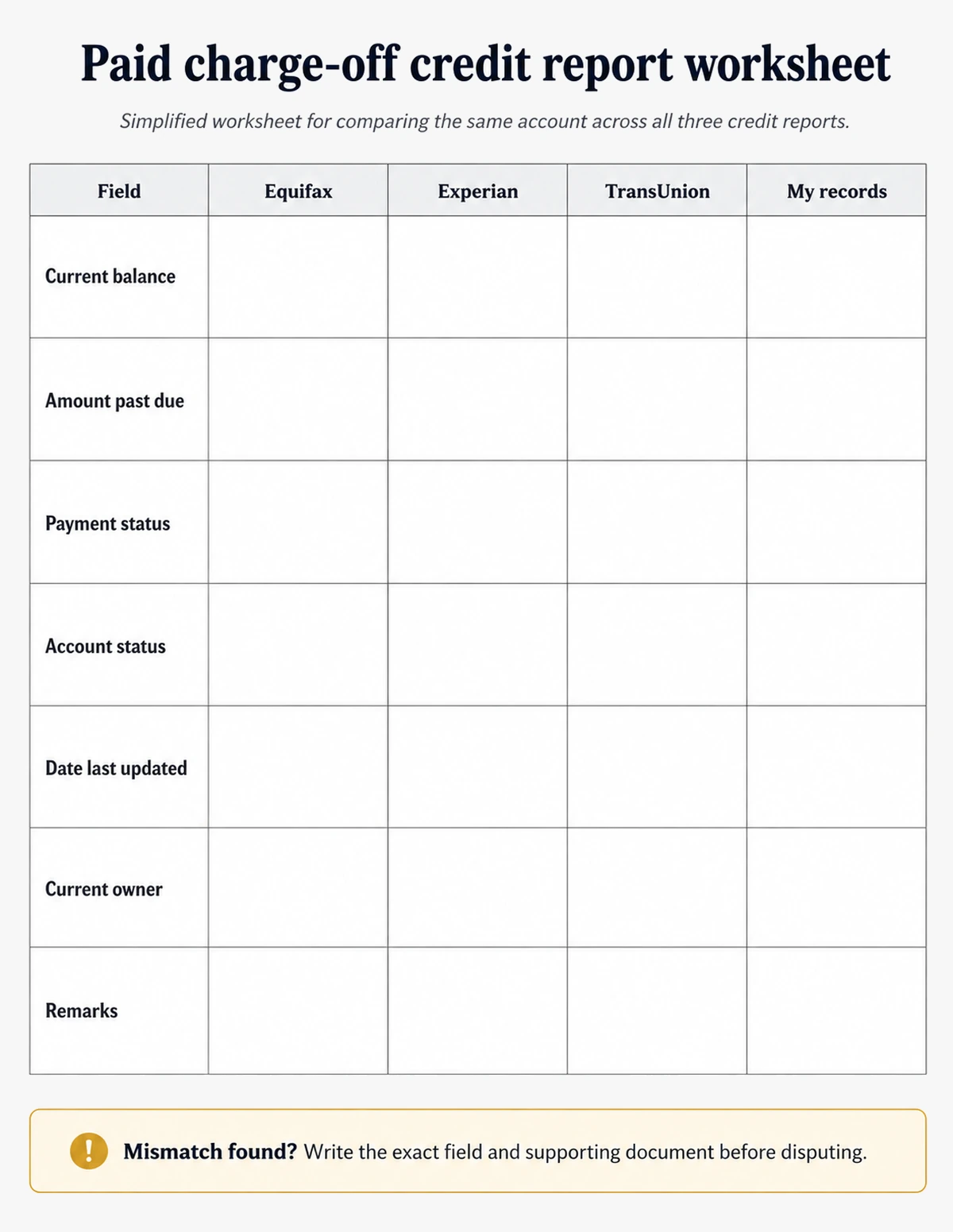
Mismatch found? Write down the exact field, the amount shown, and the supporting document before filing a dispute.
Should a paid charge-off show a $0 balance?
If the account was paid in full, a correctly updated tradeline should generally no longer show an outstanding current balance. Experian’s furnisher guidance lists a final status for a paid charge-off as a paid-in-full charge-off, and consumer guidance from Experian explains that a charged-off account paid in full should update to reflect payment.
A settlement is different from paying the original balance in full. If your written settlement says that completing the agreed payments resolves the debt and nothing else remains due, the report should not continue to show an amount as currently owed that conflicts with that agreement. The status may still say settled or paid for less than the full balance rather than paid in full.
| What happened | Current balance you would generally expect | What may still remain |
|---|---|---|
| Paid the full amount owed | $0 after the update is furnished | Historical charge-off status and prior late-payment history |
| Completed a written settlement that resolves the debt | $0 if no additional amount remains due under the agreement | Settled or paid-for-less-than-full-balance wording |
| Made only a partial payment | The legitimate remaining amount may still appear | Charge-off history plus the remaining balance |
| Original creditor sold the debt | The original creditor generally should no longer show the sold balance as owed to it | The original charge-off may remain; a separate collection account may appear |
| Original creditor still owns the debt | A balance may remain if money is still legitimately due | Charge-off history and the outstanding amount |
Paid charge-off balance checker
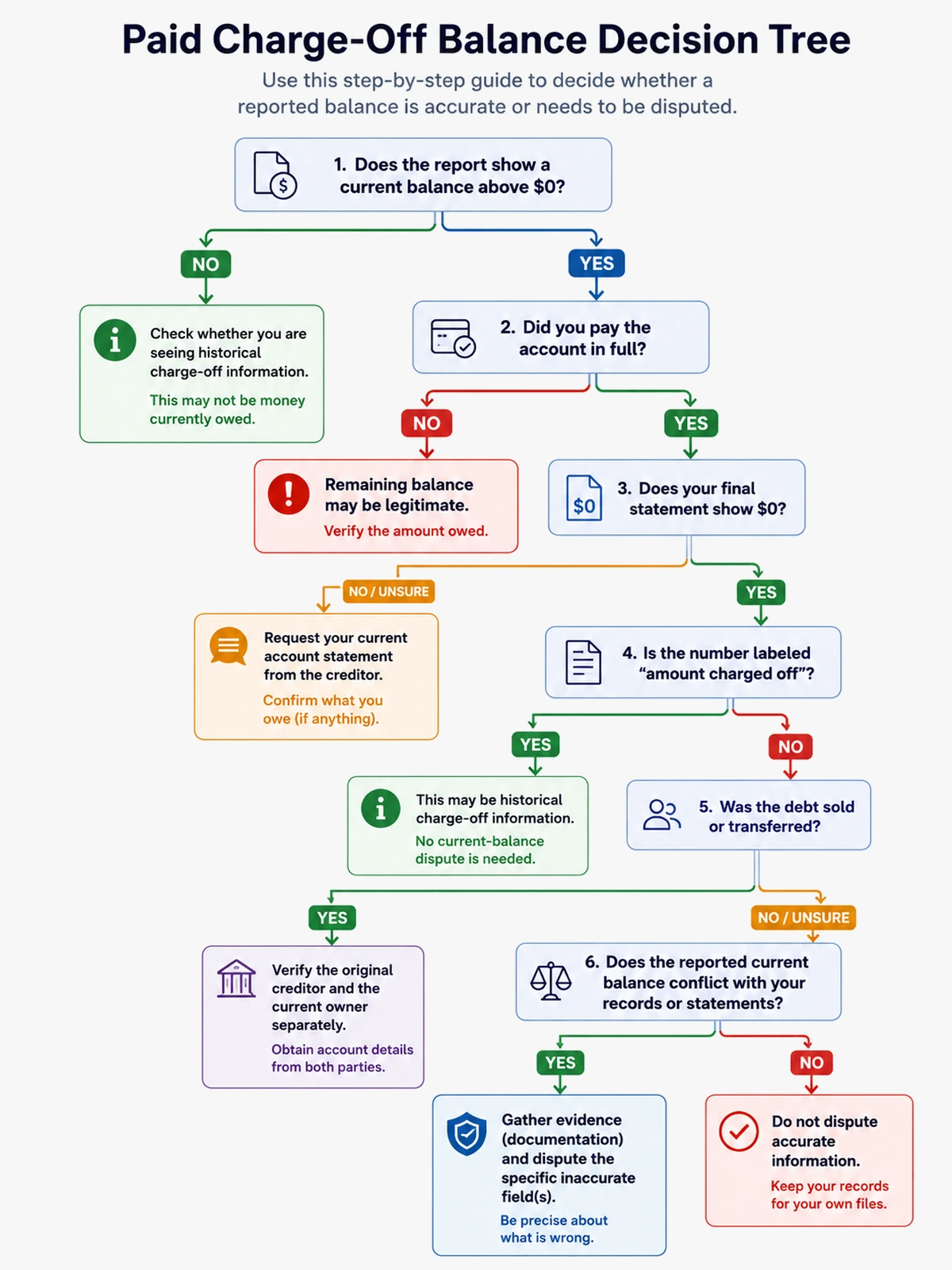
Use this quick decision path before you contact a bureau:
- Does the report show a current balance above $0? If no, stop and check whether the number bothering you is only the historical amount charged off.
- Did you pay the account in full? If yes, compare the reported current balance with your final statement or paid-in-full confirmation.
- Did you settle instead? If yes, confirm that every required payment cleared and that the agreement says no additional amount remains due.
- Does the furnisher’s own system show $0? If yes but the bureau still shows a balance, save written confirmation and focus on the bureau mismatch.
- Does the furnisher still show money due? Request a written accounting before disputing the bureau. You need to know whether the disagreement is about reporting or about the debt itself.
- Do your documents clearly support a different balance? If yes, dispute that exact field with the affected bureau and furnisher. If no, gather better records before filing.
Decision rule: dispute a specific inaccurate or incomplete field, not the existence of an accurate historical charge-off.
First, make sure you are looking at the current balance
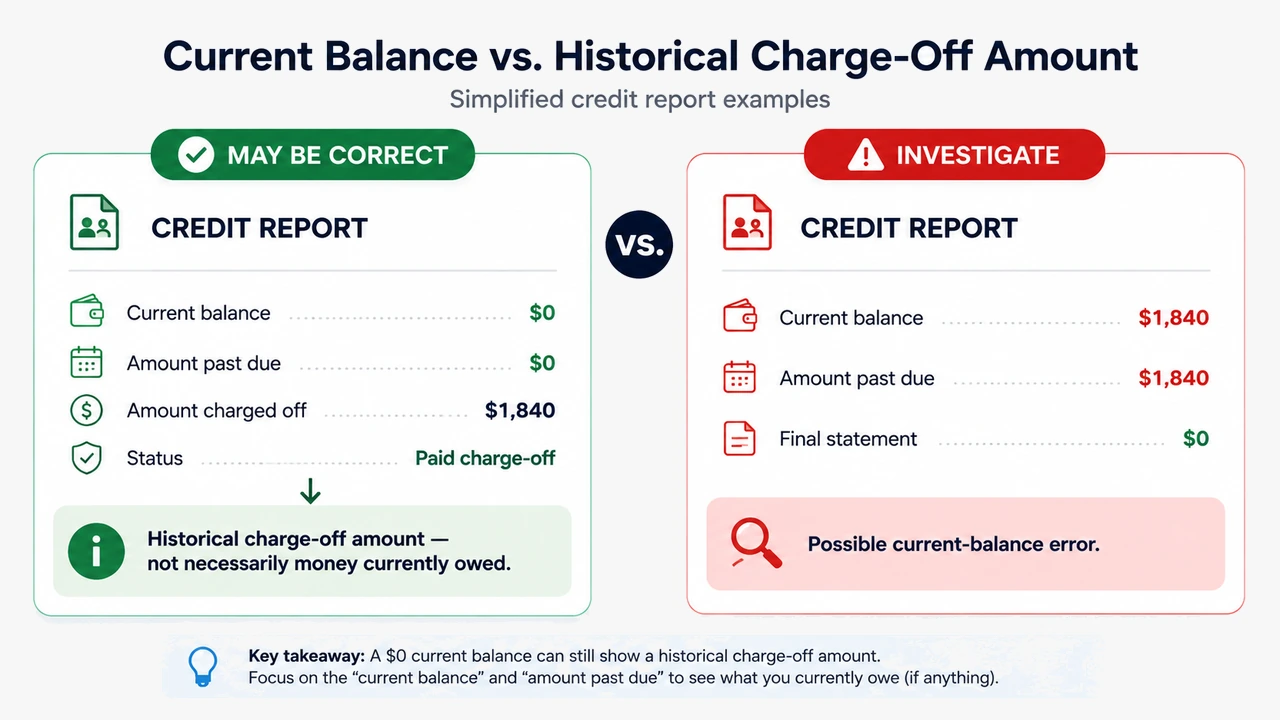
A common source of confusion is that a credit report can show more than one dollar amount for the same charged-off account. The amount originally charged off can remain as historical information even after the amount currently owed has been reduced to $0.
Do not dispute the account just because you still see the old charge-off amount somewhere on the report. Look at the field labels.
Example A — likely not a current-balance error
Current balance: $0
Amount past due: $0
Amount charged off: $1,840
Status: Paid charge-off
The $1,840 can be historical information. The report is not necessarily saying that you still owe $1,840 today.
Example B — worth investigating
Current balance: $1,840
Amount past due: $1,840
Final creditor statement: $0
Payment confirmation: payment completed
Here, the current balance conflicts with the account records. That is a specific factual mismatch you can investigate and, if necessary, dispute.
If your report uses unfamiliar fields, read how to read your credit report step by step before taking action.
Why can a paid charge-off still show a balance?
A nonzero balance after payment does not always mean the bureau made an error. The problem can be a reporting delay, an incomplete settlement, a payment that was applied incorrectly, a change in debt ownership, or a misunderstanding of which field you are reading. If the balance is actually increasing rather than simply remaining unchanged, see why a charge-off balance may keep increasing and how to reconcile the added amount.
The payment has not been reflected in the latest reporting yet
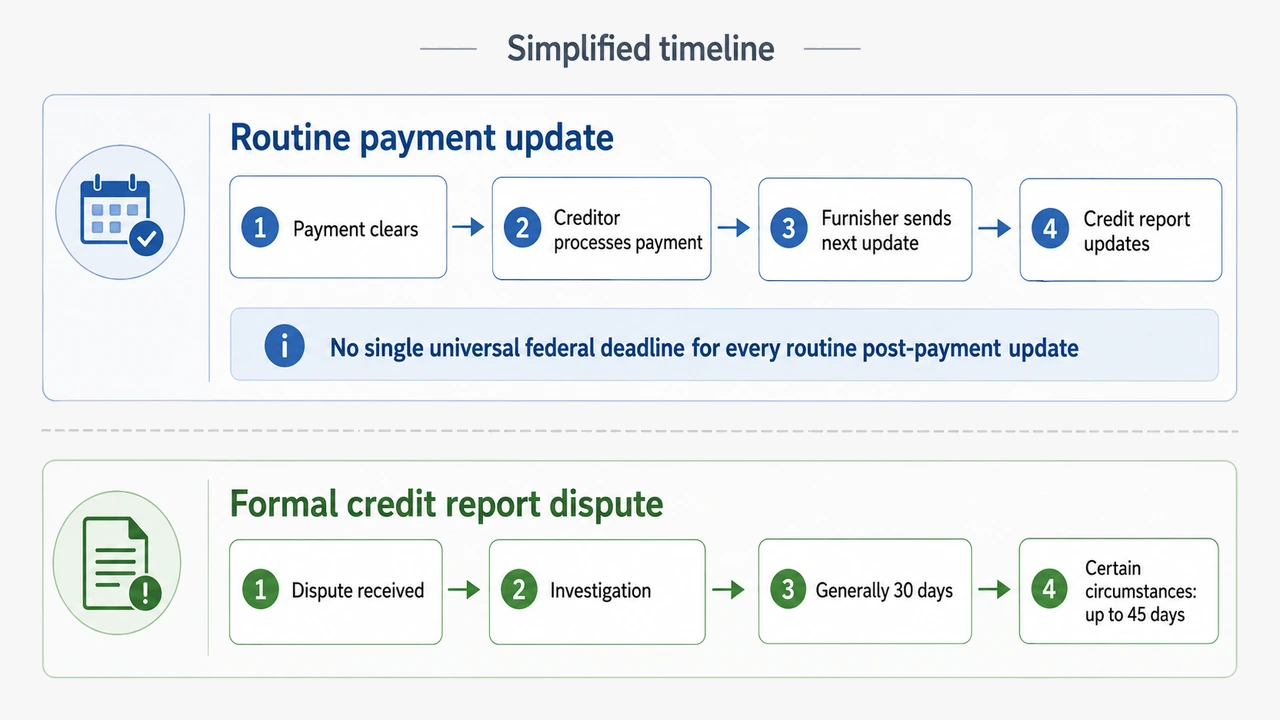
Your credit report normally does not change the moment money leaves your bank account. The creditor, collector, or debt buyer has to process the payment and then furnish updated account information.
There is no single federal rule that says every routine post-payment balance update must appear on every bureau report within a fixed number of days. That is different from the legal timeline for a formal credit-report dispute. If your concern is that the charge-off itself keeps receiving fresh monthly updates, see whether a charge-off can be reported every month and which fields matter most.
Before disputing, ask the furnisher four questions: When did the payment post? What balance does your system show now? When was the account last furnished? Which credit reporting companies received the update?
The payment was applied incorrectly, reversed, or posted to the wrong account
A bank transaction proves money moved, but it does not always prove the creditor applied it correctly. Compare your receipt with the creditor’s own transaction history. Watch for a returned payment, wrong account reference, duplicate account, payment posted to another debt, or a settlement payment treated as an ordinary partial payment.
If the company’s records still show a balance, request a written accounting rather than guessing.
You did not complete every term of the settlement
If the settlement required several payments, a specific deadline, or a specific total, review the agreement line by line. One missing or reversed payment can change whether the settlement was completed.
If you did complete the agreement, keep both the written settlement and proof that every required payment cleared. For a deeper comparison of the two outcomes, see settled charge-off vs. paid in full.
The debt was sold or transferred
If the original creditor sold a charged-off debt, the original creditor generally should not continue showing that sold balance as money currently owed to it. Experian explains that when a creditor sells a charged-off account to a collection agency, the balance on the original account updates to $0 and the collection agency becomes the party to address for the debt.
That does not mean the original charge-off disappears. The historical original account and a separate collection account can both appear on your report.
Only one bureau has stale or inconsistent information
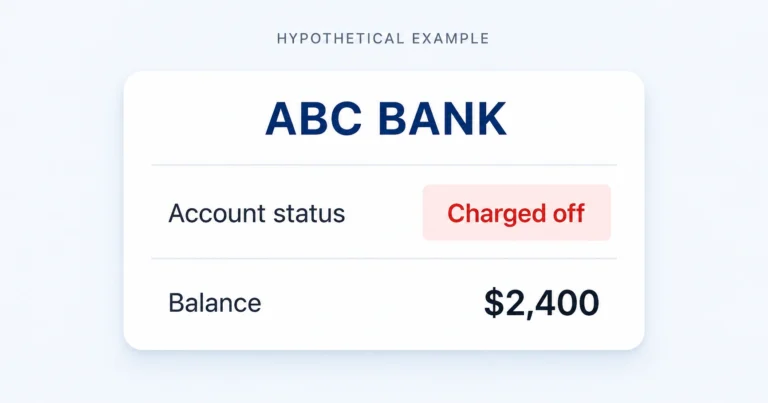
Equifax, Experian, and TransUnion maintain separate files. If two reports show a $0 current balance and one still shows $2,400 owed, do not assume the two matching reports automatically correct the third. Compare the last-updated date, status, and balance on each bureau separately.
How long should you wait before taking action?
If the furnisher confirms that the payment just posted and an update is already scheduled, waiting for the next reporting cycle may be reasonable. But there is no universal routine-update deadline that applies to every creditor and every paid charge-off.
A formal dispute has a different timeline. Under the Fair Credit Reporting Act, a credit reporting company generally has 30 days after receiving a dispute to complete a reasonable reinvestigation. That period can be extended by up to 15 additional days if you provide relevant additional information during the original 30-day period.
| Situation | Practical next step |
|---|---|
| Payment cleared very recently and furnisher confirms an update is pending | Save the confirmation and recheck the affected reports after the furnisher’s stated reporting cycle |
| Furnisher already shows $0, but one bureau still shows a balance | Save written proof from the furnisher and consider disputing that bureau’s current-balance field |
| Furnisher says you still owe money | Request a written accounting before disputing the bureau |
| Settlement is complete but report still shows the pre-settlement balance | Compare the settlement agreement, payment proof, and report; dispute the exact mismatch if supported |
| Current balance is $0 and only the historical charge-off amount remains | There may be no current-balance error to dispute |
What to do if a paid charge-off still shows a balance
Use this five-step process in order. The goal is to determine whether the balance is actually inaccurate and, if it is, create a clean evidence trail for the correction.
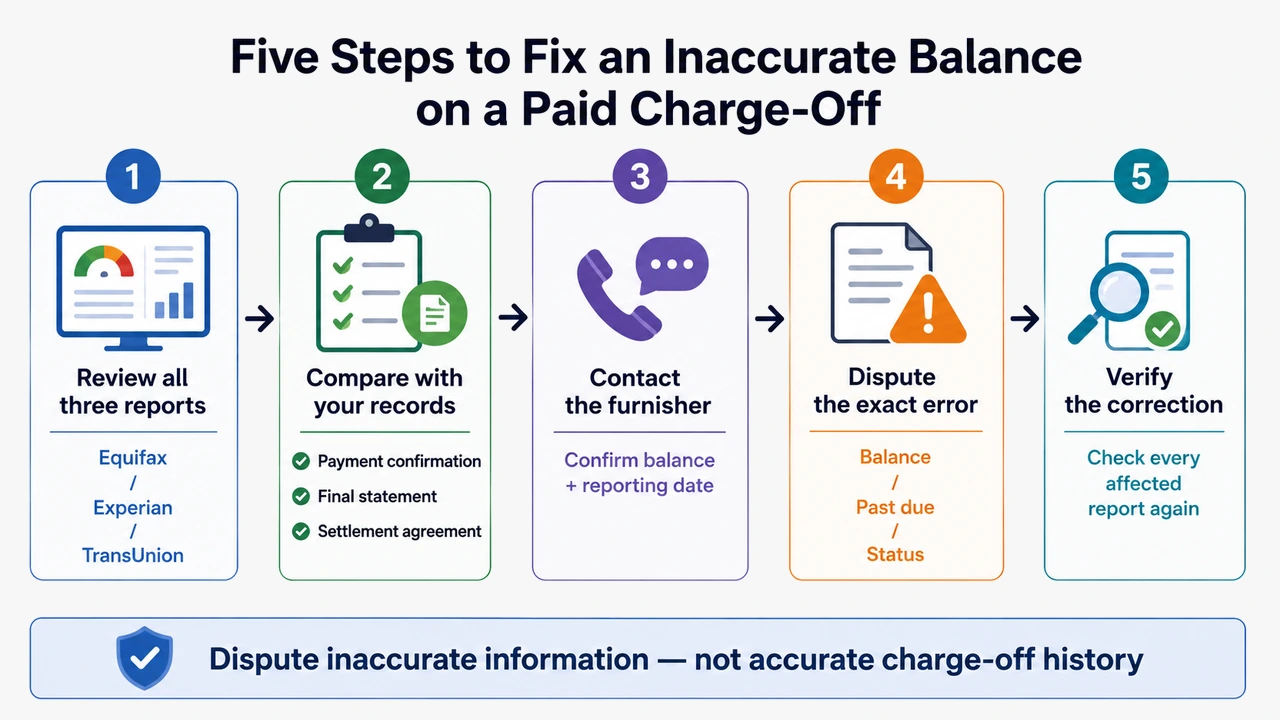
Step 1: pull all three credit reports
Get the current reports for Equifax, Experian, and TransUnion through AnnualCreditReport.com. Online reports are currently available weekly for free.
For the charged-off account, write down the creditor name, partial account number, current balance, amount past due, account status, payment status, remarks, and date last updated. Do this for each bureau separately.
Step 2: match the report to your own records
Use documents that show what happened to this exact account: payment confirmation, bank record, final statement, paid-in-full letter, settlement agreement, or settlement completion letter.
Reduce the problem to one sentence. For example:
Experian reports a current balance of $2,275, but the creditor’s final statement dated August 4 shows a $0 balance after my payment cleared on July 18.
If you cannot write the mismatch clearly, you may not yet know what needs to be corrected.
Step 3: contact the company that received the payment
Ask the creditor, collector, or debt buyer to confirm the current balance in its own system, how the payment was applied, whether the account is paid in full or settled, whether anything else is due, and when the latest credit-report update was furnished.
If the company claims a balance remains, ask for a written accounting showing the starting balance, payments, credits, interest or fees, reversals, and the amount it says remains due.
Step 4: dispute the exact inaccurate field
If your records support a different current balance, dispute the specific inaccurate or incomplete information with each credit reporting company whose report contains the problem. CFPB guidance also recommends disputing with the company that furnished the information.
Do not write only, “Remove this charge-off.” Instead identify the account, the field, the reported amount, the correct amount supported by your records, and the evidence. For the full filing process, use how to dispute errors on your credit report.
Step 5: verify the result on every affected report
After an update or dispute result, recheck the current balance, amount past due, payment status, and account status. If the correction appears on Experian but not Equifax, treat the remaining Equifax entry as a separate reporting problem rather than assuming it will fix itself automatically.
Evidence checklist for a wrong paid charge-off balance
The strongest evidence connects the exact account to the exact balance you say is correct.
- Current credit report showing the disputed tradeline.
- Creditor, collector, or debt buyer name.
- Partial account number or another matching identifier.
- Current balance and amount past due shown on the report.
- Date the account was last updated.
- Payment confirmation.
- Bank or card statement showing the payment cleared.
- Final account statement.
- Paid-in-full confirmation, if applicable.
- Settlement agreement, if applicable.
- Proof that every required settlement payment was completed.
- Any written balance confirmation from the furnisher.
- Previous dispute result, if the error was already investigated.
- One sentence explaining the exact mismatch.
Send copies rather than your only originals, and keep a complete copy of what you submit.
What to say when you call the creditor, collector, or debt buyer
You do not need a long explanation. Ask questions that produce facts you can compare with the report.
“I’m calling about account ending in [last four digits]. I completed payment on [date], but my credit report dated [date] still shows a current balance of [$X]. Can you confirm the current balance in your system, how the payment was applied, whether anything else is due, and the date your most recent update was sent to the credit reporting companies?”
Before ending the call, ask whether the company considers the account paid in full, settled, transferred, sold, or still outstanding. Ask for written confirmation if the representative says the balance is $0.
Record the date, representative name or ID, reference number, balance quoted, and any promised follow-up. A phone call is useful for diagnosis; written records are much stronger if you later need to prove the mismatch.
Sample wording for an incorrect paid charge-off balance
Use this only when you have a factual basis and supporting records. Do not dispute accurate charge-off history simply because you want it removed.
“I am disputing the current balance reported for account ending in [last four digits]. My [bureau name] credit report dated [date] shows a current balance of [$X]. I paid the account in full on [date], and the attached final statement/payment confirmation shows a $0 current balance. Please investigate and correct the current balance and amount past due to $0 if your investigation confirms these records. I am not disputing accurate historical charge-off information.”
If you settled instead of paying in full, replace “paid in full” with the accurate facts and attach the settlement agreement. Do not ask for a “paid in full” status if the agreement was a settlement for less than the full balance.
What if only one credit bureau still shows a balance?
Treat each bureau’s file separately. Suppose Equifax and TransUnion show $0, but Experian still shows $1,600. First compare the dates each tradeline was last updated. Then ask the furnisher whether it sent the $0 update to Experian.
If the furnisher confirms a $0 balance and the Experian entry still conflicts with your documentation, dispute the current balance with Experian and include the evidence. Do not assume a correction at one bureau forces an instant change at another bureau.
What if the creditor says you still owe a balance?
Ask the furnisher to explain its balance, but do not treat its disagreement as a bar to a credit-report dispute. You can dispute specific information you reasonably believe is inaccurate or incomplete with the bureau reporting it and with the furnisher; you do not need the creditor to agree with you first. The CFPB recommends contacting both. Explain the factual conflict and include relevant copies of your records.
Ask for a written accounting showing the balance before your payment, every payment and credit, any returned payment, interest or fees the company believes are authorized, and the balance it calculates today. Then compare that accounting with your payoff or settlement documents.
If you and the company disagree about whether the settlement was completed or whether a fee is legally owed, that can become a contract, debt-collection, or legal issue rather than a simple credit-report typo. A dispute should identify the inaccurate or incomplete reported fact; a bureau investigation is not a court ruling on a complex contract question. Seek qualified legal advice if the disagreement requires interpretation of a settlement or applicable law. Do not assume that an unresolved legal question eliminates your right to challenge a specific factual reporting error.
What if the original creditor and a collection agency both show a balance?
Two tradelines do not automatically mean you are being charged twice. The original account can remain as historical information while a collection account appears separately.
The key question is who currently owns the debt and which company is reporting money as currently owed. If both appear to report an outstanding balance for the same debt, first compare charge-off vs. collection so you can separate the original account from the collection role, then review what to check when the original creditor and collection agency both report a balance.
Will correcting the balance improve your credit score?
It can affect a score, but no specific point increase is guaranteed. Consumers can have multiple credit scores, and different scoring models can treat account balances and charge-off information differently.
The correct goal is an accurate report, not a promised number of points. A corrected $0 balance does not erase the historical charge-off or earlier late payments if those items are accurate and still reportable. If your main question is how payment itself may affect scoring, read does paying a charge-off improve your credit score?
Does a $0 balance remove the charge-off?
No. A $0 current balance and the historical charge-off are separate pieces of information. CFPB guidance states that accurate negative information generally can remain for the applicable reporting period, which for most negative account information is generally up to seven years.
Do not file a false dispute simply because the account is negative. Dispute inaccurate or incomplete information; do not demand deletion of accurate history merely because the debt has been paid. Correcting the balance also does not necessarily delete the historical charge-off, so review whether the paid charge-off itself can be removed before choosing your next step.
What if the balance is still wrong after a dispute?
Read the investigation result and compare it with what you actually disputed. If your request said only “remove the charge-off,” the bureau may not have been asked to investigate the current-balance mismatch you care about.
If the furnisher still reports a balance, request its written accounting and determine whether you have new or clearer evidence. If the credit reporting company or furnisher continues to report information you believe is inaccurate after you have completed the normal dispute process, CFPB guidance allows consumers to submit a complaint. You can also consider qualified consumer-law advice when the dispute involves ownership, settlement terms, or another legal issue.
Common mistakes to avoid
- Disputing the word “charge-off” when the real issue is the current balance.
- Assuming the historical amount charged off is the same as the current balance.
- Calling a settlement “paid in full” when the agreement says settled for less.
- Sending a dispute before confirming whether a recent payment is still processing.
- Using only a credit-monitoring app instead of reviewing the actual bureau reports.
- Disputing accurate negative information simply because you want it deleted.
- Failing to keep the settlement agreement, final statement, and proof of payment.
- Assuming a correction on one bureau automatically means the other two are correct.
Frequently asked questions
Why is my paid charge-off still showing a balance?
The payment may not have been reflected yet, may have been applied incorrectly, may not have fully resolved the account, or you may be reading the historical charge-off amount instead of the current balance. Compare the exact field with the furnisher’s records.
Should a paid charge-off show a $0 current balance?
If you paid the charged-off account in full, the current balance should generally update to $0 after the payment is processed and furnished. The charge-off history can still remain.
Can a settled charge-off show a $0 balance?
If the written settlement was completed and says no additional amount remains due, a $0 current balance can be consistent with the resolved settlement even though the status may say settled or paid for less than the full balance.
How long does a paid charge-off take to update?
There is no single routine reporting deadline that applies to every furnisher. Ask when the payment posted and when the company last sent an update. A formal credit-report dispute is different and generally has a 30-day reinvestigation period, subject to a limited extension when relevant additional information is provided.
Can I dispute a paid charge-off that still shows a balance?
Yes, if the current balance, amount past due, payment status, or another field is inaccurate or incomplete and you can explain the mismatch. Dispute the specific error and include supporting documents.
Why does my paid charge-off still say past due?
Check whether the amount is a current amount past due or historical delinquency information. If it is a current past-due amount that conflicts with a final statement showing nothing remains due, ask the furnisher to explain it and dispute the field if your evidence supports a correction.
Does paying a charge-off make it disappear?
No. Payment can change the balance and status, but accurate historical negative information can remain for the applicable reporting period.
Bottom line
If a paid charge-off still shows a balance, do not start by trying to delete the account. Start by identifying the exact current-balance field, comparing all three reports with your final account records, and confirming how the payment was applied.
If your records show $0 and the report still shows money currently owed, document the mismatch and dispute that specific field with the affected bureau and furnisher. If the current balance is already $0 and only the historical charge-off remains, the report may be accurately showing negative history rather than an unpaid debt.
Official sources
- Consumer Financial Protection Bureau — How do I dispute an error on my credit report?
- Consumer Financial Protection Bureau — How long does information stay on my credit report?
- Federal Trade Commission — Disputing errors on your credit reports
- Federal Trade Commission — Sample letter to credit bureaus
- Fair Credit Reporting Act § 611 — Reinvestigation of disputed information
- Experian — Paying off closed or charged-off accounts
- Experian — Data furnisher reporting FAQ
- AnnualCreditReport.com — Free credit reports
Related guides
- Charge-offs hub — guides about balances, reporting, payment, and removal.
- Can a paid charge-off be removed? — understand when correction or deletion may be possible.
- Settled charge-off vs. paid in full — compare how the account may be reported after resolution.
- Why is a closed account still showing a balance? — use the broader guide when the closed account is not specifically a charge-off.
About this guide
Source review: September 29, 2026
This guide is for U.S. consumers who paid or settled a charged-off account but still see a current balance on one or more credit reports. It focuses on identifying the exact reporting mismatch and choosing the correct next step without disputing accurate historical information.
Financial and legal disclaimer
This article is for general educational purposes only and is not individualized legal, financial, debt-collection, lending, or credit-repair advice. Credit reporting can depend on the facts of the account, the terms of a settlement, the information supplied by a furnisher, applicable federal and state law, and the results of any investigation. No particular dispute result, deletion, credit score change, or lending outcome is guaranteed.