In this guide
If your credit dispute is verified as accurate, the bureau has completed its investigation and decided to keep the disputed information as reported. The item is not automatically deleted. Compare the result with your updated report, identify any specific error that remains, and use supporting records to decide whether to dispute again, contact the company that reported it, or escalate. You can also request a description of how the bureau verified the information.
Sources checked October 6, 2026. Examples below are hypothetical.
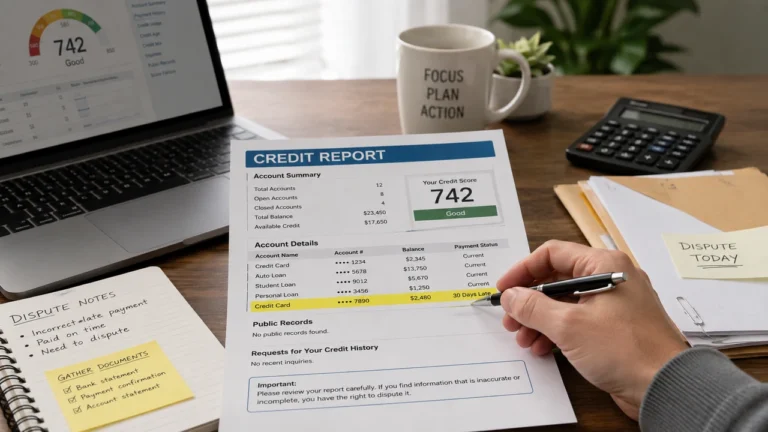
Your first move: Put the result notice beside the updated report and the document supporting your dispute. Complete this sentence: “The report still shows [specific field/value], but [document/date] supports [correction].” If you cannot identify that conflict, first check whether the information is actually inaccurate.
What does “verified as accurate” mean on a credit dispute?
It is the outcome of a credit-report investigation. The bureau determined that the challenged information should remain. The company that supplied the account information, called the furnisher, may be a lender, card issuer, servicer, or collection agency.
For example, TransUnion explains that an “already verified” result means it previously investigated and the reporting company confirmed the information. It also says you may submit the dispute again with supporting documents. Read the full result: wording and available follow-up options vary.
- It does not mean a court ruled that you owe the debt. Credit reporting and a debt-collection lawsuit are different processes.
- It does not tell you every step of the investigation. The label alone cannot show which records were reviewed or whether the investigation met legal requirements.
- It does not make every field on the account correct. Ownership, current balance, payment history, and account status are separate facts to compare.
- It does not guarantee a score change. A completed dispute is not itself a credit-score improvement.

Read the result and the revised report together
A completed case and a dispute-related account remark describe different things. If the wording is confusing, check what “account in dispute” means on a credit report before asking to remove a comment.
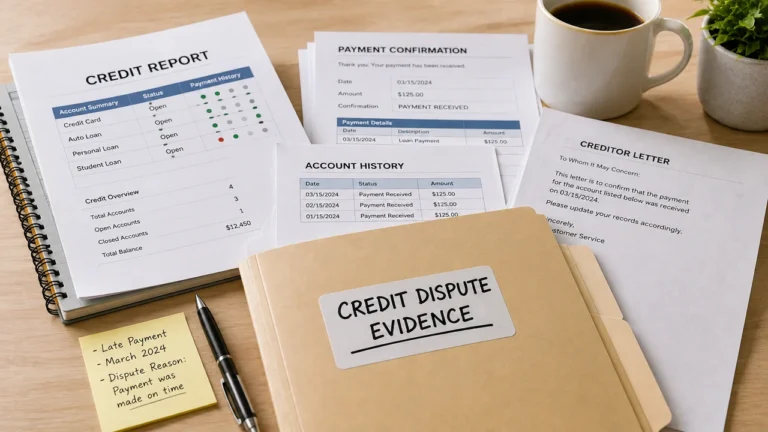
Save four records: the original report, your dispute and attachments, the complete result notice, and the revised report. Use the bureau’s actual report, not just a monitoring app’s one-line alert. You can obtain reports through AnnualCreditReport.com.
| Result | What to compare | What it does not establish |
|---|---|---|
| Verified / remains | The precise balance, date, status, or payment month you challenged. | Which evidence was considered or whether every account field was reviewed. |
| Updated | The old and new values for your disputed field. | That an unrelated update fixed your error. |
| Deleted | Whether the account or only particular information disappeared. | That every other bureau has made the same change. |
| Processed / completed | The accompanying explanation and the current report. | Whether the outcome was verification, correction, or deletion. |
| Frivolous / irrelevant | The reason given and what information the notice requests. | That the bureau completed an investigation and found the account accurate. |
What to do after your credit dispute comes back verified
1. Identify the unresolved fact and match the dates
Write down the bureau, report date, furnisher, masked account number, disputed field, reported value, and correction your evidence supports. Compare records from the relevant reporting period. A balance paid yesterday may differ from a report reflecting last month’s information without proving the earlier report was wrong.
Example: a paid collection still shows $900. Your creditor’s confirmation says the account was fully resolved with nothing left to pay. A later reporting update still lists a $900 current balance. The issue is the remaining balance, not whether paying requires deletion of the account’s entire history.
Example: the result says “updated,” but the late mark remains. The balance changed from $480 to $0, while the June payment still shows 30 days late. If you disputed June’s payment history, compare the due date, payment receipt and posting records, and creditor correspondence. A bank withdrawal alone may not establish how the creditor applied the payment.
Example: a creditor confirms the late payment was real. If the dates and records support the negative entry, a different dispute phrase does not turn it into an error. The CFPB cautions that accurate negative information generally cannot be removed simply because it is unfavorable.
Our credit-dispute evidence checklist helps match each record to the fact you want corrected.
2. Request the verification procedure if the result is unclear
Under 15 U.S.C. § 1681i(a)(6)(B)(iii) and (a)(7), you can ask the bureau for a description of the procedure it used to check the disputed information. The response must be provided within 15 days after the bureau receives your request. It includes the contacted furnisher’s business name and address, plus its phone number if reasonably available.
This is often called a method of verification request. It asks how the investigation was performed; it is not a demand that automatically produces a signed contract or removes the account.
Sample request to the credit bureau
Date: [date]
Your name and mailing address: [details]
Bureau and dispute reference: [details]
Result date: [date]
Furnisher and account identifier: [details]
Disputed information: [specific field]Please describe the procedure you used to check the accuracy and completeness of the disputed information in this investigation. Please identify each furnisher you contacted, including its business name, address, and phone number if reasonably available. I am requesting this description under 15 U.S.C. § 1681i(a)(7).
Please send the response to [mailing address].
Adapt the request to your actual result. Use the bureau’s current official contact instructions and provide the identifying information it requires through its secure channel. Keep a copy and evidence of receipt. The 15-day clock concerns the bureau’s response to this request; it is not a new 15-day deadline for you to dispute the account.
3. Follow up with a specific, supported correction
If an error remains, explain the mismatch and what your evidence adds or what the earlier result left unresolved. Avoid resending the same generic demand without addressing the previous answer. A bureau may reject a dispute it reasonably considers frivolous or irrelevant, including one without enough information to investigate.
A focused explanation could say: “My report dated [date] still shows a $900 current balance for [company/account]. The attached confirmation dated [date] says no balance remains. My prior dispute closed on [date]. Please investigate this balance discrepancy and correct the reporting based on these records.”
Keep originals, send copies, and retain your submission and response. Follow the credit-report dispute process for each bureau that shows the error. The FTC’s dispute guidance explains why you should also contact the business supplying the incorrect information.
4. Address the furnisher’s records and escalate when appropriate
For a covered direct dispute about account reporting, Regulation V § 1022.43 sets requirements for the furnisher’s investigation. Use its designated dispute address, identify the account and exact error, explain the basis, and include relevant supporting documents. This direct-dispute rule has exceptions; it does not cover every type of information on a credit report.
If a documented error remains after the investigation, you can consider a CFPB complaint. For complaints about inaccurate or incomplete reporting against a reporting agency, the CFPB’s current notice requires a dispute with that agency first and says the dispute must be closed or more than 45 days must have passed since submission. Check the current conditions before filing. An eligible complaint does not guarantee removal.
For help choosing and preparing an escalation, use the denied-dispute action guide. Consider a consumer attorney if a persistent error has caused a denial, higher borrowing costs, or other harm. Keep adverse-action notices and do not let a reporting dispute distract you from a court deadline.
Which deadlines apply after a verified result?
| Event | Timing | What to record |
|---|---|---|
| Credit-bureau investigation | Generally 30 days after receipt; up to 45 days in applicable circumstances. | Receipt date and any later evidence submitted. |
| Written investigation results | Within five business days after completion. | Completion date and result notice. |
| Description of verification procedure | Within 15 days after the bureau receives your request. | The separate request and delivery record. |
| CFPB complaint about inaccurate reporting by a bureau | First dispute directly; follow the closed-dispute or more-than-45-days conditions above. | Original submission, closure status, result, and remaining error. |
The CFPB’s timing guidance explains the 30/45-day investigation periods and five-business-day result notice. Additional relevant information during an investigation and disputes following a free annual report can affect timing. Do not treat a procedure-description request as a new investigation or assume a missed response guarantees automatic deletion.
Common questions about verified credit disputes
Can I dispute an item again after it was verified?
Yes, if you still have a specific accuracy or completeness issue to raise. Explain the unresolved fact and provide relevant supporting information, especially anything new. A second dispute is not a guaranteed second chance at deletion; the substance of the error matters.
Does “verified” mean the bureau has an original signed contract?
No. The result label does not establish which documents were reviewed. A request for the verification procedure does not itself entitle you to every internal record or an original signed contract.
Is credit-report verification the same as debt validation?
No. One concerns information reported about you; the other concerns a debt collector’s notice and the applicable collection-dispute process. Use our debt validation versus credit-report dispute comparison to keep the requests and deadlines separate.
Will my credit score improve after a dispute is verified?
There is no guaranteed increase. If the disputed data remains unchanged, the result does not itself improve it. Your score may still change because of other report updates or a different scoring model. See when credit scores update after a dispute before comparing numbers from different dates.
What if the account is not mine?
Investigate whether the name belongs to a servicer or collector you do not recognize, another person’s file was mixed with yours, or identity theft occurred. A verified result does not settle that question. For actual identity theft, use IdentityTheft.gov for the federal recovery process; do not submit a false identity-theft report.
Can I add a statement if I still disagree?
Yes. The CFPB explains your right to add a brief statement after an unresolved bureau dispute. It records your position without correcting the underlying account. Review our consumer statement examples and limitations before including sensitive personal information.
Explore related guides on credit reports and disputes.
Sources and scope
- Fair Credit Reporting Act, 15 U.S.C. § 1681i: reinvestigation, results, and procedure-description requests.
- Regulation V, 12 C.F.R. § 1022.43: covered direct disputes to furnishers.
- TransUnion dispute support: already-verified results and supporting records.
- FTC: Disputing Errors on Your Credit Reports: evidence, submissions, and follow-up.
- CFPB: investigation timelines and credit-reporting complaint conditions.
General U.S. educational information, not individualized legal or financial advice. A verified result alone does not prove either compliance or a violation. No request, dispute, complaint, or statement guarantees deletion or a credit-score increase.