In this guide
- Quick answer
- The seven-year credit-reporting period and the statute of limitations are different
- When does the seven-year collection period start?
- Which actions do not restart the seven-year period?
- Can a partial payment restart the statute of limitations?
- Why did the collection date change after payment?
- What should you do if the collection removal date changed?
- Should you pay a collection that is almost seven years old?
- Separate the reporting clock from the result of payment
- Frequently asked questions about paying collections and the seven-year rule
- Related guides
- The bottom line
Claire Bennett — Founder & Editor, Fix My Money Life
Last reviewed: September 18, 2026
Quick answer
No. Paying, settling, making a partial payment, or disputing a collection does not restart the seven-year credit-reporting period. If you are asking whether disputing a collection restarts the clock, the answer is also no for the federal credit-reporting period. The reporting timeline is generally tied to the original delinquency that led to the collection, not the date you paid the debt, contacted the collector, filed a dispute, or agreed to a settlement.
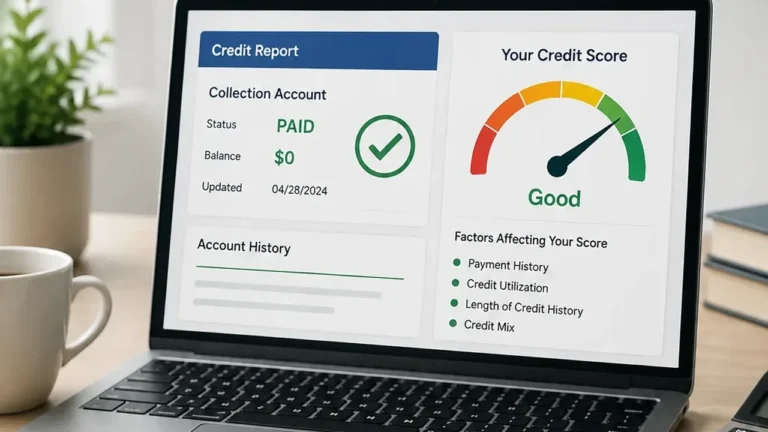
After payment, the collection agency may update the balance, payment status, last payment date, or date updated. A recent update does not automatically mean the collection can remain on your credit report for another seven years. If a paid collection still shows an amount due, see what to check when a paid collection still reports a balance. For score changes after payment, see what can happen to your credit score after paying collections.
Before paying an old collection, read your credit report carefully and check the date of first delinquency, estimated removal date, current balance, and account status.
The seven-year credit-reporting period and the statute of limitations are different
When people ask whether paying a collection restarts the seven-year period, they are often mixing up two separate deadlines. The credit-reporting period controls how long a collection may appear on a credit report. The statute of limitations controls how long legal action may be available to collect the debt.
Paying, settling, disputing, or transferring a collection does not create a new federal credit-reporting period. That timeline is tied to the delinquency that immediately preceded the collection activity. A partial payment or written acknowledgment may affect the statute of limitations in some states, however, because those rules depend on state law, the debt type, and sometimes the credit agreement.
| Question | Credit-reporting period | Statute of limitations |
|---|---|---|
| What does it control? | How long the collection may appear on a credit report | How long legal action may be available to collect the debt |
| Which law generally applies? | The federal Fair Credit Reporting Act | Applicable state law and federal debt-collection rules |
| Can payment restart it? | No. Payment does not create a new seven-year reporting period. | Possibly. A partial payment or acknowledgment may restart the period in some states. |
| What happens after it expires? | The collection generally should no longer appear in a standard credit report. | A debt collector generally cannot sue or threaten to sue on a time-barred debt, although the debt may still exist. |

This timing issue is separate from scoring. Payment may update the account without producing an immediate score increase, so review what happens to your credit score after paying off collections before assuming that a $0 balance will change your score right away.
Sources: 15 U.S.C. § 1681c; Federal Trade Commission guidance on the date of delinquency; and Consumer Financial Protection Bureau guidance on old and time-barred debt.
When does the seven-year collection period start?
The collection reporting period is tied to the delinquency that immediately led to the account being charged off or placed for collection. It does not start when a collection agency receives the debt, opens its own account, updates the balance, or receives a payment.
The key date is commonly called the date of first delinquency. This is the month and year when the account became delinquent and was never brought current again before the charge-off or collection activity occurred.
| Event | Example date | Does it create a new reporting period? |
|---|---|---|
| First missed payment that was never brought current | January 2022 | This begins the delinquency that controls the timeline. |
| Account remains delinquent | February–June 2022 | No new starting date |
| Original creditor charges off the account | July 2022 | No |
| Collection agency receives the debt | September 2022 | No |
| Collector updates the account | March 2025 | No |
| Consumer pays the collection | August 2026 | No |
In this example, paying the collection in August 2026 does not move the original delinquency date to 2026 or create a new reporting period lasting until 2033. Under the Fair Credit Reporting Act, the seven-year period for collection and charge-off accounts is calculated beginning 180 days after the start of the delinquency that immediately preceded the collection or charge-off.
Do not calculate the timeline from the date opened
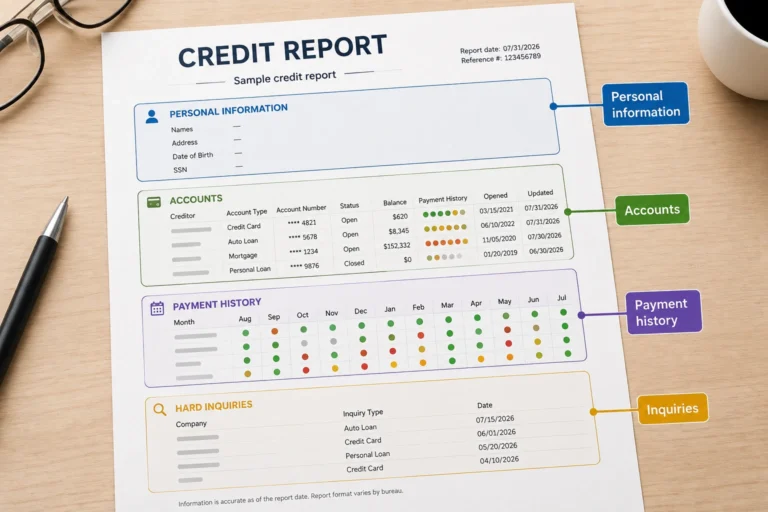
A collection account may show a recent date opened, date reported, date updated, or last payment date. These fields can change when the debt is transferred, reported, disputed, settled, or paid, but they do not automatically replace the original delinquency date used to calculate the federal reporting period.
- Date opened: may show when the collection agency received or opened the account.
- Date updated: shows when the collector last reported new information.
- Last payment date: shows when the most recent payment was received.
- Date of first delinquency: identifies the continuous delinquency that led to collection.
To locate and compare these account details, read your credit report carefully and review both the collection entry and the original creditor’s account. A recent update is not, by itself, proof that the collection has been legally re-aged.
Sources: 15 U.S.C. § 1681c and the Federal Trade Commission Advisory Opinion to Amason.
Which actions do not restart the seven-year period?
Paying, settling, disputing, or transferring a collection does not restart the seven-year credit-reporting period. These events may change the account’s balance, status, collector name, or date updated, but they do not create a new reporting timeline.
The collection must remain connected to the original delinquency that led to the account being placed for collection. A collector cannot lawfully make an old debt reportable for another seven years simply by purchasing it, updating it, or receiving a payment.
| Action | Restarts the reporting period? | What may change? | What should you know? |
|---|---|---|---|
| Paying the collection in full | No | The balance should generally update to $0, and the status may show that the account was paid. | Payment does not automatically remove an accurate collection from your credit report. |
| Settling the collection | No | The balance may update to $0, and the account may be reported as settled or paid for less than the full balance. | Settlement changes the account status, not the original credit-reporting timeline. |
| Making a partial payment | No | The balance, last payment date, and date updated may change. | A partial payment may affect the separate statute of limitations in some states. |
| Starting a payment plan | No | The collector may report payments and a lower outstanding balance. | Before agreeing to a plan on an old debt, check whether payments could affect your state’s legal deadline. |
| Disputing the collection | No | A dispute notation may appear, and inaccurate information may be corrected or removed. | A dispute does not give the collector a new seven-year reporting period. |
| Contacting the collection agency | No | Contact alone generally does not change the reporting timeline. | Verify the debt and its age before making a payment or written promise. |
| Acknowledging the debt | No, for credit reporting | The federal reporting period remains tied to the original delinquency. | A written acknowledgment may affect the statute of limitations under some state laws. |
| Selling or transferring the debt | No | The collector name, account number, date opened, or reporting details may change. | The new collector must use the same original delinquency timeline. |
| Updating the account after payment | No | The date updated, balance, and payment status may change. | A recent update does not automatically mean that the collection was re-aged. |
If a collection was transferred to another company, temporarily disappeared, or returned with a new account number, review what to check when a collection account disappeared and came back. A transfer may change how the account looks, but it should not move the original delinquency date forward.
Bottom line: does paying a collection restart the seven-year period? No. Neither full payment, settlement, a partial payment, a dispute, nor a sale to another collector creates a new federal credit-reporting period.
Sources: Federal Trade Commission Advisory Opinion to Amason; 15 U.S.C. § 1681c; and Consumer Financial Protection Bureau guidance on old and time-barred debt.
Can a partial payment restart the statute of limitations?
A partial payment does not restart the seven-year credit-reporting period. However, depending on state law, making a payment on an old collection may restart or extend the separate statute of limitations for filing a debt-collection lawsuit.
These are two different deadlines. The credit-reporting period controls how long the collection may appear on your credit report. The statute of limitations controls how long a creditor or debt collector may have to sue over the debt.
Example: a small payment on an old collection
Suppose a consumer has a six-year-old credit card collection. A collector offers a payment plan and asks for a $25 payment today. That payment would not make the collection reportable for another seven years. However, it could affect the lawsuit deadline if the applicable state law allows a partial payment to restart the statute of limitations.
| Action | Restarts the credit-reporting period? | Could affect the statute of limitations? |
|---|---|---|
| Making a partial payment | No | Possibly, depending on state law |
| Signing a payment agreement | No | Possibly |
| Acknowledging the debt in writing | No | Possibly |
| Promising to pay | No | Possibly, depending on the wording and applicable law |
| Requesting debt validation | No | Generally not by itself |
| Reviewing your credit reports | No | No |
What to check before paying an old collection
- Confirm that the debt belongs to you.
- Identify the original creditor and the type of debt.
- Find the date of the last payment and the date the account first became delinquent.
- Check which state’s law may apply to the debt.
- Determine whether the debt may be time-barred.
- Request the current balance and any settlement terms in writing.
- Do not make a small payment only to stop collection calls.
- Consider speaking with a consumer-law attorney if a lawsuit has been filed or threatened.
A debt collector generally may not sue or threaten to sue over a time-barred debt. However, the debt may still exist after the statute of limitations expires, and a collector may still request voluntary payment when permitted by law.
Bottom line: a partial payment does not restart the seven-year collection reporting period, but it may affect the statute of limitations in some states. Check the legal deadline before paying, signing an agreement, or acknowledging an old debt in writing.
Sources: Consumer Financial Protection Bureau guidance on old and time-barred debt and 12 C.F.R. § 1006.26.
Why did the collection date change after payment?
A collection may show a recent date after payment because the collector updated the balance or account status. A new date updated, last payment date, or date reported does not automatically restart the seven-year credit-reporting period.
After a payment is processed, the collector may report a $0 balance, a paid or settled status, and the date the new information was sent to a credit bureau. Those fields describe recent account activity. They do not replace the delinquency that led to collection.
| Credit report field | What it usually means | Does it restart the reporting period? |
|---|---|---|
| Date of first delinquency | The continuous delinquency that immediately preceded collection or charge-off | This date controls the federal reporting timeline. |
| Date opened | When the collection agency opened or received the account | No |
| Date reported | When account information was sent to a credit bureau | No |
| Date updated | When the balance, status, or other account information was last changed | No |
| Last payment date | When the most recent payment was received | No |
| Estimated removal date | The bureau’s estimate of when the item may stop appearing | It should remain consistent with the original delinquency timeline. |

Example: the account was paid in 2026
Suppose the delinquency that led to collection began in January 2022. The collection agency opened its account in September 2022, and the consumer paid it in August 2026. The report may then show “Date updated: August 2026” because the balance or payment status changed.
That update does not move the original delinquency to August 2026, and it does not make the collection reportable until August 2033. The Federal Trade Commission has explained that a later payment, dispute, sale, or transfer does not change the allowable reporting period.
If the recent update also left an amount due, follow the steps for a paid collection that still shows a balance. A new date updated and an incorrect remaining balance are separate reporting issues.
Bottom line: a recent collection date after payment usually reflects new account information, not a restarted seven-year period. Focus on the original delinquency timeline and investigate any removal date that moved forward without a valid reason.
Sources: Federal Trade Commission Advisory Opinion to Amason; 15 U.S.C. § 1681c; and Consumer Financial Protection Bureau guide to understanding a credit report.
What should you do if the collection removal date changed?
If the estimated removal date moved forward after you paid a collection, do not assume the seven-year period legally restarted. Compare your current and previous credit reports, identify the exact field that changed, and dispute the information if it no longer matches the delinquency that led to collection.
A recent date updated may be normal because the collector reported a new balance or paid status. The warning sign is not a routine account update. It is a newer delinquency date, a substantially later estimated removal date, or another change that makes the collection appear reportable for longer than the original timeline allows.
How to check and dispute a changed removal date
- Download your current credit reports.
Review the collection on each report where it appears. The dates and account details may not be identical across Equifax, Experian, and TransUnion. - Identify the field that changed.
Compare the date of first delinquency, date opened, date updated, last payment date, estimated removal date, balance, and account status. - Compare the current report with an older copy.
A previous report may show that the delinquency or estimated removal date was originally reported earlier. - Gather supporting records.
Useful documents may include an older credit report, account statements, a charge-off notice, a collection letter, a settlement agreement, and proof of payment. Send copies rather than original documents. - Dispute the specific inaccuracy with each affected credit bureau.
State which field is incorrect, what the report currently shows, what you believe it should show, and which documents support your position. Follow the complete process to dispute inaccurate collection information on your credit report. - Send a dispute to the company furnishing the information.
Contact the collection agency or other company that reported the disputed date and provide the same supporting records. - Keep a complete dispute file.
Save copies of your letters, attachments, submission confirmations, delivery records, investigation results, and updated credit reports. - Review the investigation result.
Credit reporting companies generally investigate disputes within 30 days, although the period may be extended in certain circumstances. Check whether the date was corrected, the item was removed, or the information remained unchanged.
| What you see | What it may mean | What to do next |
|---|---|---|
| A recent date updated | The balance or account status was recently reported | No correction is needed unless another field is inaccurate. |
| A newer date opened | The collection agency opened its account after receiving the debt | Verify that the original delinquency timeline did not move forward. |
| A later estimated removal date | The bureau may have received inconsistent or inaccurate date information | Compare older reports and dispute the date if the timeline is unsupported. |
| Different delinquency dates across bureaus | The furnisher may have reported inconsistent information | Dispute the inaccurate entry with each affected bureau. |
| A balance after full payment | The balance or payment status may not have been updated correctly | Request correction of the balance and account status. |
| The collection remains beyond the allowable reporting period | The information may be obsolete | Request deletion and provide evidence of the original delinquency timeline. |
Dispute only information you believe is inaccurate or incomplete. Paying a collection is not, by itself, a valid reason to delete accurate negative information. An unsupported delinquency date, incorrect balance, or improperly extended removal date can be challenged.
Before submitting the dispute, review the documents that can support a credit report dispute. Strong evidence makes it easier for the bureau and furnisher to understand exactly what must be investigated.
If the investigation does not correct the problem, review the bureau’s explanation, preserve the results, and consider submitting a complaint to the Consumer Financial Protection Bureau after the credit bureau dispute is no longer pending.
If the reported dates are accurate and the collection is approaching the end of its reporting period, the next decision is whether paying the old collection still supports your financial goals.
Sources: Consumer Financial Protection Bureau guidance on disputing credit report errors; Federal Trade Commission guidance on credit report disputes; and 15 U.S.C. § 1681i.
Should you pay a collection that is almost seven years old?
There is no universal answer. Do not decide based only on how close the collection is to the end of its credit-reporting period. First verify that the debt is accurate, check whether it may be time-barred, consider any upcoming credit application, and get the payment or settlement terms in writing.
Paying an old collection does not restart the seven-year credit-reporting period, but removal from a credit report does not erase the debt itself. Depending on state law, making a partial payment or acknowledging the debt may also affect the statute of limitations for filing a collection lawsuit.
| Your situation | Best next step | Why it matters |
|---|---|---|
| The debt is not yours | Dispute the account instead of paying it. | Payment may make it harder to explain that you never owed the debt. |
| The balance or reported dates are inaccurate | Gather evidence and dispute the specific error. | Paying does not correct an inaccurate balance, delinquency date, or removal date. |
| The debt may be time-barred | Check the applicable state law before paying, signing an agreement, or acknowledging the debt. | A payment or written acknowledgment may affect the statute of limitations in some states. |
| The collector offers a settlement | Request the settlement amount, deadline, and account terms in writing before sending money. | A written agreement helps document what the collector promised and what amount will satisfy the debt. |
| You plan to apply for a mortgage or other major credit soon | Ask the lender how the collection may affect its approval requirements. | A lender may consider the collection even when paying it would not produce an immediate score increase. |
| The collection is expected to stop appearing soon | Verify the actual reporting timeline and legal consequences before deciding. | The end of credit reporting and the end of the statute of limitations are separate events. |
| You expect payment to raise your credit score immediately | Review how paid collections are treated before relying on a score change. | The result depends on the scoring model and the rest of your credit profile. |
| You can make only a small payment | Check whether a partial payment could affect the legal deadline. | A token payment may have legal consequences without resolving the full balance. |
Example: a collection is close to falling off
Suppose a collection is expected to stop appearing on a consumer’s credit reports in several months, but the collector offers a discounted settlement today. Paying would not create a new seven-year reporting period. The consumer should still confirm that the debt is valid, determine whether it may be time-barred, consider any upcoming lending plans, and obtain the settlement terms in writing before making a payment.
Questions to answer before paying
- Does the debt belong to you?
- Is the reported balance accurate?
- Which delinquency led to the collection?
- When is the collection expected to stop appearing?
- Could the debt be outside the statute of limitations?
- Could a payment or written acknowledgment affect that legal deadline?
- Are you applying for a mortgage, apartment, auto loan, or other credit soon?
- Will the collector provide the payment or settlement agreement in writing?
- What balance and status will be reported after payment?
- Can you keep proof of the agreement and payment?
Do not rely on a collector’s promise that payment will remove the account or raise your credit score. Ask for any payment terms in writing, and remember that accurate negative information may remain until the applicable reporting period ends.
You can review reports from Equifax, Experian, and TransUnion through AnnualCreditReport.com. The authorized site currently provides free weekly access, and checking your own reports does not affect your credit scores.
If deletion is your main goal, review whether a paid collection can be removed from your credit report before assuming that payment alone will make the account disappear.
Sources: Consumer Financial Protection Bureau guidance on old and time-barred debt; Consumer Financial Protection Bureau guidance on debt settlements; 12 C.F.R. § 1006.26; and Consumer Financial Protection Bureau guidance on representations about credit reporting and scores.
Separate the reporting clock from the result of payment
Payment can change the current balance and status without creating a new federal reporting period or guaranteeing deletion. Those are separate questions. The CFPB’s paid-collection explanation describes the distinction between resolving the balance and removing the account.
Use the next guide that matches the problem you actually found: a balance that is still wrong after payment, whether a paid collection may be removable, or a collector’s open date that conflicts with the records. This page’s timeline and old-debt warnings remain the starting point when your concern is whether paying changes a deadline.
More on this topic: Browse all collection account guides.
Frequently asked questions about paying collections and the seven-year rule
Does disputing a collection restart the seven-year credit-reporting period?
No. Disputing a collection does not restart the federal seven-year credit-reporting period. The reporting period remains tied to the delinquency that led to the collection, not the date you filed a dispute. This credit-reporting timeline is separate from any state-law statute of limitations on a lawsuit. See the FTC advisory on the reporting period.
Does settling a collection restart the seven-year period?
No. Settling a collection does not restart the seven-year credit-reporting period. The reporting timeline remains tied to the delinquency that led to collection, not the settlement date. The collector may update the balance and status after receiving payment, but those updates do not create a new reporting period.
Does a payment plan restart the seven-year credit-reporting clock?
No. Starting a payment plan does not restart the federal credit-reporting clock. However, the payments or written agreement may affect the separate statute of limitations for a debt-collection lawsuit in some states. Check the applicable state law before making a partial payment or signing an agreement for an old debt.
Can a collection agency report an old debt as a new collection?
A new collection agency may report a recent date opened because that is when it received the account. That date does not replace the delinquency that led to collection or create another seven-year reporting period. Selling or transferring the debt also does not make accurate old information new again.
Can a collection appear after seven years?
A collection generally should not appear on an ordinary consumer credit report after the applicable federal reporting period ends. The Fair Credit Reporting Act contains limited exceptions for certain reports involving high-value credit, life insurance, or high-salary employment. Those exceptions do not apply to most everyday credit checks.
Does the debt disappear when the collection falls off?
No. Removal from a credit report does not necessarily cancel the debt. Credit reporting and legal responsibility for a debt are separate issues. A collector may still request voluntary payment when permitted by law, even if the debt no longer appears on your credit reports or the statute of limitations has expired.
Can a debt collector contact you after the collection is removed?
Possibly. A debt collector may continue lawful collection communications if the debt still exists, subject to federal and state restrictions and any valid request to stop communications. Under Regulation F, a debt collector generally cannot sue or threaten to sue over a time-barred debt, even though voluntary collection attempts may continue.
Sources: Federal Trade Commission Advisory Opinion to Amason; Consumer Financial Protection Bureau guidance on old debt; 12 C.F.R. § 1006.26; and 15 U.S.C. § 1681c.
Related guides
- Collections hub — guides about dates, balances, payment, ownership, and reporting.
- Collection account date opened is wrong — understand which dates matter for reporting.
- Collection account disappeared and came back — what to check when an old collection returns.
- How long does paid-off debt stay on your credit report? — separate a $0 balance from the time an account can remain visible.
- Should you pay the collection agency or original creditor? — verify ownership before paying an older debt.
The bottom line
Paying, settling, or making a partial payment on a collection does not restart the seven-year credit-reporting period. The reporting timeline remains tied to the delinquency that led to collection, even if the balance, payment status, or date updated changes later.
The statute of limitations for a debt-collection lawsuit is a separate deadline. Depending on state law, a partial payment, written acknowledgment, or payment agreement may affect that legal timeline. Before paying an old collection, confirm that the debt belongs to you, verify the balance and reported dates, check whether it may be time-barred, and obtain any settlement terms in writing. Dispute specific information that is inaccurate, incomplete, or too old to be reported.