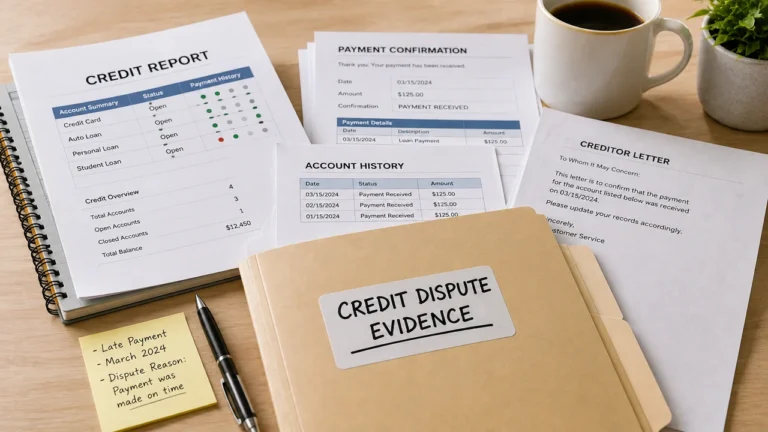
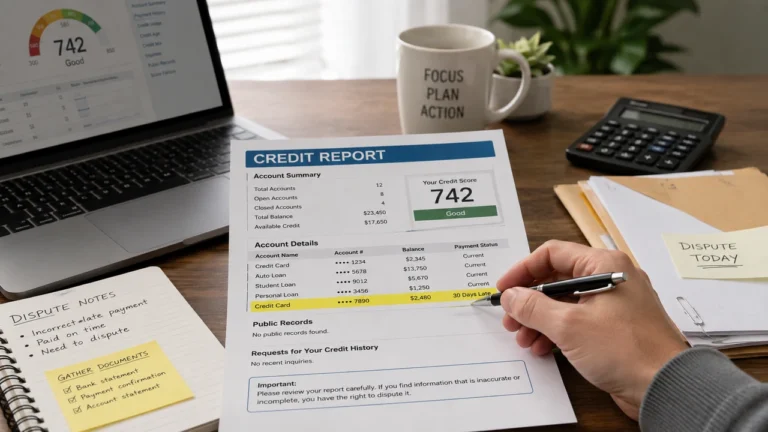
If your credit dispute was verified as accurate, the credit bureau generally completed its reinvestigation and did not make the correction or deletion you requested. In many cases, the company that furnished the information confirmed that the disputed detail matched its records, so the account or field remained on your credit report.
If you expected the account to disappear, that result can feel like your evidence was ignored. However, “verified as accurate” does not necessarily mean every balance, date, payment entry, account status, or ownership detail was reviewed and found correct.
- What it means: The bureau completed its review and kept the disputed information.
- What it does not automatically mean: Every field associated with the account is accurate.
- What to do next: Compare your original dispute with the updated credit report and identify exactly what stayed, changed, or was deleted.
If a documented error remains, do not immediately submit the same general dispute again. Identify the precise account field that is still wrong, gather evidence connected to that field, and choose the follow-up that fits the result.
For a broader comparison of your options, review what to do after a credit dispute is denied.
- What exactly was verified during your credit dispute?
- How to review a verified dispute result
- Verified, remains, updated, deleted, or processed: What is the difference?
- Can a credit dispute be verified and still be wrong?
- Example: The account is yours, but the balance is wrong
- Example: One late-payment month is incorrect
- Example: The same collection appears twice
- What to do if your credit dispute was verified as accurate
- 1. Save the complete dispute record
- 2. Identify the remaining error precisely
- 3. Match your evidence to the reporting error
- 4. Decide where the follow-up should go
- 5. Review the response before escalating
- When should you not dispute the information again?
- Can you request the method of verification?
- What to include in your request
- Sample request for the verification procedure
- What the response may and may not provide
- Does “verified as accurate” mean you owe the debt?
- Does a verified credit dispute affect your credit score?
- How long does verified information stay on your credit report?
- Does disputing an account restart the seven-year period?
- Can verified information be corrected or deleted later?
- Correction and deletion are different outcomes
- Can deleted information be added back?
- When can you submit a CFPB complaint?
- Common mistakes after a dispute is verified as accurate
- Sending the same dispute again without new details
- Disputing accurate information only because it is negative
- Reviewing only the result notice
- Submitting documents that do not prove the error
- Disputing the entire account when only one field is wrong
- Assuming that “updated” means “corrected”
- Escalating while the dispute is still pending
- Your next step after a verified dispute
- Frequently asked questions about verified credit disputes
- Does verification mean the bureau reviewed every document you sent?
- Why does the account still say “disputed” after the investigation ended?
- Why did one credit bureau delete the account while another verified it?
- Can the furnisher update the account after it was verified?
- How soon should you follow up after receiving the result?
- Should you hire a credit repair company after a verified dispute?
- Official sources
- Important legal and financial information
What exactly was verified during your credit dispute?
A verified result usually applies to the specific information investigated. It does not automatically confirm every detail associated with the account.
One credit account can contain several separate pieces of information:
- Account ownership
- Current balance
- Past-due amount
- Payment history
- Account status
- Credit limit
- Date opened
- Date of first delinquency
- Collection or charge-off status
- Your responsibility for the account
Here is where many people get confused: a furnisher may confirm that an account belongs to you while a balance, payment entry, or reporting date remains incorrect. Account ownership and the accuracy of every reported field are not the same question.
| If you disputed | What to check on the updated report | What the result may confirm |
|---|---|---|
| Account ownership | Whether the account is still listed as yours and how your responsibility is shown | The furnisher may have confirmed that the account belongs to you |
| Current balance | Whether the amount matches statements, payment records, or a payoff confirmation | Ownership may have been confirmed even if the balance remains disputed |
| Late payment | Whether the same month is still marked 30, 60, 90, or more days late | The account may be valid while one payment-history entry remains incorrect |
| Account status | Whether the account is shown as open, closed, paid, past due, charged off, or in collection | Another field may have changed while the disputed status remained |
| Duplicate reporting | Whether both entries remain and whether they report the same account, balance, and obligation | One entry may be legitimate while another requires separate review |
| Reporting date | Whether the exact date you challenged was corrected | A routine update to another date may not resolve the disputed date |
Start with the exact wording of your original dispute. If you disputed a balance, check the balance. If you disputed a late payment, check the specific month. If you disputed ownership, determine whether the result addressed ownership rather than another account detail.
Use this guide to read your credit report field by field before deciding whether the dispute resolved the problem.
How to review a verified dispute result
Do not judge the outcome only by the phrase “verified as accurate.” Review the original report, your dispute submission, the investigation notice, and the revised report together.
- Open the credit report you originally disputed.Find the account and identify the exact balance, status, date, payment entry, or ownership detail you challenged.
- Review your original dispute.Confirm what correction you requested and which supporting documents you provided.
- Read the investigation result.Look for terms such as verified, remains, updated, deleted, processed, or frivolous or irrelevant.
- Open the updated credit report.Compare the exact disputed field with the version that appeared before the investigation.
- Determine whether the specific error was fixed.An unrelated update does not resolve the dispute if the information you challenged remains inaccurate.
| What you find | What it may mean | Possible next step |
|---|---|---|
| The exact disputed field was corrected | The dispute appears to have resolved that issue | Save the result and check the same information with the other credit bureaus |
| The account is yours, but the balance is still wrong | Ownership and balance may have been treated as separate facts | Prepare a focused balance dispute supported by payment or payoff records |
| The result says “updated,” but the disputed field did not change | An unrelated field may have received a routine update | Identify the remaining error and explain why the update did not resolve it |
| The information is negative but appears accurate | The dispute process may not be the appropriate remedy | Do not repeat the dispute solely because the information hurts your credit |
| The account may be connected to identity theft | A standard credit dispute may not be enough | Use the identity theft reporting and blocking procedures that apply to your situation |
| The dispute ended, but a documented error remains | The reinvestigation did not resolve the specific reporting problem | Consider a focused dispute, direct furnisher dispute, complaint, or legal advice |
Verified, remains, updated, deleted, or processed: What is the difference?
Credit dispute result labels are not interchangeable. The wording may also vary among Experian, Equifax, and TransUnion.
Always compare the result notice with the revised credit report. The label alone may not reveal whether the particular error you disputed was corrected.
| Dispute result | What it generally means | What to check |
|---|---|---|
| Verified as accurate | The bureau completed the reinvestigation and kept the disputed information | Whether the exact balance, status, date, ownership detail, or payment entry remained unchanged |
| Remains | The information stayed on the credit report after the investigation | Whether the same reported error still appears |
| Updated | At least one field associated with the account changed | Whether the change involved the information you actually disputed |
| Deleted | The disputed information was removed from the credit report | Whether the entire account or only one reported detail was removed |
| Processed | The bureau completed an action involving the dispute | The revised report to identify exactly what changed |
| Frivolous or irrelevant | The bureau stopped or declined the reinvestigation in the form submitted | The stated reason and any additional information the bureau says is needed |
Do not assume that “updated” means “corrected.” A furnisher may submit a routine monthly balance, payment, or reporting-date update while the specific error you challenged remains unchanged.
Can a credit dispute be verified and still be wrong?
Yes. A credit dispute can be verified as accurate even when the updated credit report still contains inaccurate or incomplete information.
This may happen when:
- The investigation addressed a different field than the one you intended to challenge.
- The account received a routine update unrelated to your dispute.
- The furnisher’s records contain the same error that appears on the credit report.
- Your supporting documents did not clearly connect to the field in dispute.
- The dispute was too broad to identify the exact reporting problem.
- Different credit bureaus received different information from the furnisher.
Example: The account is yours, but the balance is wrong
Suppose a collection account belongs to you, but your payoff letter shows a zero balance while the updated credit report still shows $900 due.
The furnisher may have confirmed account ownership without correcting the current balance. A focused follow-up should identify “current balance” as the disputed field, show the amount currently reported, state the amount you believe is correct, and include the payoff letter.
Example: One late-payment month is incorrect
Suppose the account is valid, but March is reported as 60 days late even though your payment confirmation shows that the payment was made on time.
Disputing the entire account as inaccurate may not clearly direct the investigation to the March payment-history entry. A stronger dispute identifies the month, the reported delinquency level, the correct payment status, and the records supporting the correction.
Example: The same collection appears twice
Two collection-related entries can sometimes refer to the same underlying debt without being exact duplicates. For example, an original creditor and a collection agency may both appear, but they should not necessarily report the same balance and status in the same way.
Compare the account numbers, company names, balances, dates, and ownership of the debt. Identify which entry is inaccurate instead of requesting automatic deletion of both.
Before filing another dispute, review the documents that can support a credit report dispute and choose evidence that addresses the exact field that remains wrong.
What to do if your credit dispute was verified as accurate
If the disputed information still conflicts with your records, do not resend the same general claim. Follow the correct process to dispute errors on your credit report and explain precisely what remains inaccurate.
1. Save the complete dispute record
Keep copies of:
- The original credit report
- Your dispute letter or complete online submission
- The dispute or confirmation number
- Delivery records if the dispute was mailed
- Every supporting document you submitted
- The investigation result
- The updated credit report
- Relevant correspondence from the furnisher
The Federal Trade Commission recommends sending copies rather than original documents and keeping records of everything you submit.
2. Identify the remaining error precisely
Your follow-up should identify:
- The credit bureau displaying the information
- The furnisher’s name
- The account or partial account number
- The exact field in dispute
- The value currently reported
- The value you believe should be reported
- The document supporting the requested correction
Instead of writing, “This account is wrong,” use a focused explanation:
The current balance is reported as $900. The attached payoff confirmation dated May 12 shows that the account was paid in full and that the correct current balance is $0. I am disputing the current balance, not account ownership.
3. Match your evidence to the reporting error
| Reporting problem | Potentially relevant documents |
|---|---|
| Incorrect current balance | Account statements, payoff confirmation, settlement letter, cleared payment records |
| Incorrect late payment | Bank statements, payment confirmation, creditor correspondence, account history |
| Incorrect account status | Payoff letter, closure confirmation, settlement agreement, creditor statement |
| Account does not belong to you | Identity theft report, identification records, creditor correspondence, account records if available |
| Duplicate account | Credit reports showing both entries, account numbers, balances, creditor names, and collector information |
| Incorrect reporting date | Account statements, payment history, delinquency records, collection notices, creditor correspondence |
4. Decide where the follow-up should go
You may need to contact:
- The credit bureau: If the inaccurate information still appears in the report maintained by that bureau.
- The furnisher: If the lender, creditor, debt collector, or other company supplying the information appears to have incorrect records.
- Both: If the error remains and it is unclear whether the problem began with the bureau or the furnisher.
A direct dispute with the furnisher should still identify the precise information you believe is inaccurate and include records supporting your position.
5. Review the response before escalating
Compare the completed response with the exact correction you requested. Do not rely only on another general result label.
If the error remains, possible next steps may include:
- Requesting a description of the verification procedure
- Adding a brief statement of dispute to your credit file
- Submitting a complaint to the Consumer Financial Protection Bureau
- Using the appropriate identity theft recovery process
- Consulting a qualified consumer law attorney
When should you not dispute the information again?
The dispute process is intended to correct information that is inaccurate, incomplete, outdated, or cannot be verified. It is not a way to remove correct negative information simply because it hurts your credit score.
You should reconsider filing another dispute when:
- The information appears accurate after you compare it with your records.
- You are disputing the account only because it is negative.
- You do not have a factual basis for the correction requested.
- You plan to repeat the same general claim without new or more specific information.
- Your documents do not address the balance, status, date, ownership issue, or payment entry in dispute.
The FTC explains that accurate and current negative information cannot legally be removed by a credit repair company. The same principle applies when you dispute information yourself: a legitimate dispute should be based on a real reporting error.
A credit bureau may treat a repeated dispute as frivolous or irrelevant when it substantially repeats an earlier dispute without meaningful new information or does not provide enough detail to investigate.
Can you request the method of verification?
Yes. After the bureau completes its reinvestigation, you can request a description of the procedure it used to determine whether the disputed information was accurate and complete.
“Method of verification” is a common consumer phrase. The Fair Credit Reporting Act refers to a description of the procedure used to determine the accuracy and completeness of the information.
Under the FCRA, the credit bureau generally must provide that description no later than 15 days after receiving your request. The response should identify the business name and address of any furnisher contacted and include its telephone number when reasonably available.
What to include in your request
- Your full name
- Your current mailing address
- The dispute or confirmation number
- The date of the investigation result
- The credit bureau involved
- The furnisher or creditor name
- The partial account number shown on your report
- The exact balance, status, payment entry, ownership detail, or date you disputed
- A clear request for the procedure used to verify that information
- A request for the furnisher’s business name, address, and available telephone number
Sample request for the verification procedure
Re: Request for a description of the verification procedure
I am requesting a description of the procedure used to determine the accuracy and completeness of the disputed information identified below.
Credit bureau dispute number: [dispute number]
Date of dispute result: [date]
Furnisher name: [company name]
Partial account number: [account number]
Disputed field: [balance, status, payment entry, ownership detail, or date]Please describe the procedure used to verify this specific information and provide the business name, address, and telephone number, if reasonably available, of each furnisher contacted during the reinvestigation.
Please send the response to the mailing address listed above.
Keep a copy of your request and proof that the bureau received it. Certified mail can help document delivery, although federal law does not require that specific mailing method.
What the response may and may not provide
| The response may provide | The response does not necessarily provide |
|---|---|
| A description of the reinvestigation procedure | Every internal note created by the credit bureau |
| The furnisher’s business name and address | A copy of every document the furnisher reviewed |
| The furnisher’s telephone number, if reasonably available | A signed contract or complete account history |
| Information about who was contacted | Proof that every field associated with the account is correct |
| A clearer explanation of the verification process | Automatic correction or deletion of the account |
Requesting the verification procedure does not automatically require the bureau to change or delete the information. It can help you understand what happened and prepare a more focused follow-up.
Does “verified as accurate” mean you owe the debt?
No. A verified credit dispute result is not a court judgment and does not, by itself, determine whether you are legally responsible for a debt.
A credit report dispute addresses whether information in your credit file is accurate and complete. Debt collection rights, debt validation, contractual responsibility, statutes of limitation, and court liability are separate questions.
| Process | What it addresses | What it does not automatically prove |
|---|---|---|
| Credit report dispute | Whether information in your credit file is accurate and complete | That a court has determined you legally owe the debt |
| Verification procedure request | How the bureau reviewed the disputed information | That every underlying account document supports the debt |
| Debt collection dispute or validation process | Information supporting a collector’s claim and the amount being collected | That the credit bureau must remove the account |
| Court proceeding | Legal rights and liability based on evidence and applicable law | That every field on the credit report is accurate |
A collection account may remain on a credit report after verification even if you still disagree about the amount, ownership of the debt, credited payments, or legal enforceability.
Does a verified credit dispute affect your credit score?
A result labeled “verified as accurate” does not create a separate credit score penalty by itself.
If the information used to calculate your score remains unchanged, your score will generally continue to reflect the same reported data. If the investigation corrects, updates, or deletes information, your score may increase, decrease, or stay the same.
| Dispute outcome | Possible score effect | Why |
|---|---|---|
| Verified with no report change | Usually no direct change | The underlying credit report information remained the same |
| Incorrect negative information corrected or removed | The score may improve | The corrected information may no longer affect the score in the same way |
| Entire account deleted | The score may rise, fall, or stay the same | Removing an account can affect payment history, account age, available credit, and other factors |
| Personal information corrected | Usually no change | Names and addresses are not FICO scoring categories |
| Unrelated account field updated | Depends on the field | The result may say “updated” even when the disputed information did not change |
FICO explains that scores are calculated from multiple categories of credit report information, including payment history, amounts owed, length of credit history, new credit, and credit mix. That is why no specific score increase can be promised after one correction or deletion.
Before comparing scores, compare the reports. Determine which fields changed during the reinvestigation and which information remained.
If the verified information is accurate, focus on the factors you can control and follow a structured plan to improve your credit score step by step.
How long does verified information stay on your credit report?
Verification does not create a new credit reporting period.
According to the FTC, most accurate negative information can generally remain on a credit report for seven years, while bankruptcy information may remain for 10 years.
A “verified as accurate” result does not mean the account receives another seven years from the date of the dispute.
| What appears on the report | What controls how long it may remain | Does verification restart the period? |
|---|---|---|
| Negative account information | The reporting limit that applies to that type of information | No |
| Collection or charge-off | The delinquency that led to the collection or charge-off | No |
| Dispute notation | The status of the dispute and how the bureau or furnisher reports it | No |
| Consumer statement | The status of the statement in your credit file | No |
| Bankruptcy information | The reporting period that applies to the bankruptcy record | No |
Does disputing an account restart the seven-year period?
No. Disputing, verifying, paying, selling, or transferring an account does not automatically restart the federal credit reporting period for the original negative information.
A newer update date, collection assignment date, or date opened should not automatically replace the date used to determine when the original negative information becomes too old to report.
For a collection or charge-off, the reporting timeline is generally tied to the delinquency that immediately preceded the collection or charge-off.
For example, if the delinquency that led to a collection began in 2021 and the account was verified after a dispute in 2026, the verification does not ordinarily create a new reporting period beginning in 2026.
Can verified information be corrected or deleted later?
Yes. Information previously verified as accurate may still be corrected or deleted later if:
- New evidence shows that it is inaccurate or incomplete.
- The furnisher discovers an error in its records.
- The information cannot be verified during a later reinvestigation.
- The information becomes too old to report.
- The account resulted from identity theft and qualifies for blocking.
- A court order or another relevant legal development changes the situation.
A previous verification is not a permanent guarantee that every account field will remain unchanged. However, repeating the same dispute without a new factual basis does not automatically require correction or deletion.
Correction and deletion are different outcomes
Proving that one field is wrong does not necessarily require removal of the entire account.
Depending on the facts, the appropriate result may be:
- Correcting the current balance
- Updating the account status
- Removing an incorrect late-payment entry
- Correcting a reporting date
- Changing responsibility for the account
- Deleting information that cannot be verified
- Deleting the entire account when appropriate
Can deleted information be added back?
Sometimes. Under the FCRA, information deleted because it could not be verified may be added back if the furnisher later certifies that it is complete and accurate.
If deleted information is added back to your report, the bureau generally must notify you within five business days. The notice should identify the furnisher and explain your right to add a statement disputing the information.
Review the notice and updated report carefully. Confirm what returned, who supplied it, and whether the information matches your records.
When can you submit a CFPB complaint?
A CFPB complaint may be appropriate when you disputed inaccurate or incomplete information directly with the credit reporting company and the completed dispute did not resolve a documented error.
The Consumer Financial Protection Bureau currently instructs consumers not to submit this type of complaint until the bureau dispute is no longer pending or more than 45 days have passed since it was filed.
A complaint should clearly explain:
- Which credit reporting company is involved
- What information is being reported
- Why you believe it is inaccurate or incomplete
- When you disputed the information
- What result you received
- Which documents support your position
- What correction or response you are requesting
A complaint creates a formal channel for a company response, but it does not guarantee correction, deletion, compensation, or a particular credit score result.
Common mistakes after a dispute is verified as accurate
Sending the same dispute again without new details
A repeated dispute should identify the specific field that remains inaccurate, what should appear instead, and which record supports the correction.
Disputing accurate information only because it is negative
A correct late payment, collection, charge-off, or past-due balance is not a reporting error merely because it damages your credit.
Reviewing only the result notice
The notice may not show every account detail that changed. Compare the original report, dispute submission, result notice, and revised report.
Submitting documents that do not prove the error
Proof of your identity or address does not normally establish that an account balance is incorrect. Match each document to the exact field in dispute.
Disputing the entire account when only one field is wrong
A focused dispute is easier to understand and investigate than a broad claim that every part of the account is inaccurate.
Assuming that “updated” means “corrected”
An account can receive a routine monthly update while the specific information you challenged remains unchanged.
Escalating while the dispute is still pending
Review the status of the bureau dispute and the CFPB timing requirements before submitting a complaint.
Your next step after a verified dispute
| Your situation | Your next step |
|---|---|
| The exact error was corrected | Save the result and check the same account with the other credit bureaus |
| A documented error remains | Prepare a focused dispute supported by evidence tied to that field |
| The result does not explain what was reviewed | Request a description of the verification procedure |
| The information is accurate but negative | Stop disputing it and focus on rebuilding the rest of your credit profile |
| The completed dispute left a documented error unresolved | Consider a direct furnisher dispute, CFPB complaint, or qualified legal advice |
The most important question is not whether the account is negative. It is whether you can identify a specific inaccurate or incomplete field and support the requested correction with relevant records.
Frequently asked questions about verified credit disputes
Does verification mean the bureau reviewed every document you sent?
Not necessarily. A brief result notice may not explain which documents were reviewed or how each document was evaluated.
The FCRA requires the bureau to send the furnisher the relevant information it received about the dispute, but the final notice may not provide a document-by-document explanation. You can request a description of the procedure used during the reinvestigation.
Why does the account still say “disputed” after the investigation ended?
A dispute notation may remain because the bureau or furnisher has not completed a reporting update, the furnisher continues to report that you dispute the account, or a consumer statement remains in your file.
Check the current report and contact the company displaying the notation if it appears outdated or inaccurate.
Why did one credit bureau delete the account while another verified it?
Experian, Equifax, and TransUnion maintain separate credit files and conduct separate reinvestigations. They may receive different information, process the dispute at different times, or have different versions of the account in their files.
A deletion from one report does not automatically require the other bureaus to delete the same information.
Can the furnisher update the account after it was verified?
Yes. Furnishers may continue sending routine account updates, and they may also correct information later if they discover an error.
Review the exact field that changed. A new update date does not necessarily mean the disputed balance, status, payment entry, or reporting date was corrected.
How soon should you follow up after receiving the result?
Review the updated report as soon as it becomes available and save the investigation notice. If the exact error remains, prepare your records before taking another action.
If you request a description of the verification procedure, the FCRA generally gives the bureau 15 days after receiving your request to provide it.
Should you hire a credit repair company after a verified dispute?
You do not need to pay a credit repair company to dispute inaccurate information. Anything a credit repair organization can legally do for you, you can generally do yourself for little or no cost.
A company cannot legally guarantee removal of accurate and current negative information or promise a specific credit score increase. Be cautious of upfront fees, guaranteed deletion, or instructions to dispute information you know is accurate.
Official sources
This article is based on federal law and guidance from U.S. government agencies and FICO’s official consumer education materials.
- Fair Credit Reporting Act, 15 U.S.C. § 1681i — Federal rules for credit report reinvestigations, results, corrections, deletions, reinsertion, consumer statements, and requests for a description of the verification procedure.
- Consumer Financial Protection Bureau: How do I dispute an error on my credit report?
- Consumer Financial Protection Bureau: What can I do if I disagree with the results of a credit report dispute?
- Consumer Financial Protection Bureau: Credit and consumer reporting complaint notice
- Federal Trade Commission: Disputing errors on your credit reports
- Federal Trade Commission: Spot the scams when fixing your credit
- myFICO: What is in your FICO scores?
- AnnualCreditReport.com — The federally authorized website for obtaining credit reports from Equifax, Experian, and TransUnion.
Important legal and financial information
This article is provided for general educational purposes only. It is not legal, financial, credit repair, or tax advice and does not create an attorney-client or professional advisory relationship.
Credit dispute results depend on the information reported, the records provided, the companies involved, applicable law, and the facts of each case. No correction, deletion, credit score change, or other outcome is guaranteed.
If you believe a credit bureau, lender, creditor, debt collector, or another furnisher may have violated your rights, consider speaking with a qualified consumer law attorney about your specific situation.