In this guide
- When does a foreclosure fall off your credit report?
- How to check a foreclosure on your credit report
- Can a foreclosure be removed from your credit report early?
- Is the reporting period the same as the wait for another mortgage?
- How to rebuild credit after foreclosure
- Common foreclosure reporting questions
- Sources and methodology
A foreclosure generally stays on your credit report for seven years from the first missed mortgage payment that led to it. Experian describes this timeline using the missed-payment date, which can be much earlier than the foreclosure sale. A later account update does not automatically start another seven years.
To estimate when the entry should disappear, find the delinquency that led to the foreclosure, compare the mortgage account across all three reports, and check any estimated removal date. Keep that credit-report timeline separate from a lender’s waiting period for a new mortgage.
When does a foreclosure fall off your credit report?
Under the usual bureau reporting practice, the seven-year clock follows the original delinquency that led to foreclosure. That means the start of the missed-payment sequence after which the mortgage was not brought current.
Keep three dates separate:
| Date | What it tells you |
|---|---|
| Original delinquency | The beginning of the missed-payment sequence that led to foreclosure; the usual reporting clock starts here. |
| Foreclosure completion | The end of the foreclosure action; this can matter for future mortgage eligibility. |
| Last reported or updated | The latest reporting activity; it is not automatically a new delinquency date. |
You may not see a field labeled “date of first delinquency” on every consumer report. Compare the payment history with mortgage statements and ask the reporting company which date controls the expected removal.
Example: missed payment in 2021, foreclosure in 2022
Suppose Morgan misses the June 2021 mortgage payment, never brings the loan current, and the foreclosure is completed in October 2022. Under the usual seven-year reporting schedule, the estimated removal point is around June 2028—not October 2029.
A report updated in September 2026 would not, by itself, move that estimate to September 2033. These are hypothetical dates to show the calculation; verify the actual history and removal estimate with each bureau.
What if you caught up before falling behind again?
An earlier isolated late payment does not necessarily start the clock for a later foreclosure. Suppose a January 2020 missed payment was fully resolved in March 2020. The borrower then became delinquent again in August 2021 and never caught up before foreclosure. The later sequence is the one to examine for the foreclosure’s removal date.
Experian’s explanation of original delinquency and default reporting makes this distinction. Save evidence that the account was brought current; the oldest late mark anywhere on the report is not always the relevant starting point.
How does the legal reporting limit fit in?
The Fair Credit Reporting Act, section 605, sets limits for adverse information. For accounts placed for collection or charged off, section 605(c) calculates the ordinary seven-year period after 180 days from the delinquency that immediately preceded that action. Section 605(b) also contains limited exceptions for certain reports.
That statutory calculation is different from the usual seven-year foreclosure-removal practice described by Experian. It does not mean that a later sale, transfer, or monthly update gives an old account a fresh reporting clock.
How to check a foreclosure on your credit report
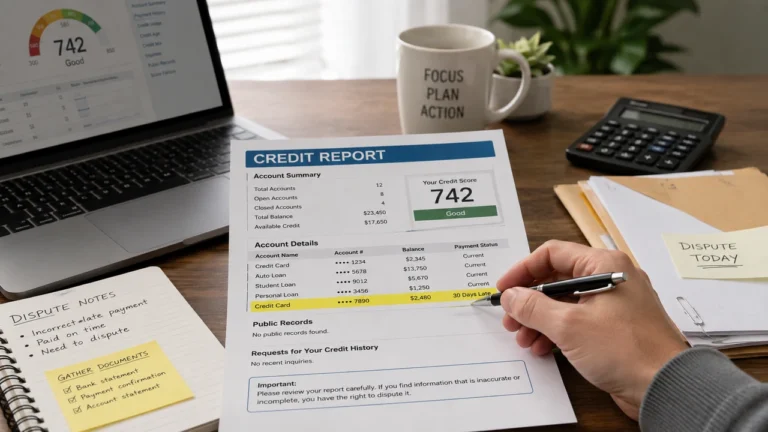
Request reports from Equifax, Experian, and TransUnion through AnnualCreditReport.com. Work from the full reports, not only a score app’s summary. Our guide to reading your credit report explains the account fields and payment history.
Find the mortgage account and check its status and remarks. Fannie Mae’s lender guidance notes that foreclosure-related events may be identified in account remarks and may not be reported consistently across creditors or bureaus. Do not search only the public-record section.
| Check | Compare with your records |
|---|---|
| Account identity | Match the lender or servicer, partial account number, and mortgage documents. |
| Payment history | Identify the missed-payment sequence and any later return to current status. |
| Final status | Check that foreclosure, short sale, or another resolution matches what actually happened. |
| Balance | Compare the amount reported with the final accounting, settlement, or applicable discharge records. |
| Removal estimate | Check the date used by the bureau rather than substituting the latest update date. |
Create one note per suspected error. “The August 2021 delinquency is shown as August 2023” is more useful than “Please delete this mortgage.” Keep dated report copies and identify the document that supports each correction.

Can a foreclosure be removed from your credit report early?
An accurate foreclosure within its reporting period generally stays until it ages off. Paying a company to challenge it does not create a right to early deletion. Experian distinguishes accurate foreclosure reporting from errors that can be disputed.
A record may need correction if it belongs to someone else, describes the wrong outcome, contains an incorrect date or balance, or remains beyond the applicable reporting period. Focus on the specific factual problem.
The CFPB’s dispute instructions recommend contacting both the credit reporting company and the business that supplied the information. For a mortgage account, identify the company furnishing that entry.
- Identify the entry. Include the bureau, creditor name, and enough account information to locate it.
- Explain the error. State what is reported, what should be reported, and why.
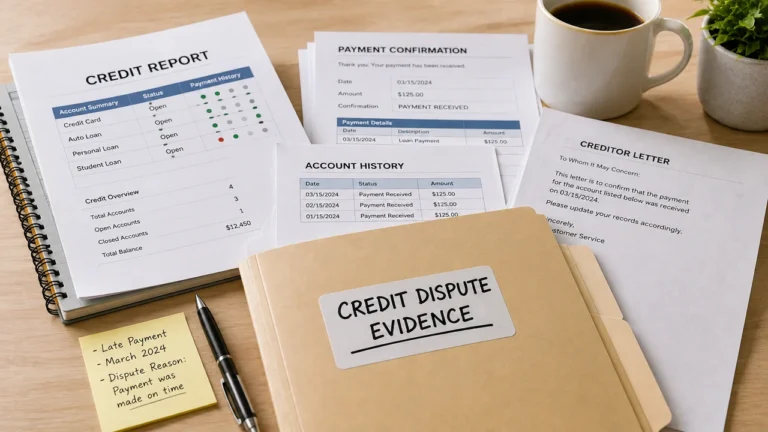
- Attach supporting copies. Use the relevant statement, payment confirmation, or resolution document. Keep originals.
- Save submission records. Retain your explanation, attachments, confirmation, and investigation result.
- Review the outcome. Compare the updated report with the correction you requested.
Follow our credit report dispute guide for the process, and use the dispute document checklist to match evidence to the error.
Is the reporting period the same as the wait for another mortgage?
No. Credit-report removal and mortgage eligibility answer different questions. A record disappearing does not automatically make you eligible for a particular loan.
For example, Fannie Mae’s foreclosure guidelines generally require seven years from completion of the foreclosure action. A three-year exception may apply with documented extenuating circumstances and additional restrictions. Other loan programs have their own rules.
In Morgan’s example, the usual report-removal estimate was June 2028. Seven years from the October 2022 foreclosure completion would be October 2029. The two dates answer different questions; neither is a promise of loan approval. Ask a lender which program, event date, and documentation apply before planning a purchase.
How to rebuild credit after foreclosure
You can start improving current credit habits before the foreclosure disappears. Its effect on your scores can lessen as it ages, but there is no universal recovery date or guaranteed point increase.
FICO’s credit-improvement guidance emphasizes accurate reports, timely payments, and lower revolving balances. A practical order is:
- Stabilize your current budget. Make room for housing, essentials, and required payments before taking on new borrowing.
- Keep active accounts current. Use reminders or payment arrangements you can sustain.
- Keep card balances manageable. Avoid spending beyond what your budget can repay.
- Apply selectively. Open an account only when it serves a purpose and its costs fit your situation.
- Track the same score source. Comparing the same bureau and scoring model makes changes easier to interpret.
Our step-by-step credit improvement guide helps organize those actions. If housing payments are still a problem, the CFPB’s housing counselor finder lists HUD-approved agencies that can help you explore options.
Common foreclosure reporting questions
Will paying the remaining balance remove the foreclosure?
Resolving a valid balance may change the balance and status reported, but it does not automatically erase accurate negative history. See how long paid-off debt stays on a credit report. Whether a remaining mortgage deficiency is legally owed depends on the circumstances and applicable law; get advice about the debt itself before treating it as payable or forgiven.
Is a short sale the same as foreclosure?
No. The CFPB describes a short sale as selling a home for less than the mortgage balance with the lender’s agreement. It is an alternative to foreclosure. The reported outcome should match the actual resolution, and existing late-payment history does not simply vanish. Keep any written agreement about the remaining balance.
What if bankruptcy and foreclosure both appear?
Review the bankruptcy case and mortgage account separately. They describe different events, and a bankruptcy discharge is not the same as deleting the mortgage’s history. Our guide to bankruptcy credit-report timelines explains the distinction between the case record and included accounts.
Will my credit score jump when the foreclosure falls off?
It may improve, but no fixed increase applies to everyone. Other negative entries, balances, account history, and the scoring model still matter. Do not use a predicted score jump as the basis for a home purchase budget.
Explore related guides on credit reports and disputes.
Sources and methodology
Sources checked October 6, 2026. This guide uses the linked Experian, CFPB, FTC, Fannie Mae, FICO, and AnnualCreditReport.com materials. The date scenarios and reporting checklist were created for this guide. Examples are hypothetical and do not predict a bureau’s exact update date, a credit score, or mortgage approval.
Educational information for U.S. readers, not individualized financial or legal advice. Consult a qualified attorney about a foreclosure, disputed deficiency, or bankruptcy order affecting your obligations.