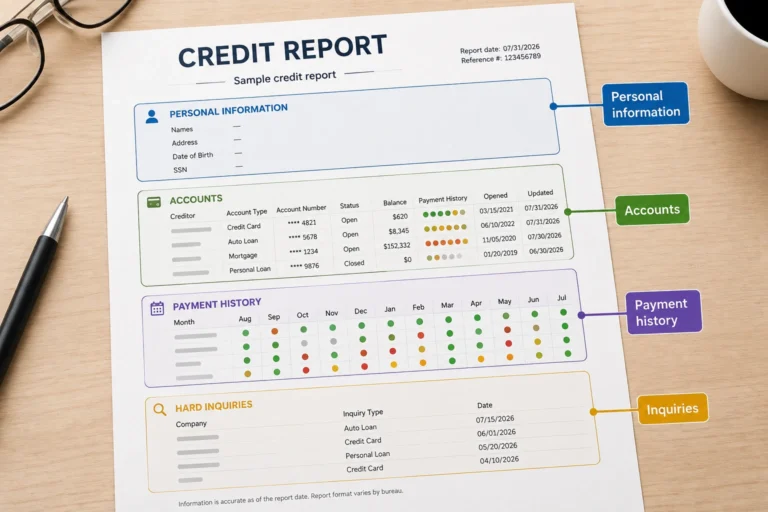
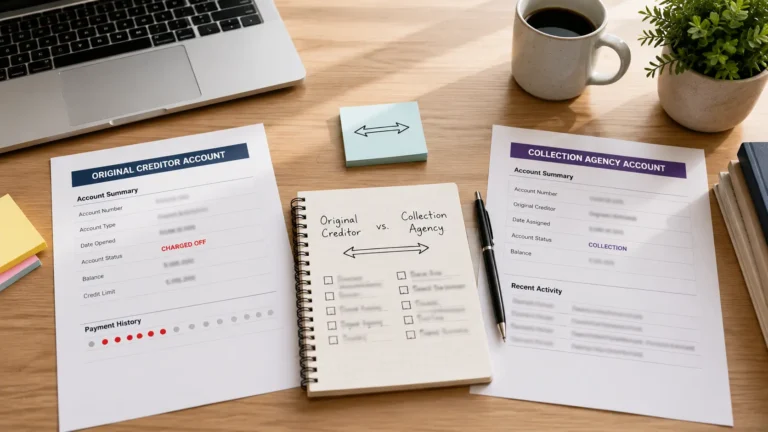
Can the same collection appear twice on your credit report?

Woman comparing two matching collection accounts on her credit report Credit score

If the same collection appears twice on your credit report, you need to determine whether the entries represent a legitimate account history, a transferred debt, or an inaccurate duplicate collection. This guide explains how to compare both tradelines, identify the current creditor, and dispute the specific reporting error.

Contents
  1. Quick answer
  2. How to tell whether two collection accounts are duplicates
  3. Compare the collection agency and creditor names
  4. Compare the account numbers
  5. Compare the balances
  6. Compare the dates
  7. Compare the statuses and account remarks
  8. Signs the collection may be duplicated
  9. Situations that are not automatically duplicates
  10. Why does the same collection appear twice on your credit report?
  11. The original creditor and collection agency are both reporting
  12. The same collector created two tradelines
  13. The debt was transferred to another collector
  14. The collection appears on multiple credit bureau reports
  15. Similar entries represent separate debts
  16. One account may not belong to you
  17. Duplicate collection comparison worksheet
  18. Three collection reporting examples
  19. Example 1: Two entries that may both be accurate
  20. Example 2: A likely duplicate from the same collector
  21. Example 3: An old and new collector both show the balance
  22. Decision tree: Is the collection really duplicated?
  23. Can a duplicate collection hurt your credit score?
  24. What to do when the same collection appears twice on your credit report
  25. Step 1: Get all three credit reports
  26. Step 2: Save both collection entries
  27. Step 3: Identify the current creditor
  28. Step 4: Request information from the collector
  29. Step 5: Identify the exact reporting error
  30. Step 6: Dispute the duplicate with each affected credit bureau
  31. Step 7: Send a direct dispute to the furnisher
  32. Step 8: Track the investigation
  33. Sample wording for a duplicate collection dispute
  34. When the same collector reports the account twice
  35. When an old and new collector both report a current balance
  36. What to customize before sending the dispute
  37. What happens after you dispute a duplicate collection?
  38. Checklist for reviewing the updated report
  39. What to do if the duplicate collection is not removed
  40. Review the investigation result
  41. Request the verification procedure
  42. Contact the furnisher
  43. Submit a new dispute only with new evidence
  44. File a CFPB complaint or consider legal help
  45. Common mistakes to avoid with duplicate collections
  46. Paying both collectors
  47. Disputing every related tradeline
  48. Saying the debt is not yours
  49. Relying only on matching balances
  50. Confusing a transferred debt with a duplicate
  51. Repeating the same dispute without new evidence
  52. Expecting a guaranteed credit score increase
  53. Frequently asked questions
  54. Can the same collection appear on all three credit reports?
  55. Will paying one collector remove both entries?
  56. Can duplicate reporting restart the seven-year period?
  57. Can I dispute a duplicate collection online?
  58. What if only one credit bureau removes the duplicate?
  59. Can a corrected collection remain on the credit report?
  60. Final thoughts

Quick answer

If the same collection appears twice on your credit report, one entry may be an inaccurate duplicate, but two related tradelines are not always an error. An original creditor and a collection agency may report different stages of the same debt, while two matching collection accounts on the same bureau report may indicate duplicate reporting.

Do not pay both entries until you confirm who currently owns the debt and which company is authorized to collect it. Compare the creditor names, partial account numbers, balances, dates, statuses, and account remarks before deciding whether to file a dispute.

What appears on your credit report What it may mean What to check
An original creditor account and one collection account The entries may report different stages of the same debt rather than a duplicate. Check whether the original account is closed, charged off, sold, or transferred and whether its current balance is accurate.
The same collection agency appears twice with matching details One tradeline may be a duplicate collection account. Compare the original creditor, partial account number, balance, dates, status, and account remarks.
Two collection agencies report the same full balance as currently due The debt may have been transferred, or one entry may contain outdated or inaccurate information. Identify the current creditor and determine which collector owns or is authorized to collect the debt.
The collection appears once on Equifax, Experian, and TransUnion This is not automatically duplicate reporting because each bureau maintains a separate credit file. Review each bureau report independently for duplicate tradelines, incorrect balances, or inaccurate statuses.

The next step is to compare the complete tradeline details and determine whether the two entries represent one debt reported twice or accurate account history.

How to tell whether two collection accounts are duplicates

Two collection accounts may be duplicates when the collector, original creditor, account identifiers, balances, dates, statuses, and account remarks connect both tradelines to the same underlying debt. A duplicate is more likely when both entries appear on the same credit bureau report and present the debt as a separate current obligation.

Use the complete reports from Equifax, Experian, and TransUnion rather than relying only on a credit monitoring app. Monitoring services may shorten company names, mask account numbers, or omit details needed to compare the entries. Review how to read your credit report if any account field is unclear.

Compare the collection agency and creditor names

Record the collection agency, original creditor, and current creditor shown on each tradeline. A report may use a company’s legal name, abbreviation, parent company, servicing name, or debt buyer name.

Different company names do not automatically mean the entries represent separate debts. Matching creditor information, balances, dates, and original account details may show that both tradelines trace back to the same obligation.

An original creditor account and a collection account are also not automatically duplicates. They may document different stages of the account history. Review the difference between a charge-off and a collection before disputing either entry.

Compare the account numbers

Check every visible digit, but do not rely on the collection account number alone. Credit reports may display only part of the original number, and a collector may assign its own internal reference number after receiving or purchasing the debt.

Two different collection account numbers can still refer to one original account. Matching numbers provide stronger evidence when the creditor, balance, dates, and status also match.

Compare the balances

Review the original balance, amount placed for collection, current balance, payments, credits, interest, and fees shown for each account. Identical balances may support a duplicate finding, but separate debts can occasionally have the same amount.

A stronger warning sign is when two collectors report the same full balance as currently due. If the debt was already paid or settled but one entry still reports an amount owed, review what to do when a paid collection is still showing a balance.

Compare the dates

Check the date opened, date assigned, date updated, date of first delinquency, last payment date, service or billing date, and estimated removal date. Similar dates may connect the entries, while different service dates or invoice dates may identify separate obligations.

The date opened on a collection tradeline may reflect when the collector received or began reporting the account. It should not be treated as the date of first delinquency or proof that the debt’s credit reporting period restarted.

Compare the statuses and account remarks

Determine whether each account is reported as open, closed, paid, settled, sold, assigned, transferred, disputed, or showing a zero balance.

A previous collector marked closed or transferred with a zero balance may document an account transfer rather than a duplicate. Two open tradelines with the same original creditor, balance, account details, and no clear transfer explanation require closer review.

Signs the collection may be duplicated

  • Both tradelines appear on the same credit bureau report.
  • The same collector and original creditor appear on both entries.
  • The partial account numbers or original account details match.
  • The balances, dates, statuses, and remarks are identical or substantially similar.
  • Both entries show the debt as open or currently due.
  • No transfer, sale, or separate account history explains the second entry.

Situations that are not automatically duplicates

  • An original creditor account appears with a separate collection tradeline.
  • A previous collector reports a zero balance while a new collector reports the unpaid amount.
  • The same collection appears once on each Equifax, Experian, and TransUnion report.
  • Similar entries have different service dates, original balances, or original account information.

After comparing the complete tradelines, determine whether the entries reflect accurate account history, a transferred debt, separate obligations, or one collection account reported twice.

Why does the same collection appear twice on your credit report?

The same collection may appear twice because the original creditor and a collector are reporting different parts of the account history, the debt was transferred to another collector, two similar debts were assigned to the same company, or inaccurate information created a duplicate collection account.

The original creditor and collection agency are both reporting

The original creditor may continue reporting the payment history and status of the original account after the debt is charged off, assigned, or sold. A collection agency or debt buyer may report a separate collection tradeline for the same underlying obligation.

Those entries are not automatically duplicates because they serve different reporting purposes. The original account may show the history that led to collection, while the collection tradeline identifies the company currently collecting or owning the debt.

The same collector created two tradelines

A possible duplicate exists when one collection agency appears twice with the same original creditor, balance, account identifier, dates, and status. This may result from information being submitted more than once or displayed as separate tradelines in the credit bureau file.

Small differences do not necessarily prove that the accounts are separate. Credit reports may mask account numbers, and a collector may use an internal reference number that differs from the original creditor’s account number.

The debt was transferred to another collector

An old and a new collection agency may both appear after a debt is reassigned or sold. The previous collector may remain as part of the reporting history, but its balance and status should accurately reflect whether it still owns or services the account.

A previous collector showing a zero balance or a closed or transferred status while the new collector reports the outstanding balance may reflect a normal transfer. Further review is needed when both companies report the full amount as currently due without explaining which company owns or is authorized to collect the debt.

The collection appears on multiple credit bureau reports

One collection appearing on Equifax, Experian, and TransUnion is not the same as one collection being listed three times on a single report. Each credit reporting company maintains a separate consumer file and may receive information from the same furnisher.

Check each report independently because the balance, status, dates, or number of tradelines may differ between bureaus. Free weekly reports are available through AnnualCreditReport.com, the federally authorized source for credit reports from the three nationwide credit reporting companies.

Similar entries represent separate debts

Two collection accounts from the same company may relate to different obligations. This commonly occurs with separate medical services, utility accounts from different addresses, unpaid invoices, or multiple accounts issued by the same original creditor.

Different service dates, original balances, account identifiers, or itemized charges can help distinguish separate debts from the same debt listed twice on a credit report.

One account may not belong to you

An unfamiliar entry may result from a mixed credit file, incorrect identifying information, or identity theft. It may also display an unfamiliar company name because the original creditor sold the account or hired a third-party collector.

The Consumer Financial Protection Bureau advises consumers to investigate an unfamiliar company before assuming the account is fraudulent because creditors may sell debts or use outside collection companies.

After identifying why the two entries may have appeared, compare the specific account fields to determine whether they document separate obligations, a legitimate transfer, or a true duplicate.

Duplicate collection comparison worksheet

Detail to compare Entry 1 Entry 2 What the comparison may reveal
Collection agency Whether the same or different collectors are reporting
Original creditor Whether both entries trace back to the same creditor
Current creditor Who may currently own the debt
Partial account number Whether the entries may refer to the same original account
Original balance Whether both amounts began with the same obligation
Current balance Whether both companies report money as currently due
Date opened When each collector may have received or reported the account
Date of first delinquency Whether the entries follow the same delinquency timeline
Account status Whether an entry is open, closed, paid, or transferred
Account remarks Whether a sale, transfer, dispute, or payment explains the difference
Estimated removal date Whether both entries appear connected to the same reporting timeline

After comparing the fields, practical examples can help distinguish legitimate account history from a likely duplicate collection.

Three collection reporting examples

These examples show what it can mean when the same collection appears twice on your credit report. The key difference is whether the entries document separate stages of one debt, repeat the same collection tradeline, or show conflicting claims from two collectors.

Example 1: Two entries that may both be accurate

ABC Bank

  • Status: Charged off and sold
  • Current balance: $0
  • Original balance: $1,450

XYZ Recovery LLC

  • Original creditor: ABC Bank
  • Current balance: $1,450
  • Status: Open collection

These entries may both be accurate because the original creditor and the collection company are reporting different stages of the same debt. The balances should not be added together as though the consumer owes $2,900.

Example 2: A likely duplicate from the same collector

First entry from XYZ Recovery LLC

  • Original creditor: ABC Medical Center
  • Account ending in 4521
  • Balance: $850
  • Date opened: March 2025
  • Status: Open

Second entry from XYZ Recovery LLC

  • Original creditor: ABC Medical Center
  • Account ending in 4521
  • Balance: $850
  • Date opened: March 2025
  • Status: Open

This pattern may indicate a duplicate collection account because the same collector, creditor, account identifier, balance, date, and status appear twice. The entries should still be compared with the full account records before either one is disputed.

Example 3: An old and new collector both show the balance

Old Recovery Inc.

  • Original creditor: City Utility
  • Current balance: $980
  • Status: Open

New Portfolio LLC

  • Original creditor: City Utility
  • Current balance: $980
  • Status: Open

Do not pay both companies. Confirm the current creditor, determine who owns the debt, and identify which collector is authorized to accept payment. If a collection disappeared and later returned under a different company, review why a collection account can disappear and come back before deciding whether the new entry is a duplicate.

Infographic comparing legitimate collection reporting, a possible duplicate, and two collectors reporting the same debt
One debt can produce different reporting patterns. Compare the current owner, balance, and account status before deciding which entry may be inaccurate.

These examples identify the most common reporting patterns. The next step is to use a decision tree to determine which explanation best matches the entries on your credit report.

Decision tree: Is the collection really duplicated?

A likely duplicate collection exists when two tradelines on the same credit bureau report point to one underlying debt and both present it as a separate current obligation. Use these four questions to decide whether the entries need further investigation.

  1. Do both entries appear on the same credit bureau report?No: One collection appearing separately on Equifax, Experian, and TransUnion is not duplicate reporting within the same credit file.Yes: Continue to the next question.
  2. Is one entry reported by the original creditor?Yes: Check whether it shows the original account history, such as a charge-off, sale, transfer, closure, or zero balance. An original creditor account and a collection tradeline are not automatically duplicates.No: If both entries are collection accounts, continue comparing them.
  3. Do both tradelines report a balance as currently due?Yes: Confirm who currently owns the debt and which company is authorized to collect it. Two collectors reporting the same full balance require closer review.No: A previous collector showing a zero balance or a closed or transferred status may be documenting the account history rather than a second current debt.
  4. Do the creditor, account details, balances, and dates match?Yes: The entries may represent one collection account reported twice, especially when no transfer, sale, or separate obligation explains the second tradeline.No: Different service dates, original balances, or original account details may indicate separate debts. Request additional account information before treating either entry as inaccurate.

If the entries still appear to represent the same current obligation, the next question is whether the duplicate reporting could affect your credit score.

Can a duplicate collection hurt your credit score?

A duplicate collection may affect your credit score and the credit terms lenders offer, but the exact impact cannot be predicted. The Consumer Financial Protection Bureau states that listing the same debt multiple times is not a harmless error and could lead to a lower score, higher interest rates, or less favorable loan terms.

A duplicated tradeline can make a credit file appear to contain more unpaid collection accounts than it actually does. However, credit scoring models evaluate the complete credit report, so no reliable formula can show how many points one duplicate entry may cost.

The potential impact depends on factors such as:

  • The credit scoring model and version used by the lender
  • The age of the collection account
  • Whether the collection is reported as paid or unpaid
  • The type and amount of the debt
  • Other late payments, charge-offs, or collections on the report
  • Whether an accurate collection or original creditor account remains

Different FICO Score versions may treat collection accounts differently, and the effect of one item cannot be measured without considering the rest of the credit file. Removing an inaccurate duplicate may correct the report, but it does not guarantee a specific score increase.

An accurate original creditor account may remain after a duplicate collection is deleted. A valid collection tradeline may also remain if only the second, duplicated entry was inaccurate.

If the duplicate is removed but the score does not change immediately, review why your credit score may not increase after a collection is removed. The correction can still improve the accuracy of your report even when the scoring result is small, delayed, or unchanged.

If the entries appear to represent the same current obligation, the next step is to document the reporting error and contact each affected credit bureau and furnisher.

What to do when the same collection appears twice on your credit report

If the same collection appears twice on your credit report, do not pay both entries or dispute them blindly. Document the two tradelines, identify the current creditor, determine which information is inaccurate, and contact each credit bureau and furnisher reporting the error.

Step 1: Get all three credit reports

Review your complete Equifax, Experian, and TransUnion reports because the duplicate collection may appear on only one or two of them. Use AnnualCreditReport.com, the federally authorized source for reports from the three nationwide credit reporting companies.

Save each report as a PDF or print a copy. Record the date you accessed it and any report or confirmation number provided.

Step 2: Save both collection entries

Preserve both tradelines before contacting the bureaus or collectors because balances, statuses, and account remarks may change during an investigation.

Save the following details from each entry:

  • Collection agency name
  • Original creditor
  • Current creditor, if listed
  • Partial account number
  • Original and current balances
  • Date opened and date updated
  • Date of first delinquency, if available
  • Account status and remarks
  • Estimated removal date

Step 3: Identify the current creditor

Contact the collection companies using verified information from your credit reports, collection notices, or their official websites. Ask whether each company owns the debt or is collecting for another creditor.

Confirm:

  • Who currently owns the debt
  • Whether the account was sold, assigned, transferred, or recalled
  • Which company is authorized to collect payment
  • Whether the previous collector still services the account
  • Which credit bureaus each company is reporting to

Do not provide payment information until you confirm that the company is legitimate and authorized to collect the specific debt.

Step 4: Request information from the collector

Review any validation notice you received and ask for enough information to connect the collection tradeline to the original account.

Relevant information may include:

  • The current creditor’s name
  • The original creditor’s name and address, if different
  • The original account number
  • The amount placed for collection
  • The current amount claimed
  • An itemization of interest, fees, payments, and credits
  • The date the collector received or purchased the account

A debt validation request and a credit report dispute are separate processes. Requesting information from a collector does not automatically dispute the tradeline with Equifax, Experian, or TransUnion.

Step 5: Identify the exact reporting error

Describe the specific inaccuracy instead of submitting a general statement that the account is duplicated.

The error may be:

  • The same collection tradeline appearing twice
  • A previous collector continuing to report a current balance after a transfer
  • Two collectors reporting the same debt as currently owed
  • An incorrect current creditor
  • An inaccurate balance or account status
  • Conflicting account dates
  • A collection account that belongs to another consumer

Request correction or deletion only of the information that is inaccurate, incomplete, duplicated, or unverifiable. An accurate original creditor account or valid collection tradeline may remain.

Step 6: Dispute the duplicate with each affected credit bureau

Submit a separate dispute to every credit bureau whose report contains the inaccurate entry. Identify both tradelines and explain which matching details connect them to the same underlying debt.

Your dispute should include:

  • Your full name and current mailing address
  • The collection agency and partial account number
  • The specific bureau report containing the error
  • A clear explanation of why the entries appear to duplicate one debt
  • The correction or deletion you are requesting
  • Copies of the relevant report pages and supporting records

Do not send original documents. Follow the full process to dispute errors on your credit report and keep proof of every submission.

Step 7: Send a direct dispute to the furnisher

Send a separate dispute to the collection agency, debt buyer, or other company that supplied the disputed information. Use the address the furnisher specifies for direct disputes when one is provided.

A qualifying direct dispute should clearly identify the account, explain the alleged inaccuracy, and include relevant supporting documents. A furnisher generally must conduct a reasonable investigation of a qualifying dispute, review the information you provide, and correct reporting found to be inaccurate. Exceptions may apply when a dispute lacks sufficient information or falls outside the direct-dispute requirements.

Step 8: Track the investigation

A credit bureau generally must complete its reinvestigation within 30 days after receiving a dispute. The period may extend to 45 days in certain circumstances, including when the consumer provides additional relevant information during the original investigation period.

The bureau generally must send the results within five business days after completing the reinvestigation. Review the updated report rather than relying only on the result notice.

Keep:

  • Copies of every dispute and supporting document
  • Online submission confirmations
  • Mailing and delivery records
  • Responses from the bureaus and furnishers
  • Updated credit reports
  • Notes from calls with collectors or creditors

Once you identify the inaccurate tradeline and gather the supporting records, use precise dispute wording that explains how the two entries connect to the same debt.

Sample wording for a duplicate collection dispute

Identify both collection tradelines, explain how they connect to the same underlying debt, and request correction or deletion of the specific inaccurate information. Replace every bracketed field with details from your credit report and supporting records.

When the same collector reports the account twice

Sample wording:

I am disputing two collection tradelines reported by [collection agency name] on my [Equifax, Experian, or TransUnion] credit report. The entries have account numbers ending in [first partial account number] and [second partial account number]. Both identify [original creditor name], report a balance of [$ amount], and show matching or substantially similar account details.

These tradelines appear to report the same underlying debt as separate collection accounts. Please investigate both entries and correct or delete the duplicate tradeline if it is inaccurate, incomplete, or cannot be verified. I am not disputing any separate account supported by distinct account records.

When an old and new collector both report a current balance

Sample wording:

I am disputing conflicting collection information reported by [previous collection agency] and [current collection agency]. Both entries identify [original creditor name], relate to account number ending in [partial account number], and report a current balance of [$ amount]. The attached records indicate that the account was [sold, transferred, assigned, or recalled] on [date, if known].

Please investigate which company currently owns or services the debt. If the previous collector no longer has authority to collect the balance, please correct its balance and account status or delete the inaccurate tradeline. I am requesting correction only of information that is duplicated, outdated, incomplete, or otherwise inaccurate.

What to customize before sending the dispute

  • The credit bureau receiving the dispute
  • Your credit report or confirmation number
  • The collector names and partial account numbers
  • The original creditor
  • The reported balances and statuses
  • The details connecting both entries to one debt
  • The specific information you want corrected or deleted
  • The documents included with the dispute

Do not state that the account is not yours when the debt belongs to you and the actual error is duplicate reporting. Do not dispute both tradelines automatically if one accurately reports the account. Send copies rather than original records, and include documents that can support a credit report dispute.

Supporting records should show how the two tradelines connect to the same underlying debt and which reported information is inaccurate.

What documents can prove a collection is duplicated?

The strongest evidence of a duplicate collection connects both tradelines to the same underlying debt and identifies the specific balance, status, creditor, or account information that is inaccurate. A matching balance alone is not enough.

Document or record What to compare What it may help establish
Complete credit report entries Collector names, original creditor, partial account numbers, balances, dates, statuses, and account remarks Whether two tradelines on the same bureau report present one obligation as separate collection accounts
Original creditor statements Original account number, billing or service date, original balance, payments, and account status Whether both collection entries trace back to the same original account
Collection notices or validation information Current creditor, original creditor, account reference number, itemized amount, payments, credits, interest, and fees Whether two collectors are seeking payment for the same debt
Sale, transfer, assignment, or recall letters Transfer date, previous collector, new owner or servicer, and account reference number Whether a change in debt ownership or servicing explains why two companies appear
Payment or settlement records Payment date, amount, account number, settlement terms, confirmation number, and remaining balance Whether one tradeline reports an inaccurate balance or payment status
Correspondence from creditors or collectors Statements about ownership, collection authority, transfer history, account closure, or current balance Whether one company no longer services the debt or both companies refer to the same account
Identity or address records Name, address, service location, account holder information, and other identifying details Whether one entry may belong to another consumer rather than being a true duplicate

Different collection account numbers do not necessarily mean the debts are separate, and identical balances do not prove duplication. Use records that connect both tradelines through the original creditor, account history, dates, and obligation. Send copies rather than original documents, and redact unrelated financial or personal information.

After submitting the evidence, review the investigation results to determine whether the inaccurate entry was deleted, corrected, or verified without changes.

What happens after you dispute a duplicate collection?

After you dispute a duplicate collection, the credit bureau may delete one tradeline, correct specific account information, verify both entries without changes, or show the account again after it was previously removed. Review the updated credit report because the result notice may not show every field that changed.

Investigation result What it may mean What to check next
The duplicate tradeline is deleted One entry was removed after the investigation. An accurate collection account or original creditor account may remain. Confirm that the inaccurate entry was deleted and that the remaining account reports the correct creditor, balance, status, and dates.
The information is corrected The tradeline remains, but its balance, status, creditor, ownership information, dates, or remarks changed. Compare each corrected field with your supporting records instead of checking only whether the account disappeared.
Both entries are verified without changes The furnishers may have confirmed the accounts, or the investigation may not have resolved how the two tradelines are connected. Determine whether the results explain why the entries represent separate debts, different stages of one debt, or two current obligations.
A deleted entry appears again The same information may have been reinserted, or another collector may have reported a transferred debt under a new tradeline. Compare the collector, account number, balance, dates, and status to determine whether the reporting is the same entry or a new account record.

Checklist for reviewing the updated report

  • Was the specific inaccurate tradeline deleted or corrected?
  • Does the previous collector show a zero balance when appropriate?
  • Is the account reported as open, closed, paid, or transferred accurately?
  • Is the correct current creditor identified?
  • Do two companies still report the same balance as currently due?
  • Does the date of first delinquency remain consistent with the original debt?
  • Did another tradeline appear under a different collector or account number?
  • Was the information corrected on every affected credit bureau report?

Deletion from one credit bureau does not mean Equifax, Experian, and TransUnion all made the same change. Review each report where the duplicate collection previously appeared.

If a removed account returns, compare the new and previous tradelines before disputing it again. A transferred debt reported by a new collector is not automatically the same as reinsertion of the deleted entry. Review why a collection account can disappear and come back to identify the correct reporting issue.

If both entries remain unchanged, determine whether the bureau overlooked your evidence, the furnisher confirmed separate debts, or additional records are needed to clarify the account history.

What to do if the duplicate collection is not removed

If a duplicate collection remains after the investigation, determine what the credit bureau verified before submitting another dispute. A follow-up should identify the unresolved error and include clearer or new evidence rather than repeat the original submission.

Review the investigation result

Compare the result notice with your original dispute and updated credit report. Confirm that the bureau investigated both tradelines and check whether any balance, status, creditor, date, or account remark changed.

Determine whether the response explains why the entries represent separate debts, different stages of one account, or two current obligations. A statement that the information was verified may not explain how the tradelines were distinguished.

Request the verification procedure

You may request a description of the procedure used to determine the accuracy and completeness of the disputed information. Ask for the name, address, and telephone number of each furnisher contacted during the investigation.

Request clarification about which furnisher verified each tradeline and which account identifiers were used to treat the entries as separate accounts. The bureau may not be required to provide the furnisher’s complete internal account file.

Contact the furnisher

Send a focused direct dispute to the collection agency, debt buyer, or creditor that supplied the unresolved information. Identify both tradelines and explain the exact conflict that remains.

Include the collector names, partial account numbers, original creditor, matching balances or dates, the bureau’s investigation result, and records showing ownership, transfer, payment, settlement, or account closure. Request correction of the specific inaccurate balance, status, creditor, or duplicate entry.

Submit a new dispute only with new evidence

A new dispute should correct a weakness in the first submission or include relevant information that was not previously considered.

Useful new evidence may include:

  • A letter identifying the current debt owner
  • A sale, transfer, assignment, or recall notice
  • A statement from the original creditor
  • A payment, settlement, or zero-balance confirmation
  • A clearer comparison of both tradelines
  • Written confirmation that a previous collector no longer services the account

Explain how the new evidence connects both entries to the same debt and identify the exact reported field that remains inaccurate.

A CFPB complaint may be appropriate when the credit bureau or furnisher does not address a documented reporting conflict. Include the original dispute, submission confirmation, supporting records, investigation results, updated report, and correspondence with the furnisher.

Consider consulting a consumer law attorney when inaccurate duplicate reporting continues after detailed disputes and causes significant harm, such as a denied mortgage, rejected rental application, higher borrowing costs, or another consumer’s information appearing in your file. Neither a complaint nor legal assistance guarantees that the tradeline will be removed.

Before taking another action, make sure the unresolved error is clearly identified and supported by information that was not adequately addressed during the first investigation.

Common mistakes to avoid with duplicate collections

When the same collection appears twice on your credit report, avoid actions that could hide the actual reporting error, lead to payment of the wrong company, or weaken your dispute. Confirm the account history and challenge only the information that is inaccurate.

Paying both collectors

Two collection tradelines do not automatically mean that you owe the balance twice. Before paying, confirm who currently owns the debt and which company is authorized to accept payment.

Do not request deletion of every account connected to the debt. An accurate original creditor account, valid collection tradeline, or previous collector entry with a zero balance may remain. Identify the specific duplicate, incorrect balance, inaccurate status, or outdated creditor information.

Saying the debt is not yours

Do not state that the account is not yours when the underlying debt belongs to you and the actual problem is duplicate reporting. Explain that both entries appear to report the same original obligation as separate collection accounts.

Relying only on matching balances

Identical balances do not prove that two accounts are duplicates. Compare the original creditor, partial account numbers, service dates, original balances, statuses, and transfer history before reaching a conclusion.

Confusing a transferred debt with a duplicate

A previous collector and a new collector may both appear after a sale, assignment, or transfer. Investigate whether both companies report the balance as currently due and whether the previous collector accurately shows a zero balance, closed status, or transfer remark.

Repeating the same dispute without new evidence

If the first investigation leaves both entries unchanged, do not simply resend the same explanation and documents. Identify what was not addressed and add relevant evidence, such as a transfer notice, creditor statement, payment record, or clearer comparison of both tradelines.

Expecting a guaranteed credit score increase

Correcting a duplicate collection improves the accuracy of your credit report, but it does not guarantee a specific or immediate score increase. The outcome depends on the scoring model and the other information remaining in your credit file.

The remaining questions involve reporting across multiple bureaus, payment updates, transferred debts, and what information may remain after a duplicate is corrected.

Frequently asked questions

The same collection can appear in several places without being a true duplicate. These questions address reporting across multiple bureaus, payment updates, credit reporting timelines, and what may remain after an error is corrected.

Can the same collection appear on all three credit reports?

Yes. A collection agency may report the same account to Equifax, Experian, and TransUnion. One entry on each bureau’s separate report does not mean the debt was reported three times within the same credit file.

Review each report independently. A possible duplicate exists when two tradelines on the same bureau report appear to present one underlying debt as separate collection accounts.

Will paying one collector remove both entries?

Not necessarily. Paying the authorized collector may update the balance and payment status of the accurate collection tradeline, but it does not guarantee deletion of that account, an original creditor account, or an inaccurate duplicate.

If another entry continues to report an incorrect balance or status after payment, dispute the specific reporting error with each affected credit bureau and furnisher.

Can duplicate reporting restart the seven-year period?

No. Reporting the same debt again, selling it, or transferring it to another collector does not create a new date of first delinquency for the underlying account.

A new collector may report a later date opened because that field can reflect when it received the account. The date opened should not be confused with the original delinquency date used to determine the credit reporting period.

Can I dispute a duplicate collection online?

Yes. Equifax, Experian, and TransUnion each provide an online dispute process. Identify both tradelines, explain how they connect to the same debt, and specify which balance, status, creditor, or account entry appears inaccurate.

Save the submission confirmation, copies of uploaded documents, the original reports, and the investigation results. Online portals may not preserve every detail in a form that is easy to retrieve later.

What if only one credit bureau removes the duplicate?

A correction by one credit bureau does not automatically update the other bureaus. Check every report where the duplicate appeared and submit a separate dispute to each bureau that continues to report inaccurate information.

Use the corrected report and investigation result as supporting evidence, but remember that each bureau may conduct its own investigation.

Can a corrected collection remain on the credit report?

Yes. A collection tradeline may remain if the account itself is accurate and only certain information required correction. For example, a previous collector may continue to appear with a zero balance and a closed or transferred status.

Removing an inaccurate duplicate does not require deletion of an accurate collection account or original creditor history connected to the same debt.

The final step is to summarize how to identify duplicate reporting, avoid paying the wrong company, and dispute only the information that is inaccurate.

Final thoughts

An original creditor and a collection agency may both appear when they accurately report different stages of the same account history. A previous collector may also remain with a zero balance and a closed or transferred status after another company receives the debt.

A duplicate collection is more likely when two tradelines on the same credit bureau report connect to one underlying debt and both present it as a separate current obligation. Compare the original creditor, account identifiers, balances, dates, ownership history, statuses, and account remarks before paying either company.

If one entry appears inaccurate, save both tradelines, identify the current creditor, gather supporting records, and dispute the specific duplicate, balance, status, or creditor information with each affected credit bureau and furnisher. Keep the original reports, dispute confirmations, investigation results, and updated reports until the information is accurate.


Rate article
Fix My Money Life