In this guide
- Does a credit card dispute affect your credit score?
- A charge dispute is different from a credit-report dispute
- Do you have to pay a disputed credit card charge?
- How to dispute a charge without missing a payment
- What happens to autopay during a dispute?
- How long does a credit card dispute take?
- Can provisional credit change your credit utilization?
- What if your credit card dispute is denied?
- Frequently asked questions
- Sources
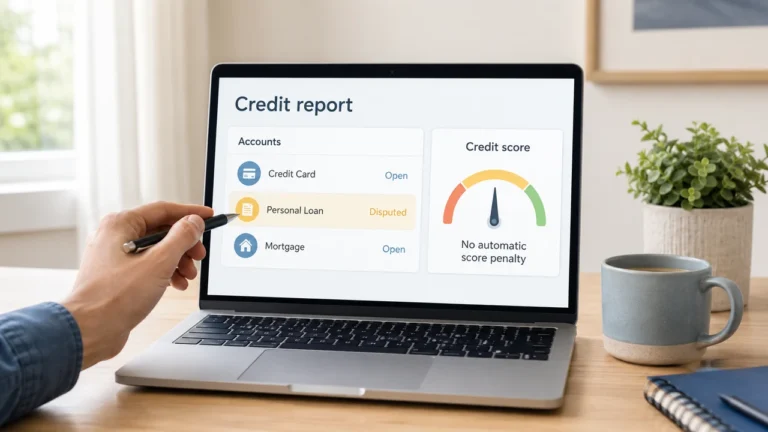
Disputing a credit card charge generally does not hurt your credit score by itself. Filing a transaction dispute is not an application for credit. The bigger risks are missing payments you still owe and changes to your reported balance while the case is being resolved.
For a qualifying billing error reported correctly and on time, federal rules let you withhold the disputed amount and related charges during the investigation. You must still pay the undisputed part as required. This guide covers U.S. consumer credit cards; debit-card disputes follow different rules.
Your first three moves: contact the card issuer promptly, preserve your written-notice rights, and confirm the payment still due. Do not turn off every payment just because one purchase is disputed.
Does a credit card dispute affect your credit score?
Experian explains that a card dispute does not directly affect your credit, although the account may show a dispute notation. That notation is different from a late payment. There is no standard number of points you lose for asking your issuer to investigate a charge.
Keep these three events separate: opening the dispute, the issuer changing your balance, and making your monthly payment. A score change during an investigation does not establish that filing the claim caused it.
| Event | What it means |
|---|---|
| You file a charge dispute | The filing itself generally does not lower your score. |
| You withhold a protected disputed amount | During the investigation, the issuer cannot report you delinquent solely for withholding that amount and related charges. |
| You miss an undisputed payment | The dispute does not protect unrelated nonpayment. A reported delinquency can hurt your credit. |
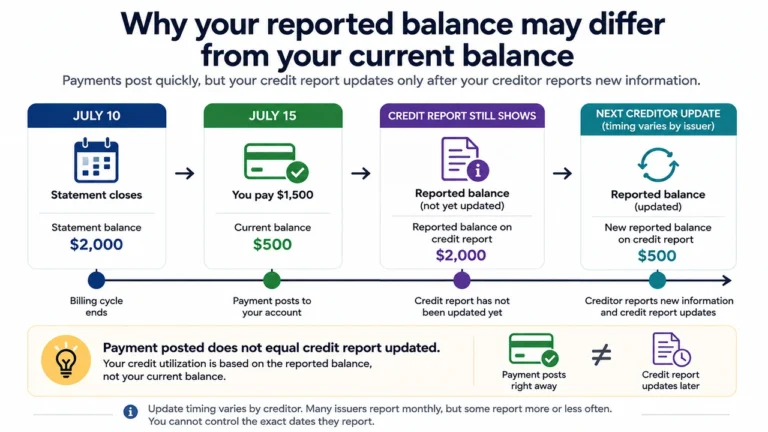
| Your reported balance changes | Your utilization may change, which can affect your score independently of filing the dispute. |
The reporting protections above come from Regulation Z, section 1026.13. They apply to the covered billing-error process, not automatically to every disagreement with a merchant.
A charge dispute is different from a credit-report dispute
A credit card charge dispute challenges a transaction or billing mistake with the card issuer: for example, a duplicate purchase or a charge you did not authorize. A chargeback is a process that may reverse a card transaction.
A credit-report dispute challenges information supplied to a credit bureau, such as an incorrect account balance or late-payment entry. If that is your issue, see whether disputing your credit report affects your score. Reporting a transaction to your bank does not automatically file a separate bureau dispute.
Purchase-quality complaints need special care. Goods never delivered as agreed can fall within billing-error rules, while dissatisfaction with goods you accepted may follow a different route. The CFPB explains these distinctions in its guide to credit card purchase refunds. Do not assume a general customer-service complaint suspends your payment obligation.
Do you have to pay a disputed credit card charge?
For a timely, qualifying billing-error dispute, you can withhold the disputed amount and related finance or other charges while the issuer investigates. The CFPB’s billing-error guide also emphasizes paying correct, undisputed charges on time.
Do not subtract the disputed purchase from your minimum payment yourself. The statement balance and required minimum are different numbers. Ask the issuer to identify the adjusted payment required on the undisputed balance and confirm how it will appear on your account.
Example: a $300 duplicate on a $1,200 statement
Suppose Maya’s $1,200 statement includes a $300 duplicate charge. She submits a qualifying billing-error notice on time. Ignoring interest and fees for this example, $900 is undisputed.
- The $900 is the undisputed statement balance, not automatically the minimum payment.
- If Maya normally pays in full and has a purchase grace period, paying that undisputed $900 by the applicable deadline can preserve the grace period on undisputed purchases.
- If she cannot pay the full $900, she still needs to make the required payment on the undisputed balance. Interest may apply under her card terms.
- She saves the issuer’s explanation of the adjusted payment and checks that her payment posts.
The billing-error rules protect an otherwise available grace period from being lost solely because a protected disputed amount remains unpaid. They do not make all other borrowing interest-free. Our guide to the statement date versus payment due date explains which date controls the payment deadline.
How to dispute a charge without missing a payment
- Identify the actual problem. Compare the posted transaction with receipts, subscriptions, and purchases by authorized users. A merchant’s billing name can differ from its storefront name. Report suspected unauthorized use immediately through the issuer’s official contact channel. If your card was lost or stolen, also review how to replace it without opening a new credit account and keep your upcoming payments on track.
- Save supporting records. Keep the statement, receipt, order or cancellation confirmation, delivery information, and relevant merchant messages. Note the disputed amount and the date the first statement showing the error was sent.
- Contact the issuer promptly. Use the number on the card or statement, or the issuer’s authenticated website or app. Ask for a case number. A merchant may resolve a duplicate quickly, but waiting for a promised refund should not make you miss your notice deadline.
- Send a proper billing-error notice. The issuer must receive it at its designated billing-inquiries address within 60 days after sending the first statement reflecting the error. That address may differ from its payment address. Keep a copy and delivery evidence.
- Verify what is still due. Confirm the undisputed payment, its due date, and any scheduled automatic withdrawal. Keep paying the required undisputed amounts while the case is open.
- Track the result. Respond to requests for relevant records and check the final decision against later statements. A temporary credit is not the final outcome.
The CFPB recommends following up in writing to preserve billing-error rights. Under Regulation Z, an electronic notice can satisfy the written requirement if the issuer’s billing-rights statement specifies an accepted electronic method and you use it. Do not assume a phone call or any online chat alone meets that requirement.
What to put in your written notice
Include enough information to identify your name and account, the transaction date and amount, and a clear explanation of the error. For example: “My statement shows two $300 charges from the same merchant for one purchase. The attached receipt supports a single $300 purchase. Please investigate and correct the duplicate charge.”
Use the issuer’s designated secure channel or mailing instructions for account information. Keep originals of your evidence and submit copies.
What happens to autopay during a dispute?
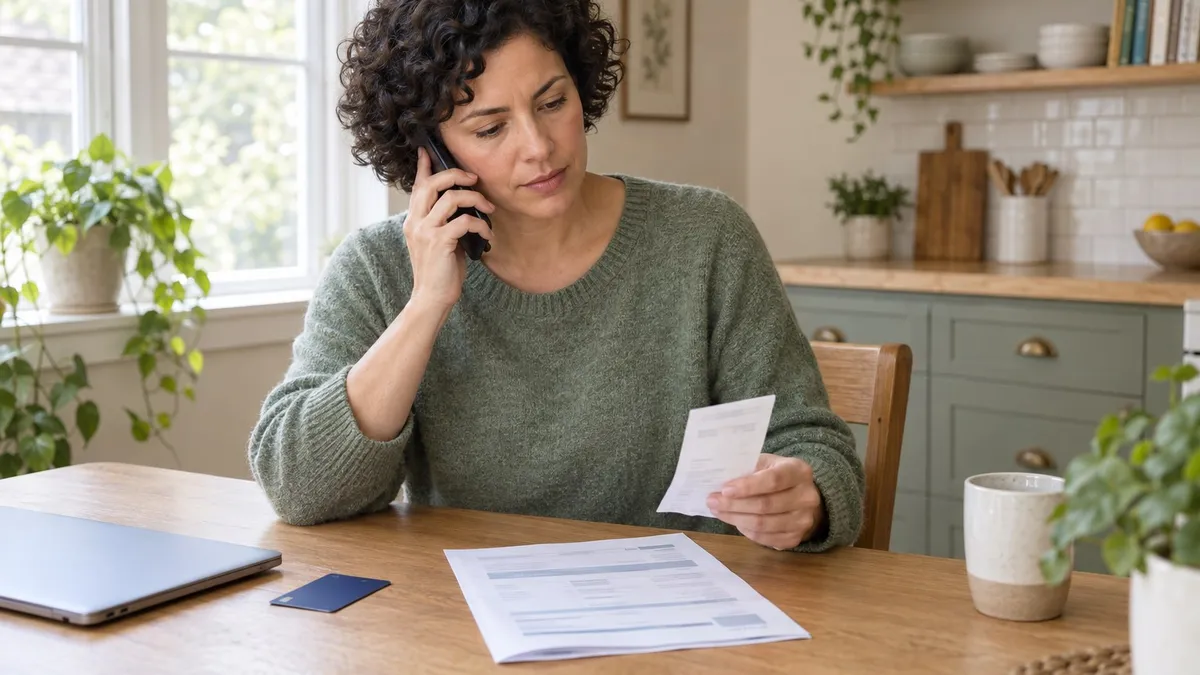
Check the next withdrawal before it runs. For an automatic payment plan offered by the card issuer, Regulation Z says the issuer must not deduct the disputed amount or related charges when it receives the billing-error notice at least three business days before the scheduled payment.
That specific protection does not apply to a bill-payment service offered by another financial institution. If notice arrives later, contact the issuer about the pending withdrawal and subsequent payments. Do not cancel the whole payment without arranging the undisputed portion.
A useful question is: “What amount will you withdraw on my next due date, and what payment do I still need to make while this billing-error dispute is pending?” For routine safeguards, see how to set up credit card autopay.
How long does a credit card dispute take?
For the federal billing-error process, the clock runs from the issuer’s receipt of your qualifying notice. The acknowledgment period does not add another 30 days to the investigation deadline.
| Stage | Deadline |
|---|---|
| Your written notice | Received within 60 days after the first statement showing the error was sent. |
| Issuer acknowledgment | Within 30 days after receipt, unless the dispute is already resolved under the required procedures. |
| Issuer resolution | Within two complete billing cycles after receipt, and no later than 90 days. |
A voluntary merchant refund or network chargeback may involve different procedures. Do not treat an issuer’s longer voluntary claim window as an extension of the federal written-notice deadline.
If a merchant issues a refund, check whether a credit card refund counts as a payment before reducing your next payment. A posted refund can lower your balance without satisfying the minimum still due.
Can provisional credit change your credit utilization?
A provisional credit is a temporary account adjustment. If the issuer provides one, it can be reversed following a decision that you owe the charge, subject to the applicable resolution rules. Do not spend the apparent extra room as though the refund is final.
FICO explains that reported balances and credit utilization matter. A lower balance in your card app does not necessarily mean the same balance has reached the credit bureaus.
For illustration, $1,200 reported against a $4,000 limit is 30% utilization. A reported balance of $900 against that same limit is 22.5%. Those calculations describe the ratio only; they do not predict a score change or guarantee how a disputed balance will be reported or scored. Learn more about how credit utilization works.
What if your credit card dispute is denied?
A denial does not itself create a separate credit-score penalty. Read the issuer’s written explanation, amount owed, and payment deadline. If you disagree, ask for the supporting documents and provide any missing evidence promptly.
Under the billing-error rules, the issuer must allow the applicable payment period before adverse reporting: at least 10 days after you could reasonably be expected to receive the amount-due notice, or the longer disclosed grace period. Interest treatment depends on whether you originally had a grace period; a dispute is not a guaranteed interest-free loan.
If you still disagree, a timely further written notice triggers additional dispute-reporting duties, but it does not guarantee that an unpaid balance cannot be reported delinquent. Do not assume an appeal restarts the entire investigation or payment clock.
If a balance or late-payment entry is inaccurate, use the separate process to dispute errors on your credit report. If the issuer fails to address the billing problem, you can submit a CFPB complaint with the relevant records.
Frequently asked questions
Does a chargeback hurt your credit?
Requesting a chargeback generally does not hurt your credit by itself. Continue making required undisputed payments and review the final outcome. Nonpayment of an amount you ultimately owe can create a separate credit problem.
Can you dispute a charge after paying it?
Yes. The CFPB says you can dispute a billing error even if you already paid the charge. Preserve the applicable notice deadline and keep your payment and purchase records.
Can the issuer close your card because you disputed a charge?
Regulation Z prohibits restricting or closing the account solely because you exercised its billing-error rights in good faith. That protection does not prevent every closure for an independent reason.
Why did your score drop while a dispute was open?
Check the underlying report for changed balances, reported late payments, and other account changes. Timing alone does not establish the cause. Our guide to reading your credit report explains what to compare.
Before your next due date: save your case number and notice receipt, confirm the required undisputed payment, check autopay, and put the expected resolution deadline on your calendar.
Explore related guides on credit cards and utilization.
Sources
- CFPB: Regulation Z billing-error resolution
- CFPB: How to fix mistakes in your credit card bill
- CFPB: Credit card purchase refunds
- Experian: How to dispute a credit card charge
- myFICO: Amounts owed and credit utilization
Sources checked October 7, 2026. This guide draws on the linked CFPB guidance, Regulation Z, Experian, and FICO materials. The Maya payment example and utilization calculations are hypothetical. Educational information for U.S. consumers; individual card terms and dispute facts matter.
Claire Bennett is an editorial name, as explained on the author page. No independent expert review is claimed.
Educational information only; not personalized financial, legal, tax, or credit advice.