In this guide
- The difference in one minute
- Charged-off account vs. sold account at a glance
- What is a charged-off account?
- What does it mean when a debt is sold?
- Can a charged-off debt be sold?
- A simple ownership checker
- Who should you pay?
- What should the original creditor show after a sale?
- Can both companies appear on your credit report?
- Does selling the debt restart the seven-year period?
- What should you do before paying or disputing?
- Short action checklist
- Frequently asked questions
- Related guides
- Sources
- Verify the owner before your next move
The difference in one minute
Charged-off account vs. sold account: the first label describes an accounting and account-status event, while the second describes an ownership event. A creditor charges off debt after treating it as a loss for accounting purposes, but that does not erase what you owe. The creditor may keep the debt, hire a collector to service it, or sell it to a debt buyer. Therefore, a charged-off account can be either retained or sold.
The practical question is not simply whether the account says “charged off.” It is who currently owns the debt and who is authorized to accept payment. Confirm those facts before sending money, sharing bank details, or agreeing to terms.

Charged-off account vs. sold account at a glance

What is a charged-off account?
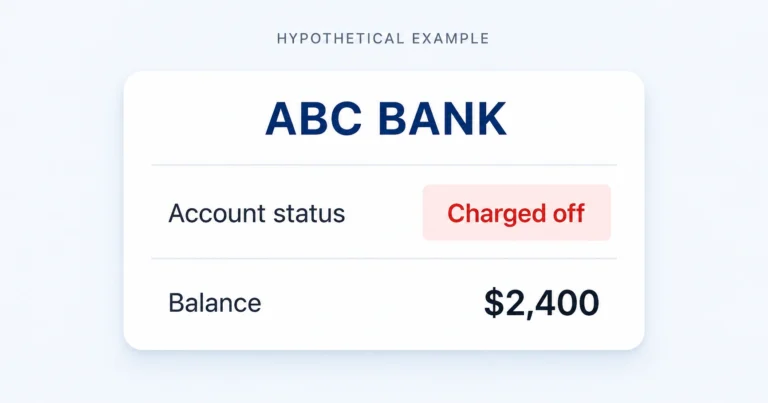
A charge-off occurs when a creditor moves a seriously delinquent account out of its active receivables and records a loss under its accounting practices. It is an internal classification with external consequences: the account may be closed, collection efforts may continue, and the status may appear on your credit reports. Charge-off is not forgiveness, cancellation, or proof that another company owns the balance.
A creditor can still own and collect its charged-off debt. It can also assign collection work to a third-party agency without selling anything. The CFPB distinguishes an original creditor from a debt collector, and explains that collectors may collect debts owed to others. Consequently, a collection letter does not automatically establish that the sender purchased the account. For broader reporting context, see how a charge-off appears on your credit report and how charge-off differs from collection activity.
What does it mean when a debt is sold?
A sale transfers ownership rights in the debt from the seller to a buyer. The buyer may collect directly or use another company as its collection servicer. A debt buyer is generally a person or business that purchases debts, often after default, as the CFPB explains in its overview of debt collectors and debt buyers. Your contract obligations and applicable law still matter after ownership changes.
Sale and charge-off often occur in sequence, which is why reports and letters can feel confusing. A lender might first charge off an account, continue collecting for months, and later sell it. Another lender might retain charged-off accounts and merely outsource calls and letters. The presence of a new company proves neither scenario by itself.
Can a charged-off debt be sold?
Yes. A charged-off debt can be sold once or resold multiple times, subject to contracts and applicable law. Charge-off does not block a transfer, and transfer does not undo the earlier charge-off. These labels can coexist: the original tradeline can show a charged-off status while a debt buyer separately reports or collects the purchased balance.
Who owns the debt after a sale?
After a completed sale, the buyer owns the debt unless it later transfers it again. However, the company contacting you may only be servicing the account for that owner. Ask for the current creditor’s name and mailing address, plus the collector’s role. Do not infer ownership from a logo, caller ID, or payment portal.
A simple ownership checker
Use documents, not assumptions. Work through these questions and keep copies of every answer, letter, report, statement, and payment offer in one dated file.
- Does the original creditor say it still owns the account? If yes, ask whether the collector is authorized to act for it.
- Does the original creditor say it sold or transferred ownership? Ask for the buyer’s name and effective transfer date.
- Does a collector identify the current creditor, original creditor, itemized amount, and account details? Compare these with your records.
- Do credit reports from all three nationwide bureaus show consistent ownership, balances, dates, and statuses? Differences are not automatically errors, but unexplained conflicts deserve investigation.
- Can the company provide validation information and explain its authority to collect? If not, pause before paying.

Who should you pay?
Pay the verified current owner or a collector that the owner has authorized to receive payment. If the original creditor retained ownership, payment may go to that creditor or its assigned collector. If the debt was sold, payment generally goes to the buyer or its authorized servicer, not automatically to the original creditor named on old statements.
Start by contacting companies through independently verified phone numbers or addresses, not only those in an unexpected message. Request the current creditor’s identity, a breakdown of the claimed amount, and written payment instructions. Before paying, decide whether you are paying in full or negotiating a settlement. Get every material term in writing, including the amount, deadline, account covered, and how the remaining balance will be treated.
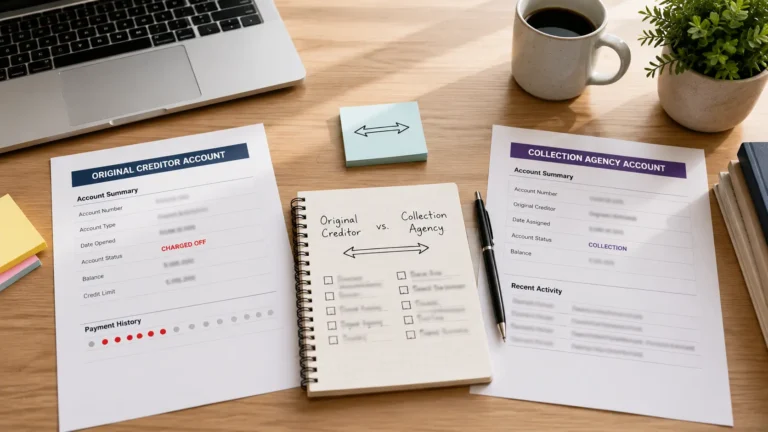
Before sending a payment, confirm which company owns the debt and which company is authorized to collect it. Use our original-creditor versus collection-agency checklist to organize those checks.
Never pay two companies for the same balance merely because both appear on a credit report. Reporting and ownership are related but different questions. If claims conflict, stop and request documentation before money changes hands.
What should the original creditor show after a sale?
When an original creditor sells a charged-off debt, its reported balance commonly updates to $0, because that company no longer owns the amount. Its tradeline may still retain historical late payments, charge-off status, dates, and other accurate information. The buyer may report a separate collection account or simply collect without furnishing information to credit bureaus. Practices and report layouts vary, so read every field rather than relying on the account title alone.
A $0 balance on the original tradeline does not mean the debt was paid, forgiven, or removed. It can mean ownership moved. Conversely, a balance remaining with the original creditor may be appropriate if it still owns the debt. An original creditor showing an amount after a documented sale could warrant clarification or a dispute if inaccurate.
Can both companies appear on your credit report?
Yes. The original creditor’s tradeline and a buyer’s or collector’s account can both appear when each reports its own accurate information. That is not automatically duplicate debt. The important issue is whether reporting wrongly suggests that two different owners are each owed the full balance at the same time.

Example 1: retained debt
A bank tradeline shows “charged off” with a $3,200 balance. An agency sends letters naming the bank as current creditor. This can indicate that the bank owns the debt while the agency collects for it.
Example 2: sold debt
The original lender shows “charged off,” $0 balance, and a closed status. A debt buyer reports a $3,200 collection. This pattern can be consistent with a sale, assuming the dates, amount, identity, and ownership are accurate.
Example 3: possible reporting problem
The lender confirms a sale and reports $0, but another report still lists the lender with the full current balance while the buyer also claims it. Gather sale and validation records, then ask the furnishers or bureaus to investigate specific inaccuracies.
For a focused walkthrough, review what to do when a creditor and collection agency both report a balance.
Does selling the debt restart the seven-year period?
A sale does not by itself create a new federal credit-reporting period. For collection accounts and charge-offs, federal reporting rules generally tie the exclusion period to the delinquency that led to the charge-off or collection, not to a later purchase date. Reselling an old debt therefore should not make accurate negative information newly reportable solely because ownership changed.
Do not confuse credit-reporting time limits with a state statute of limitations for filing a lawsuit. They are different legal timelines, and payment, acknowledgment, or other conduct can have state-specific consequences. Before acting on an older account, consider qualified legal advice for your state. Learn more about how long a charge-off stays on a credit report.
What should you do before paying or disputing?
Use this sequence to reduce mistakes. Keep communications factual and specific; do not assume that every unfamiliar name signals fraud or a sale.

- Pull current credit reports and save copies showing balances, dates, remarks, and company names.
- Match the account using the original creditor, masked account number, opening date, and amount history.
- Ask who owns the debt today and whether the contact is owner or servicer. Request written proof.
- Review validation information, including creditor identity, amount itemization, and dispute instructions.
- Compare the first delinquency history and other dates. A sale date is not a new delinquency date.
- Check whether the claimed balance reflects payments, settlements, fees, interest, and prior adjustments accurately.
- If information is wrong, identify each field and support your position with copies, not originals. Follow a structured credit-report dispute process.
- Do not send payment until the recipient’s authority and written terms are clear.
Debt collectors generally must provide validation information about the debt, typically in an initial communication or within five days after it, subject to the federal rule. The CFPB’s validation information guide and Regulation F validation notice requirements explain the required content and consumer protections. A written dispute sent within the stated validation period can require the collector to pause collection of the disputed amount until verification is mailed or otherwise provided as the rule permits. Deadlines and circumstances matter, so follow the notice carefully.
Bottom line: charge-off tells you the account’s status; sale tells you who owns it. Verify both, then direct payment or disputes to the company.
Short action checklist
- Confirm whether charge-off describes status only.
- Identify current owner and any authorized collector.
- Compare original creditor and buyer balances.
- Request validation information and preserve deadline.
- Put payment or settlement terms in writing.
- Dispute specific, supportable reporting errors.
Frequently asked questions
Can a sold debt still say charged off?
Yes. The original account can accurately retain its historical charge-off status after ownership transfers. The buyer’s entry, if any, reflects its role. Review balances, dates, and owner identity together.
Can the original creditor take payment after selling?
Not unless it is authorized to service the sold debt or the sale arrangements say otherwise. Ask both parties for written confirmation. Do not rely on an old statement or saved payment link.
Will paying remove the charge-off?
Not necessarily. Payment may update a balance or status, but accurate negative history can remain for the applicable period. No score increase or deletion is guaranteed.
Related guides
- Charge-off guides — account status, balances, payment updates, and reporting.
- Collection guides — debt ownership, balances, dates, and collection reporting.
Sources
Sources checked September 17, 2026.
- CFPB: Original creditor versus debt collector.
- CFPB: Validation information debt collectors must provide.
- CFPB: Regulation F, Section 1006.34, validation notices.
- CFPB: What a debt collector or debt buyer is.
- Experian: Paying closed or charged-off accounts and checking ownership.
Educational note: This article provides general U.S. personal-finance information, not legal advice. Laws, contracts, reporting practices, and individual facts vary. Consider a consumer-law attorney or nonprofit credit counselor when ownership is disputed, a lawsuit is threatened, or an old debt may have legal consequences.