In this guide
- Quick answer
- Start by protecting essentials and urgent obligations
- Create a past-due account worksheet
- Make the next payment plan realistic
- Choose payments using a practical decision framework
- Call creditors early and ask specific questions
- Understand partial payments, credit reporting, and collections
- Follow up after you make a plan
- Bottom line
- Sources
Quick answer
When several accounts are past due, do not panic or send every available dollar to the oldest balance. First protect housing, utilities, food, transportation, insurance, and any payment with an immediate legal or practical consequence. Then list every delinquent account, identify how late it is, find the amount required to bring it current, and call each creditor before making a payment you cannot sustain. Ask about hardship options, due-date changes, payment arrangements, or temporary relief. Your goal is to stop the situation from worsening while building a realistic catch-up plan.
A partial payment may help in some situations, but it may not restore an account to current status. Before sending money, ask how the payment will be applied and what amount is required to prevent the account from becoming more delinquent. Bringing an account current does not remove accurate prior late-payment history or guarantee a credit-score increase. The immediate goal is to stabilize required payments with a plan you can sustain.
Review bills due within the next seven days before focusing on older delinquent balances. Avoid creating a new late payment while trying to solve an existing one.
Start by protecting essentials and urgent obligations
Multiple past-due accounts require triage. A credit card payment matters, but losing electricity, insurance coverage, housing, or the ability to get to work can create a much bigger crisis. Prioritize based on consequences, not embarrassment, collection pressure, or whichever creditor calls most often.
Put these expenses first
- Housing payments, including rent, mortgage payments, and required homeowner association charges.
- Utilities that could be disconnected, especially electricity, gas, water, and phone service needed for work or safety.
- Food, medication, child care, and transportation required to keep earning income.
- Auto insurance, health insurance, and other coverage that could lapse and expose you to major costs.
- Taxes, court-ordered obligations, child support, or secured loans when missed payments could trigger serious consequences.
- Minimum payments on accounts that are about to move to the next delinquency stage, if paying them is affordable.
This order can feel counterintuitive if an old credit card balance is already in collections. However, using all available cash on one older unsecured debt while allowing rent, insurance, or a current loan payment to become late can make your overall situation worse. Stabilize your present month first, then direct remaining money toward past-due accounts.
Know which bills can change fastest
Some creditors offer short grace periods, while others can impose late fees, suspend service, or begin collection activity sooner. Read your most recent statement, online account message, or written notice. If you received a shutoff, cancellation, repossession, foreclosure, eviction, or lawsuit notice, treat it as urgent and seek help immediately from the creditor or a qualified local legal-aid organization.
Create a past-due account worksheet
A worksheet replaces vague anxiety with specific decisions. Gather statements, creditor emails, collection notices, bank records, and account logins. Include accounts you have not opened recently; a missed automatic payment or expired card can create a surprise delinquency. Do not rely on memory alone.
For each account, write the creditor’s name, account type, regular payment, total past-due amount, next due date, delinquency stage, interest rate, late fees, and the exact amount needed to restore current status. Also write whether the account is essential, secured by property, in collections, or subject to a pending notice. Finally, note the person you spoke with, the date, and any promised follow-up.
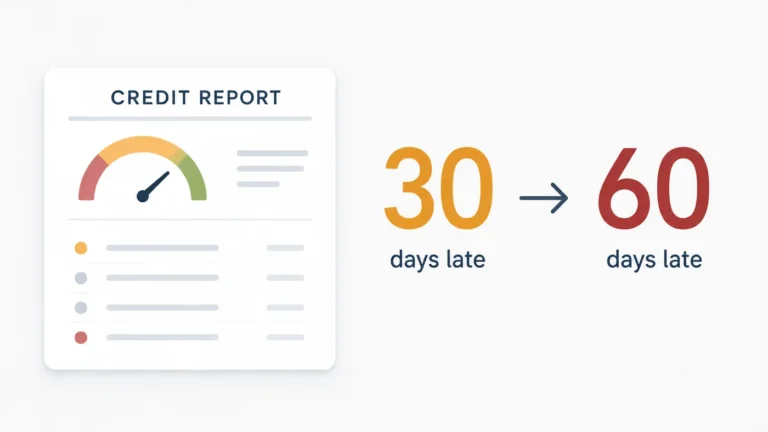
Delinquency stages matter. A payment that is only a few days late may be handled differently from one that is 30, 60, 90, or more days past due. If you are less than 30 days late, review what happens when a payment is less than 30 days late. For a clearer view of escalating reporting risk, see 30-day late payment versus 60-day late payment.
Make the next payment plan realistic
A plan only works if it leaves enough cash for essentials and next month’s required payments.
Choose payments using a practical decision framework
After setting aside money for essentials, compare every past-due account against the same questions. The best choice is not always the account with the largest balance, highest interest rate, or oldest missed payment. It is usually the account where an available payment prevents the most immediate harm.
Suppose you have $600 after covering food and rent. Your utility provider needs $150 to avoid disconnection, your auto insurer needs $120 to keep coverage active, a credit card needs $250 to prevent another missed payment, and an older card is already 90 days late with a $500 catch-up amount. It may make more sense to protect utilities and insurance, then contact both card issuers to negotiate. Sending all $500 to the older card could leave you unable to preserve essential services or prevent another account from worsening.
If two accounts have similar consequences, consider the amount needed to bring each current and whether one payment solves a problem completely. A small catch-up payment that restores a current account may be more useful than a partial payment spread across several accounts. Confirm the creditor’s rules first, because account servicing practices differ.
Call creditors early and ask specific questions
Contacting a creditor does not guarantee relief, but it gives you information and can open options that are unavailable after more missed payments. Call the number on your statement or use the creditor’s official website. Explain the situation briefly, state what you can afford, and ask for the department that handles hardship, retention, loss mitigation, or payment assistance.
Questions to ask during the call
- What exact amount is needed to bring the account current today?
- What happens if I pay less than that amount?
- Can you offer a hardship plan, temporary reduced payment, payment extension, or due-date change?
- Will interest, late fees, or account restrictions apply under the arrangement?
- How will the arrangement affect my account status and credit reporting?
- Can you send the agreement in writing through secure message, email, or mail?
“I am experiencing a temporary financial hardship and want to avoid falling further behind. I can pay [amount] on [date], and I expect my income or budget to change on [date, if known]. What options do you have to help me keep this account from worsening? Please explain the total cost, payment dates, and how the arrangement will be reported before I agree.”
Do not promise a payment you cannot make. A missed hardship-plan payment may end the arrangement and leave you in a worse position. If the representative offers terms verbally, ask for written confirmation and review it before paying. Keep screenshots, confirmation numbers, statements, and notes from every conversation.
Understand partial payments, credit reporting, and collections
Partial payments can be useful when a creditor accepts them and they prevent a more serious consequence. But they may not make the account current. For example, paying one monthly minimum when you are two months behind may still leave the account delinquent. Ask how the payment will be applied, what balance remains past due, and whether the account will advance to another late-payment category.
Bringing an account current is generally worthwhile because it stops additional late payments from accumulating. However, accurate prior late payments can remain on your credit reports for the period allowed by law. A creditor is not required to remove accurate negative information simply because you caught up. Current status also does not guarantee a particular score increase, because credit scores consider many factors and scoring models vary.
For recovery steps after your accounts are current, read how to rebuild credit after late payments. Focus on paying every new bill on time, keeping account information updated, and reviewing your credit reports for errors. If information is inaccurate, dispute it with the credit reporting company and the business that supplied it, following the instructions on your report.
When a debt collector contacts you
Do not ignore collection communications, but do not rush into payment based solely on a phone call. Ask for the collector’s name, company, mailing address, and information about the debt. Review written validation information carefully. If you do not recognize the debt, believe the amount is wrong, or think it may be identity theft, act promptly and keep copies of your correspondence.
The Federal Trade Commission warns consumers to watch for debt-collection scams. A legitimate collector should not need threatening language, pressure for immediate unusual payment methods, or sensitive information before providing basic details. If you receive court papers, respond by the stated deadline; ignoring a lawsuit can lead to serious consequences even if you believe the debt is wrong.
Follow up after you make a plan
Your work is not finished when you submit a payment. Confirm that the payment posted correctly, that any agreement appears on your account, and that future due dates match your calendar. Payment processing delays, returned payments, and misapplied funds can create avoidable problems.
Follow-up checklist
- Save receipts, confirmation numbers, screenshots, and written arrangements.
- Check each account within several business days to confirm payment posting.
- Set reminders before every agreed payment date, not only on the due date.
- Review your spending plan weekly until all accounts are stable.
- Pause optional spending and subscriptions temporarily if that protects required payments.
- Update automatic payments only after verifying enough money will be available.
- Check credit reports periodically and dispute only information you believe is inaccurate.
If your income loss, medical issue, or family emergency will last longer than a month or two, consider speaking with a reputable nonprofit credit counseling organization. A counselor may help you review a budget and discuss debt-management options. Be cautious about companies that promise to erase debt, guarantee score improvements, or tell you to stop communicating with creditors without explaining the risks.
Bottom line
Multiple past-due accounts are a financial emergency to organize, not a reason to give up. Protect essentials, identify the exact status of every account, prevent imminent new delinquencies, and call creditors before deciding where each dollar goes. Use written arrangements, realistic payment amounts, and careful follow-up to regain control. Once the immediate crisis is stable, keep every new payment on time and rebuild gradually rather than chasing a quick fix.
Explore related guides on late payments.
For a broader look at your options, read how to address late or missed payments on a credit report. Disputing inaccurate reporting and asking for goodwill on accurate history are different processes.