In this guide
- Credit score recovery after a late payment: how to rebuild
- Step 1: find out how late the account is
- Step 2: bring the account current
- Step 3: check whether the late payment is reported accurately
- Use this late-payment recovery decision tree
- Step 4: protect every other account
- Step 5: set up payment safeguards
- Step 6: reduce high credit-card utilization when financially safe
- Step 7: build newer on-time history
- How long can an accurate late payment remain?
- Track recovery with a simple monthly dashboard
- What not to do
- Frequently asked questions
- Bottom line
- Sources
- Financial disclaimer
To fix your credit score after a late payment, first stop the account from becoming further delinquent and protect every other account from becoming late. If the late payment is inaccurate, dispute the specific error. If it is accurate, focus on getting current, preventing another delinquency, reducing high revolving balances when financially safe, and building a newer pattern of on-time payments. This page is about recovery after the late payment; for the difference between delinquency stages, use the 30-day vs. 60-day guide. For related timing, removal, and recovery guides, browse the Late payments hub.
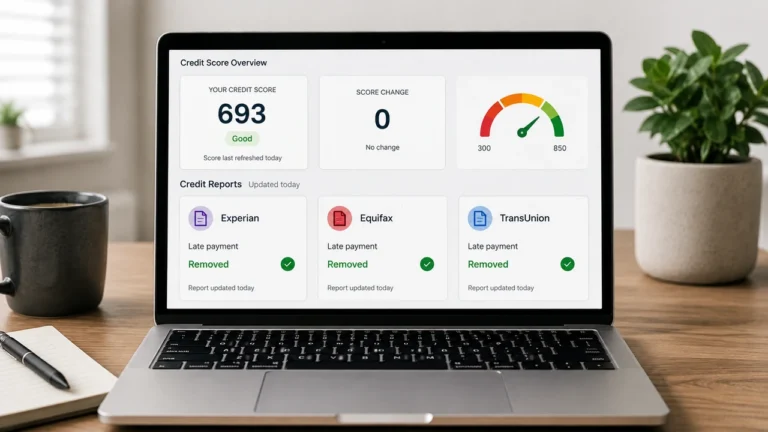
There is no guaranteed number of points or fixed recovery date. FICO says late payments are evaluated in context, including how recent, severe, and frequent they are. If a late mark was removed but your score barely moved, see why a credit score may not increase after a late payment is removed.
Reviewed against CFPB and FICO guidance. Source review: October 3, 2026.
Quick rule: First stabilize the account. Then verify the reporting. Only after that should you optimize utilization or other parts of the credit profile.
Credit score recovery after a late payment: how to rebuild
- Find out exactly how late the account is.
- Bring it current or contact the lender about available options.
- Check the credit report for accuracy.
- Protect every other required payment.
- Use autopay and reminders as safeguards.
- Reduce high revolving balances when financially safe.
- Track newer on-time history over time.
Step 1: find out how late the account is
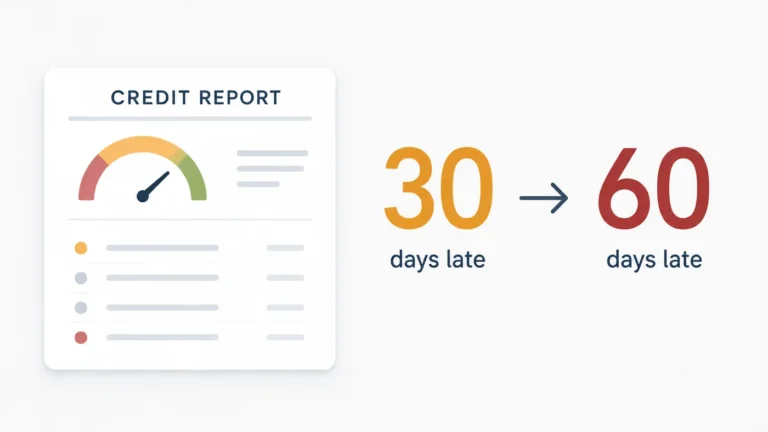
A payment can be late under the account terms before it reaches a standard 30-day delinquency category on a credit report. FICO says creditors commonly report late payments in categories such as 30, 60, 90, 120, and 150 days late.
If the account has already reached the 120-day stage, use the dedicated guide to 120 days late on a payment before choosing your next step.
If you are still under 30 days late, your priority is to prevent the account from progressing. See what happens when a payment is less than 30 days late.
| Status | Main goal | What to do |
|---|---|---|
| Under 30 days late | Prevent a reportable delinquency | Confirm the catch-up amount and pay as soon as possible |
| 30 days late | Prevent a 60-day delinquency | Bring the account current if possible |
| 60 days late | Stop further deterioration | Confirm the full past-due amount; contact the lender if you cannot catch up |
| 90+ days late | Address a serious delinquency immediately | Confirm account status and available lender options |
Step 2: bring the account current
A federal student loan already in default needs a different resolution process from an ordinary overdue bill. Review how student loan default is reported and compare rehabilitation with consolidation before choosing a path.
Do not guess what to send. Ask the lender for the exact amount required to bring the account current. That amount may be different from the regular minimum payment or the full account balance.
“What exact amount do I need to pay today to bring this account current?”
If you cannot afford the catch-up amount, ask what hardship or payment-arrangement options are available for that specific account. Confirm the terms before relying on any arrangement.
Also protect other upcoming required payments. Fixing one late account by creating another late account elsewhere can make recovery harder.
If you cannot afford the catch-up payment
The CFPB recommends contacting the card company immediately. Tell it what you can afford and when normal payments may resume. Before agreeing, ask:
- What amount and date will bring the account current?
- If that is unaffordable, what temporary payment arrangement is available?
- How will interest, fees, the credit limit, and account access change?
- How will the account be reported during the arrangement?
- When does the arrangement end, and what payment is due afterward?
Ask for the terms in writing. A partial payment or a phone call alone does not establish that the delinquency has been cured. Our hardship-program guide explains the reporting questions to ask.
Step 3: check whether the late payment is reported accurately
Once the account is stable, compare the credit report with statements and payment records.
Check:
- the month reported late;
- the delinquency level — 30, 60, or 90 days;
- current balance and past-due amount;
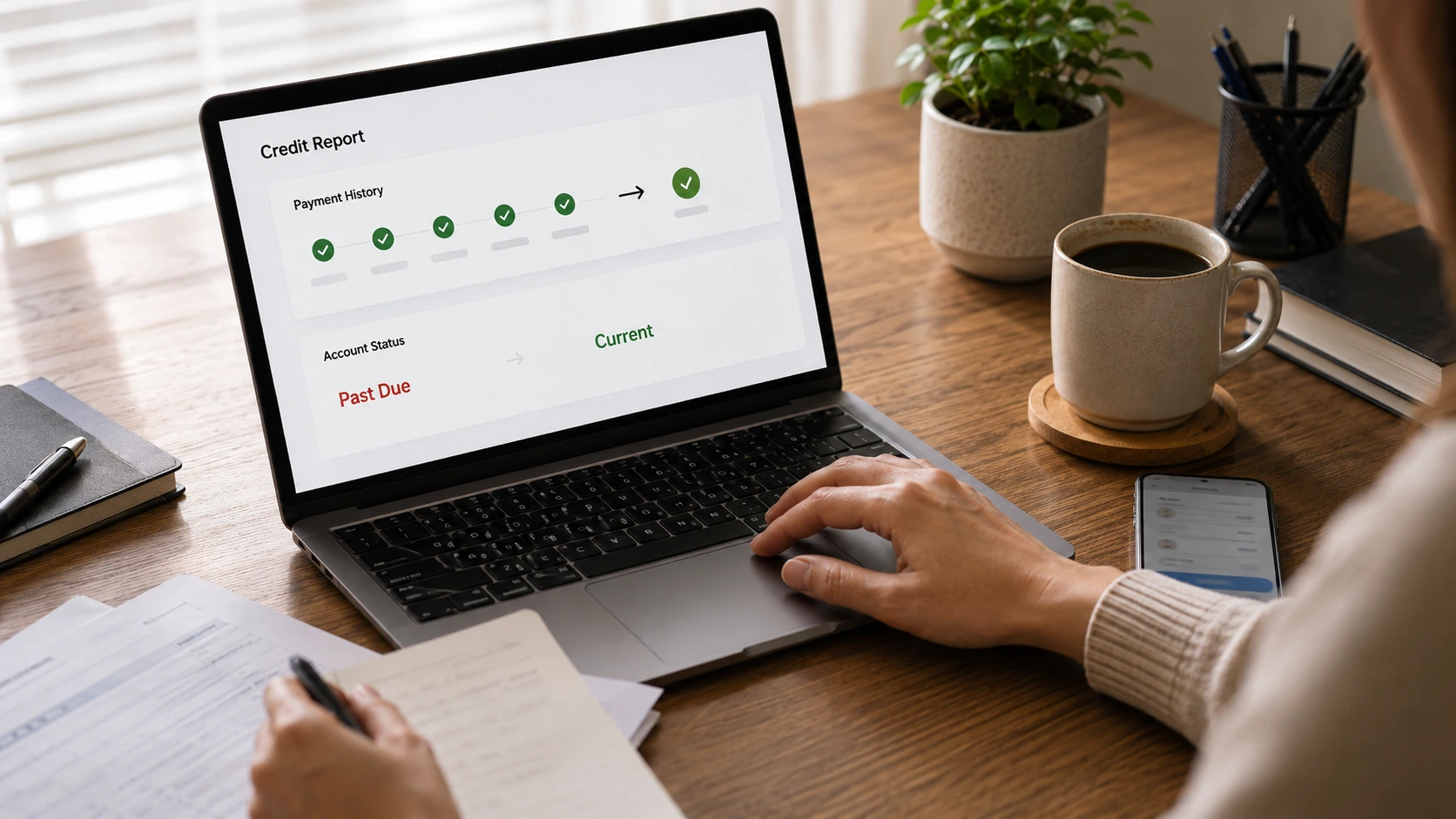
- account status;
- date last updated.
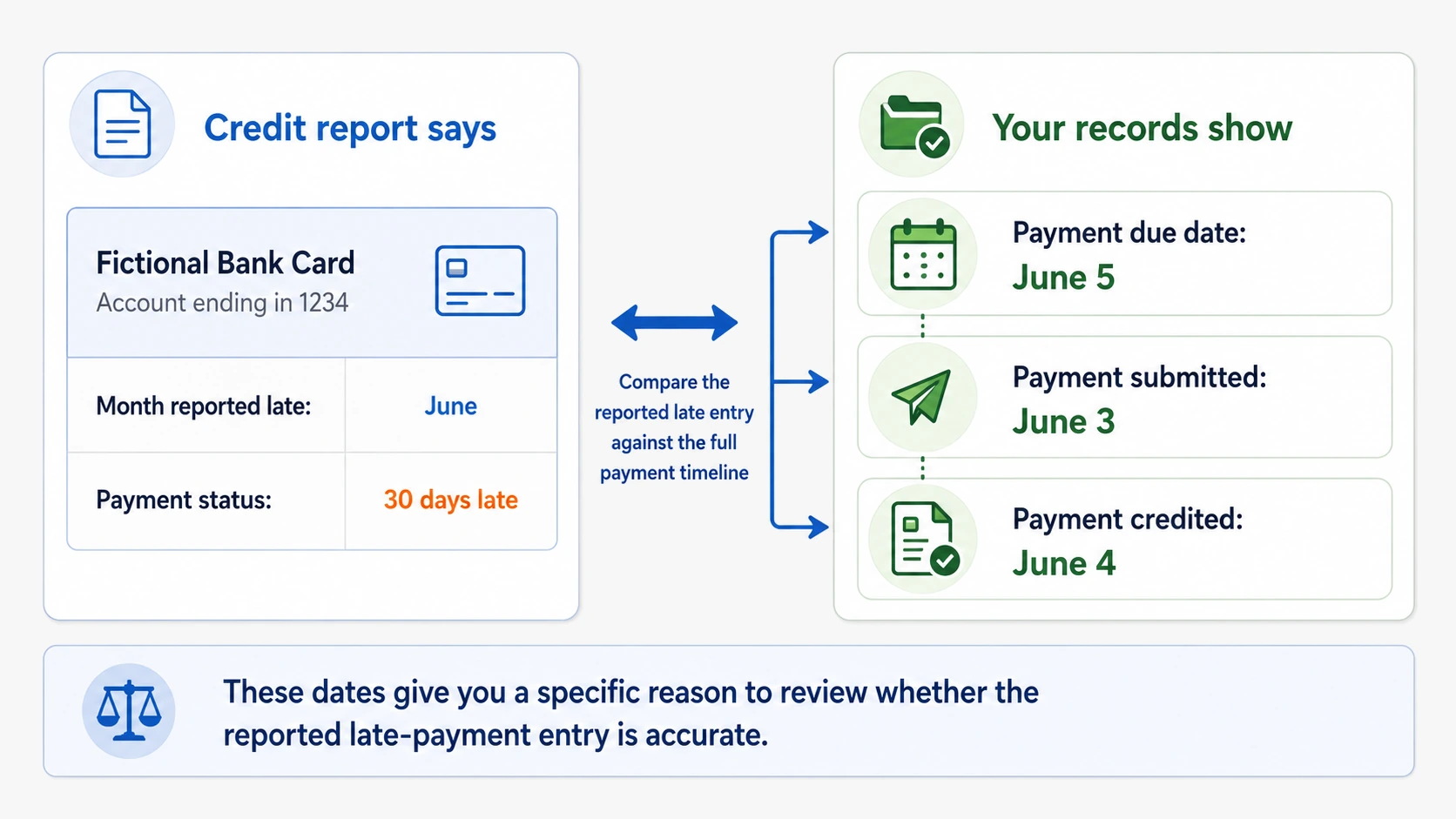
If the late payment is inaccurate, dispute the specific error. CFPB says consumers have the right to dispute inaccurate or incomplete information with both the credit reporting company and the furnisher. Use how to dispute an inaccurate late payment.
If the late payment is accurate, do not dispute it merely because it hurts your score. CFPB says accurate negative information generally cannot be removed simply because it is unfavorable. Compare your options in our guide to when late payments can be removed from a credit report.
Use this late-payment recovery decision tree
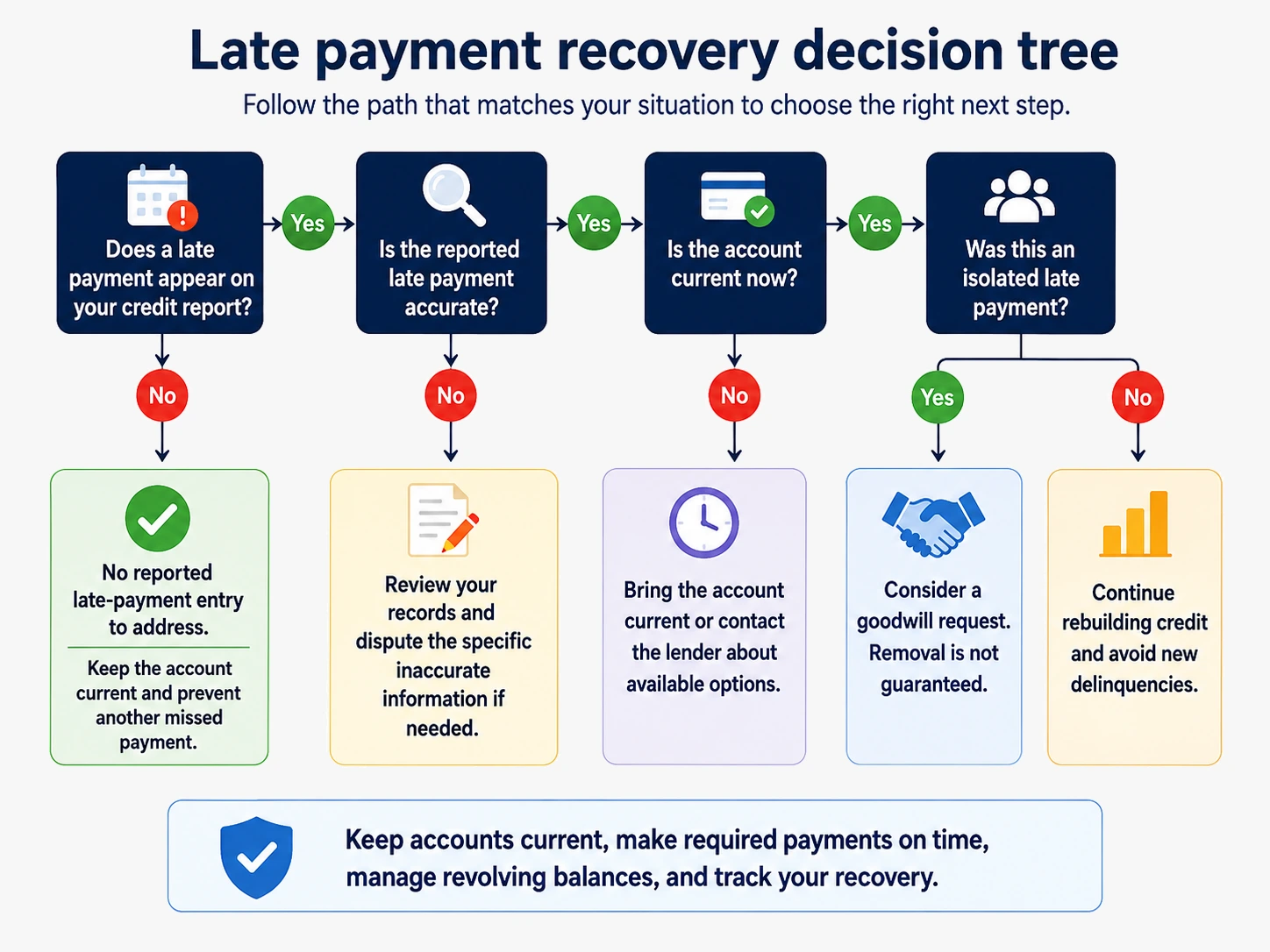
- Does the late payment appear on the report? If no, keep the account current.
- Is the reported information accurate? If no, gather evidence and dispute the specific error.
- Is the account current now? If no, focus on curing the delinquency.
- Was this one isolated accurate late payment? If yes, a goodwill request may be worth considering, but the lender is not required to remove accurate information.
- Were there several accurate late payments? Focus on rebuilding rather than repeatedly trying to remove valid history.
If you want to try a courtesy request for one isolated accurate late payment, see how a goodwill letter works.
Step 4: protect every other account
Before making extra debt payments, list every required payment due soon. Protect minimums and scheduled loan payments first.
| Payment type | Priority | Why |
|---|---|---|
| Past-due catch-up amount | High | May stop the existing delinquency from progressing |
| Required minimum payment | High | Prevents a current account from becoming late |
| Scheduled loan payment | High | Keeps the installment account current |
| Extra debt payment | After required payments | Helpful, but not if it creates another delinquency |
Step 5: set up payment safeguards
Use more than one system if possible:
- autopay for a required payment you can reliably fund;
- calendar reminders several days before the due date;
- a reminder after the expected processing date to confirm the payment posted;
- a regular check that the correct bank account is still linked.
A scheduled payment is not the same as a completed payment. Verify that it actually posts.
If autopay caused the original problem, see what to do when autopay fails and causes a late payment.
Step 6: reduce high credit-card utilization when financially safe
After required payments are protected, reducing high revolving balances can improve another part of the credit profile.
Utilization = reported balance ÷ credit limit × 100
Use the credit utilization calculator to compare each card and your overall ratio. Enter reported balances and limits, then test a payment amount you can afford after protecting required payments. The result is a balance calculation, not a prediction of credit-score points.
Example: $3,500 on a $5,000 limit is 70% utilization. Paying the reported balance down to $2,000 would bring that card to 40% utilization once the lower balance is reported.
Do not create another late payment in order to lower utilization faster. For the full mechanics, see how credit utilization works.
Step 7: build newer on-time history
FICO says payment history is the largest broad category in its scoring framework and that late payments are considered based on recency, severity, and frequency. The practical recovery goal is therefore simple: avoid adding new delinquencies and keep current accounts current.
There is no fixed number of on-time payments that guarantees recovery to a specific score.
How long can an accurate late payment remain?
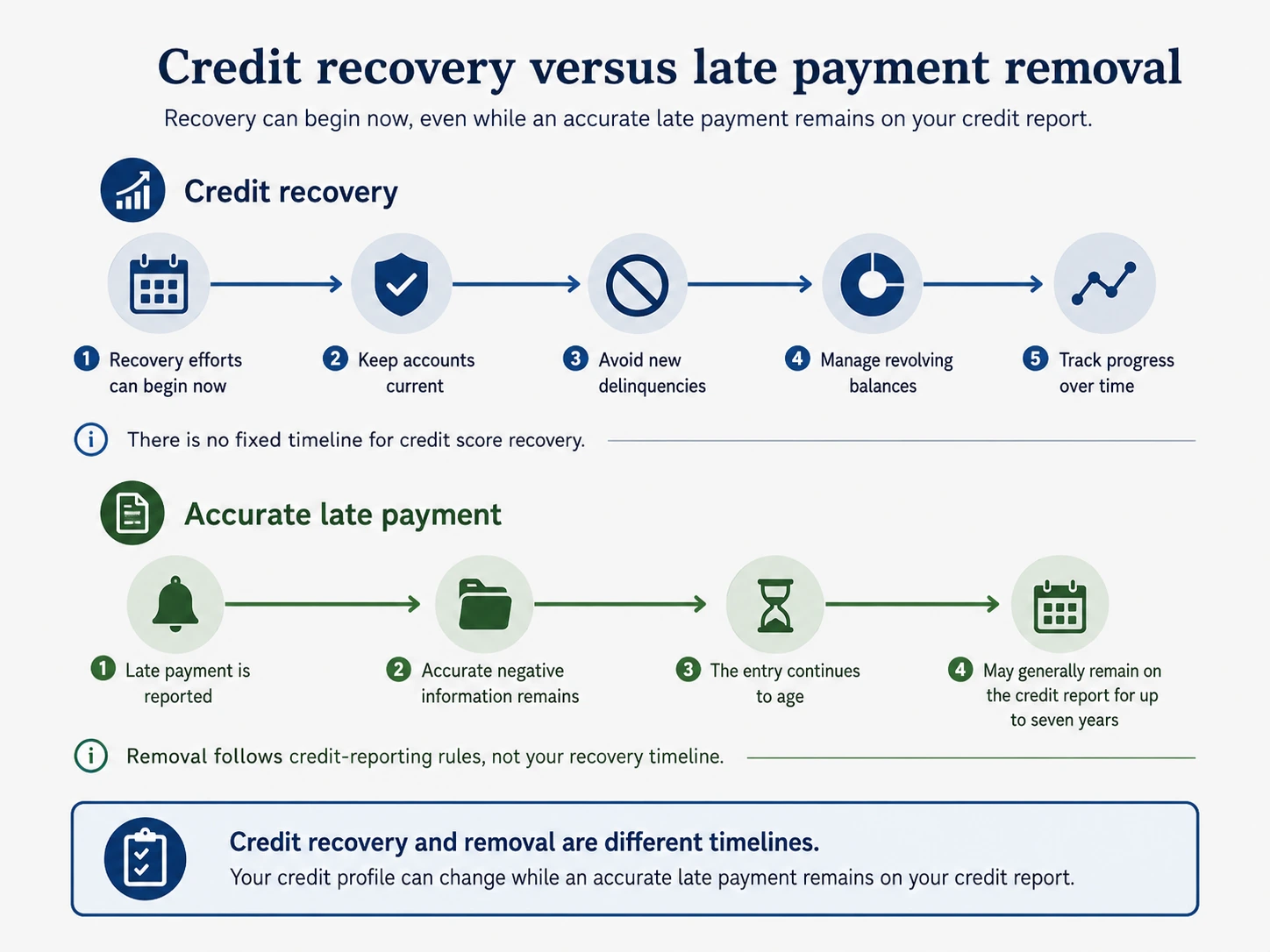
CFPB says most negative payment-history information can generally remain on a credit report for up to seven years. Recent negative information generally matters more than older negative information.
That does not mean your score will be affected equally for the entire reporting period. Recovery depends on the rest of the file and what happens after the late payment.
Track recovery with a simple monthly dashboard
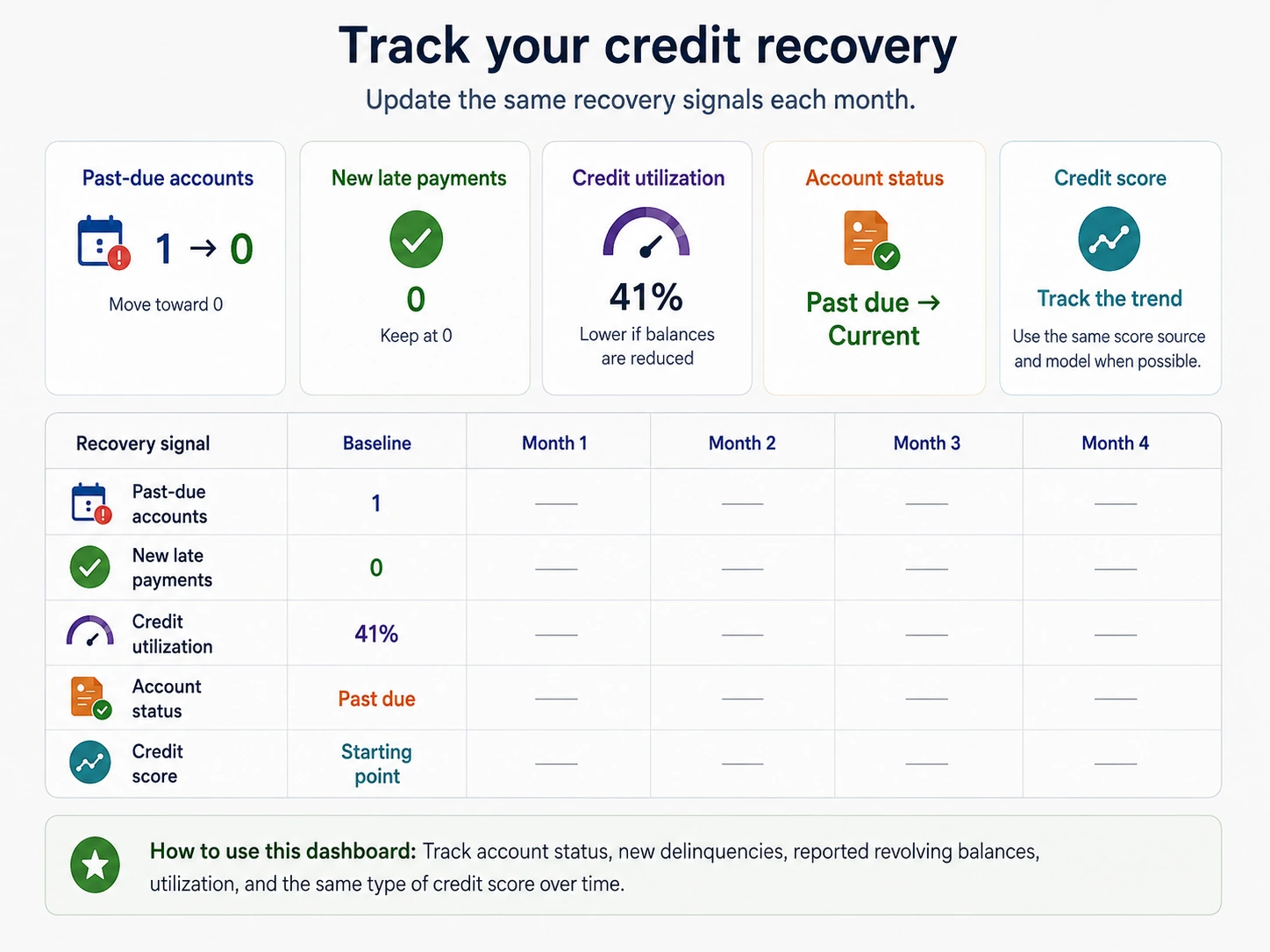
At each checkpoint, record:
- whether the late account is current;
- whether any new late payments appeared;
- reported revolving balances;
- overall and per-card utilization;
- whether disputes or corrections changed the report;
- the same score source/model when possible.
If you want a broader progress framework, see how to know if your credit score is improving.
Example: use a checkpoint instead of a score deadline
Fictional example: after one reported 30-day late payment, you confirm that the account is current and the next payment is scheduled. At the next report update, verify the current status and past-due amount. The earlier accurate late mark may remain; that does not mean the catch-up payment failed.
At each later checkpoint, compare the same bureau and score model. Record whether another delinquency appeared and whether reported card balances changed. Those observations are more useful than assuming that three or six months of payments must restore a certain number of points.
What not to do
- Do not file false disputes against accurate late payments.
- Do not open several new accounts to try to “dilute” one late payment.
- Do not sacrifice required payments on other accounts to make one aggressive debt payment.
- Do not expect a fixed number of points by a specific date.
- Do not carry unnecessary interest-bearing debt solely for scoring reasons.
Frequently asked questions
Can you rebuild credit after one late payment?
Yes. FICO notes that a few late payments do not automatically make a strong credit file unrecoverable. The most important next step is to get current and avoid new delinquencies.
Should I dispute an accurate late payment?
No. Dispute information when you have a specific reason to believe it is inaccurate or incomplete.
Can a goodwill letter remove an accurate late payment?
A lender may choose to make a courtesy adjustment, but it is not required to do so and there is no guarantee of removal.
How long does recovery take?
There is no universal timeline. It depends on how severe and recent the late payment was, whether there are other negatives, utilization, and the rest of the credit file.
Bottom line
To rebuild your credit after a late payment, stop the delinquency from getting worse, verify the reporting, protect every other required payment, and build a newer pattern of on-time payments. If the report is inaccurate, dispute the specific error. If it is accurate, focus on recovery rather than trying to manufacture a deletion.
Lower high revolving balances when financially safe, avoid unnecessary new credit, and track progress using the report first and the score second.
Sources
- Consumer Financial Protection Bureau — How to rebuild your credit
- Consumer Financial Protection Bureau — Accurate negative information
- Consumer Financial Protection Bureau — How long information stays on a credit report
- Consumer Financial Protection Bureau — How to dispute a credit-report error
- FICO — How FICO considers late payments
- FICO — Payment history
Financial disclaimer
This article provides general U.S. financial and credit information, not individualized financial, legal, lending, or credit-repair advice. Credit-score results vary by scoring model, bureau data, lender, and the rest of the credit profile. No action described here guarantees a specific score increase or recovery date.