In this guide
- What does available credit mean?
- Why is my available credit less than it should be?
- How to reconcile available credit without counting a charge twice
- Why is available credit still low after a payment?
- Why is my available credit zero?
- Does lower available credit affect your credit score?
- What should you do?
- What should you ask the card issuer?
- What if the credit report shows the wrong limit?
- Frequently asked questions
- Bottom line
- Sources
Quick answer: If your available credit is lower than you expected, first check whether your credit limit actually changed. Available credit can be reduced by your posted balance, pending purchases, merchant authorization holds, a payment that is still processing, fees or interest, a returned payment, or an issuer restriction. Chase explains that pending charges and holds can reduce available credit before they become part of your posted balance, and payments may take time to restore spending room. If the credit limit itself was reduced, that is a separate issue. Compare your current limit, posted balance, pending transactions, payment status, and any issuer notices before assuming there is an error.
What does available credit mean?
Available credit is the portion of your credit line that is currently available for new purchases or other permitted transactions. A simple starting calculation is:
Credit limit − amounts currently using the line = available credit.
The bank’s actual number can differ temporarily because pending transactions, authorization holds, payments in processing, and account restrictions may affect what you can spend.
Why is my available credit less than it should be?
1. Pending purchases are using part of the limit
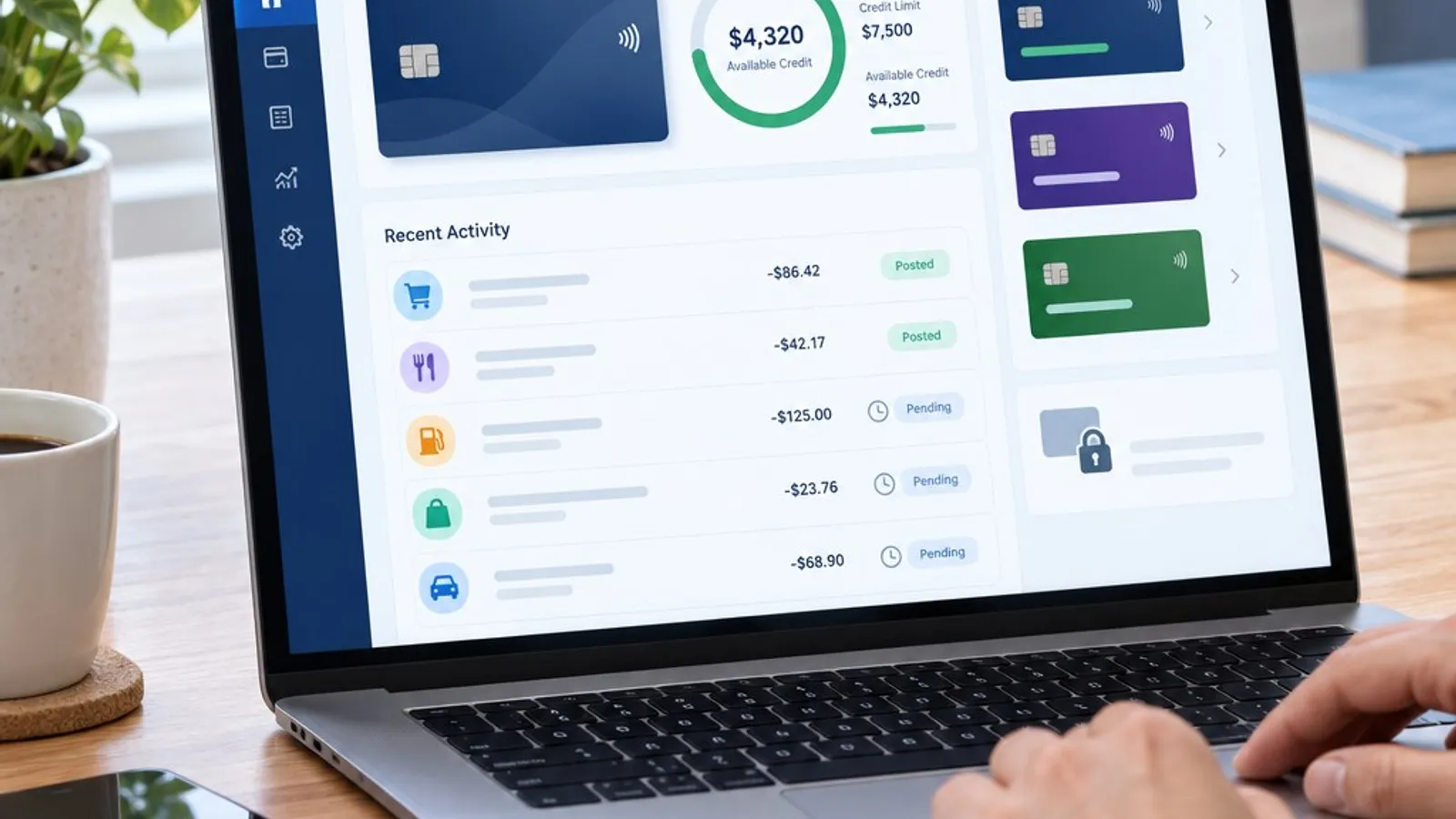
A transaction can reduce available credit before it becomes a posted balance. Hotels, rental-car companies, gas stations, and other merchants may also place authorization holds that are larger than the final purchase amount.
2. Your payment has not fully cleared
Making a payment does not always restore available credit instantly. The issuer may wait until the payment is processed or verified before releasing the corresponding amount of credit.
3. A merchant hold is still active
Authorization holds temporarily reserve part of your credit line. Even if the final charge is smaller, the hold can remain until the merchant completes or releases it.
4. New interest or fees posted
Interest, annual fees, late fees, or other charges can reduce available credit even if you have not made a new purchase.
5. A payment was returned
If a payment was reversed or returned, the issuer can add the balance back and reduce available credit again.
6. Your credit limit was reduced
If the issuer lowered the actual credit limit, available credit can fall even after you paid the balance down. See why a credit limit can decrease after paying off debt.
7. The account is restricted or suspended
A fraud review, missed payment, returned payment, or other account issue can limit spending even when the mathematical difference between the limit and balance looks larger.
How to reconcile available credit without counting a charge twice
Use values from the same moment in your account, not a statement balance from last month and a limit from today. Chase explains that authorization holds reserve spending capacity before a final charge settles. Start with the issuer’s current limit, posted balance, and separately identified pending amounts.
| Line | Amount | Check before using it |
|---|---|---|
| Current credit limit | $5,000 | Use the current purchase limit |
| Minus posted balance | $1,800 | Includes any interest or fees already posted in that balance |
| Minus pending purchases and holds | $600 | Include only amounts not already counted in the posted balance; do not add a hold again if it is part of the pending total |
| Working estimate | $2,600 | $5,000 − $1,800 − $600 |
| Suppose the app instead shows | $2,100 | The $500 difference is the amount to ask the issuer to explain, not proof of an error |
Do not subtract the same item twice. If a payment has already reduced the displayed posted balance, do not deduct that payment again. If an interest charge is included in the posted balance, do not add it a second time. A pending authorization and its final posted transaction may represent the same purchase; ask the issuer which still reserves available credit.
Use a precise follow-up: “Using your current figures, I calculate $2,600, but the app shows $2,100. Which $500 hold, unreleased payment amount, or account restriction explains that difference, and what must happen for it to be released?” Record the explanation and expected follow-up date. A separate cash-advance limit or a spending restriction can make this simple purchase-credit calculation inapplicable.
Why is available credit still low after a payment?
Payment timing is one of the most common explanations. Chase says payments can take processing time before available credit is restored. The exact timing depends on the issuer, payment method, account history, weekends, and other factors.
Do not send duplicate payments just to test the system. Confirm that the first payment posted and ask the issuer when the corresponding available credit should be released.
Why is my available credit zero?
Zero available credit can happen when the posted balance plus pending amounts or holds use the entire line. It can also happen if the issuer restricted the account or reduced the limit close to the current balance.
If you cannot explain the number from your transactions, contact the issuer before relying on the card for an essential purchase.
Does lower available credit affect your credit score?
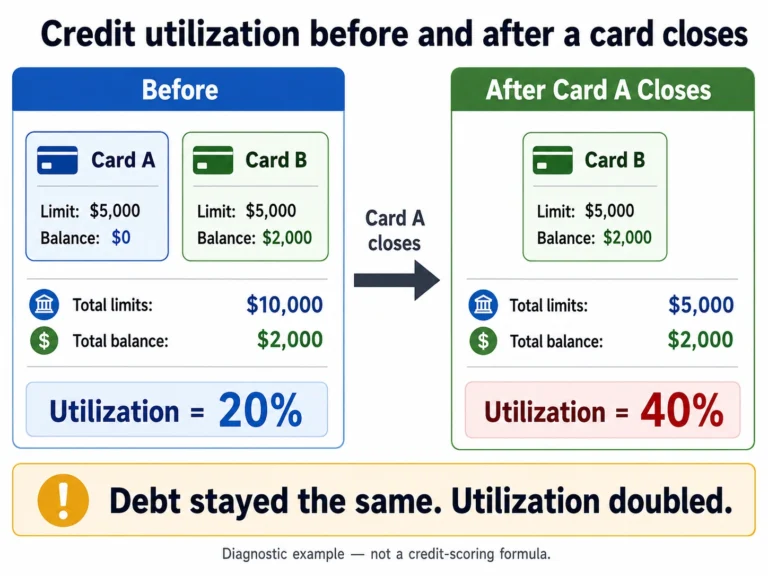
Credit scores do not use the “available credit” number displayed in your banking app directly. FICO considers reported balances and credit limits when calculating revolving utilization. If your credit limit was actually reduced, or a higher balance is reported, utilization can rise.
For the scoring calculation, see what credit utilization is and how it works.
What should you do?
If your app shows enough available credit but a purchase still fails, use our checklist for a credit card declined with available credit. Check the requested authorization amount, card status and security alerts before assuming the balance is the only problem.
- Check the actual credit limit. Compare it with the last statement.
- Review posted and pending transactions. Include merchant holds.
- Confirm the payment status. Make sure it is completed, not pending or returned.
- Check fees and interest. Look at the most recent statement and activity.
- Look for issuer notices. A limit reduction or account restriction may be explained in a secure message, email, or letter.
- Call the issuer if the number still does not make sense. Ask which specific amounts or restrictions are reducing available credit.
What should you ask the card issuer?
You can ask:
“My credit limit is $[amount], my posted balance is $[amount], and I see $[amount] in pending transactions. My available credit is only $[amount]. What specific hold, payment status, fee, restriction, or limit change is reducing the remaining available credit?”
What if the credit report shows the wrong limit?
Your card account screen and your credit report serve different purposes. If the issuer confirms one credit limit but a recent credit report shows a different, factually incorrect limit, gather the issuer’s confirmation and dispute the specific reporting error.
See how to dispute an error on your credit report.
Frequently asked questions
Why didn’t my available credit increase after I paid my card?
The payment may still be processing or subject to a temporary hold. Check whether the payment has fully posted and ask the issuer when spending availability will be restored.
Can pending transactions reduce available credit?
Yes. Pending transactions and authorization holds can reserve part of your credit line before the final charge posts.
Can my available credit be lower than my limit minus my posted balance?
Yes, when pending charges, holds, fees, payment processing, or account restrictions are also affecting the line.
Is lower available credit the same as a credit-limit decrease?
No. Check the actual limit. Your available credit can fall while the limit stays unchanged.
Bottom line
If your available credit is lower than expected, separate the credit limit from the amount currently available to spend. Review pending transactions, holds, payments, fees, and restrictions before assuming the lender reduced your limit or your credit report is wrong.
Explore related guides on credit cards and utilization.
Sources
This article is general educational information and is not individualized financial advice. Card terms and payment-release policies vary by issuer.