In this guide
- Do not assume the problem is your credit score
- Ask three questions before applying elsewhere
- Request the correct report
- Build a focused dispute if something is wrong
- How long does ChexSystems keep a negative record?
- If the information is accurate, ask about account options
- Close the loop with the bank and the report
- Where to request your ChexSystems consumer disclosure
- Sources
If you were denied a checking account, ask the bank whether a consumer report contributed to the decision and which company supplied it. ChexSystems is one possibility; Early Warning Services or another report may be involved. Request the named report, compare it with your records, and dispute specific errors with the reporting company and the bank that supplied them. A checking-account report is different from a standard credit report, so a good credit score does not settle the question. Also ask about identity-verification issues and whether the bank offers another account that fits your situation.
Do not assume the problem is your credit score
The CFPB distinguishes checking-account reporting from traditional credit reporting. Banks can assess past deposit-account activity, including unpaid negative balances or reported account misuse. Some institutions also consult traditional credit reports. The report actually used matters more than the score displayed in your credit-monitoring app.
A denial is not proof that you committed fraud, and it is not proof that ChexSystems was involved. Start with the bank’s explanation and notice. Our adverse action notice guide explains the general purpose of identifying the report behind a decision, although the document for a checking account may differ from a credit-denial notice.
Ask three questions before applying elsewhere
- Was this decision based, wholly or partly, on a consumer report?
- What company supplied the report, and how can I obtain the notice and contact details?
- Was there also an identity-verification, eligibility, or bank-policy issue that a report correction would not address?
The reporting company supplies information; the bank makes the account decision. Ask each organization about the part it controls. Repeatedly asking the reporting company to “approve my bank account” sends the request to the wrong decision-maker.
Illustrative scenario: an applicant sees a strong credit score but is declined for checking. The notice identifies a specialty report containing a former joint account with an unpaid balance. The next useful step is to inspect that entry and the bank’s records, not to open another credit card in hopes of changing the checking-account decision.
Request the correct report
CFPB guidance on obtaining a checking-account report explains the right to request a free report every 12 months and additional access after an adverse action. Use the reporting company’s official instructions and act promptly on the notice. Request reports separately from each relevant company; one request does not necessarily produce every specialty report.
| Company named in the notice | Official starting point | What to request |
|---|---|---|
| ChexSystems | Consumer disclosure request | The report containing account details; a score alone is not enough. |
| Early Warning Services | CFPB provider directory and contact route | Your consumer report from that company. |
| Another reporting company | The company identified in the bank’s notice | The specific report used for the decision. |
AnnualCreditReport.com is the route for the three nationwide credit reports, not a universal dashboard for every banking-screening company. If a traditional report also contributed, use our free credit report guide for that separate file.
Save the version you receive before starting a dispute. Record the report date and reference number. If you cannot access it online, check the company’s alternative verification and request channels rather than repeatedly changing your identifying details to make the form accept them.
| Field or entry | Compare with | Question to resolve |
|---|---|---|
| Account owner or joint owner | Opening documents and your identifying information | Does this account actually belong to you? |
| Reported unpaid amount | Final statements, payments, and settlement records | Is the amount and current payment status correct? |
| Closure or event date | Bank notices and statements | Are the dates consistent with what happened? |
| Fraud or misuse information | The specific bank communication and supporting records | What event and evidence does the entry refer to? |
Build a focused dispute if something is wrong
The CFPB recommends contacting the reporting company and the information provider about an error. Describe the entry, the precise inaccuracy, and the correction requested. “This report stopped me opening an account” explains the consequence, but does not identify the factual mistake.
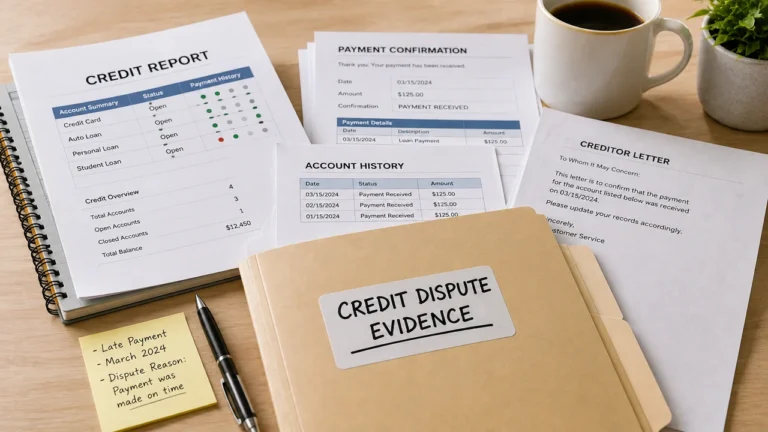
Use our evidence-packet checklist as an organizational aid. A paid balance needs proof of payment and the date it cleared. An account that is not yours needs an identity-related explanation. A disagreement about fees may require the relevant agreement and statements. Send copies and keep the documents, submission confirmation, and result together.
Illustrative request: “The report dated [date] lists [bank/account identifier] with [reported information]. I dispute [specific field] because [reason]. The enclosed [record] shows [correct fact]. Please investigate and correct the entry, and send me the results.”
If an account was opened without your permission, use the appropriate identity-theft recovery process too. Do not characterize a legitimate joint-account obligation as identity theft simply because the other holder caused the overdraft.
How long does ChexSystems keep a negative record?
Generally, negative checking-account information remains for five years, according to the OCC’s explanation of ChexSystems and Early Warning Services reports. The OCC also notes that certain negative information may be reported for up to seven years under federal law. Ask the reporting company for the expected removal date of the specific entry in your disclosure.
ChexSystems’ FAQ says paying an accurate reported balance does not require its removal. The reporting institution should update the account to reflect a paid-in-full or settled-in-full status when applicable. Keep proof of payment and verify that status, even if the record remains visible.
You do not need to wait for an inaccurate entry to age off before disputing it. Identify the actual error—such as someone else’s account, an incorrect amount, or a missing payment update—and attach the supporting records.
If the information is accurate, ask about account options
Paying a valid unpaid balance can resolve money owed, but do not assume it automatically deletes reporting or guarantees approval. Ask how the former bank will update the status and obtain documentation of the payment. Then ask the prospective bank whether that change would affect eligibility.
The CFPB notes that some institutions offer lower-risk accounts. Compare the actual features before applying: monthly fee, minimum-balance rules, direct deposit requirements, ATM access, overdraft policy, and whether the account supports the payments you need. A “second chance” label is not enough to show that an account is affordable or suitable.
If you need a place for wages urgently, ask about the bank’s available options and timing while the dispute is pending. A pending investigation does not guarantee immediate access to a standard account, and a different institution may use different policies.
Close the loop with the bank and the report
When the result arrives, verify the corrected field and save the new report. Ask the bank whether it can reconsider the application using updated information or requires a new application. Do not assume a correction triggers automatic reconsideration.
Keep a simple log: notice received, report requested, report received, dispute sent, response received, and bank follow-up. If traditional credit information is also involved, read that report separately so you do not confuse a checking-account record with a credit-card account. Your goal is to identify the actual barrier and resolve the part you can document—not to chase a score that may never have been the problem.
Where to request your ChexSystems consumer disclosure
If the denial notice names ChexSystems, start with its official consumer disclosure request page. ChexSystems says it provides these reports free of charge. The page offers an online portal and instructions for telephone or mail requests. Use its current instructions for authentication documents rather than sending sensitive records to an address found in an advertisement.
Request the consumer disclosure when you need to inspect the reported accounts and information. A consumer score alone does not provide the item-by-item detail needed to identify an error. The ChexSystems page lists these as separate request options.
If your notice names Early Warning Services or another company, follow that company’s route instead. The CFPB’s checking-report directory identifies several providers. Before submitting, compare the company’s name with the notice; requesting the wrong file can consume time without explaining the denial.
Explore related guides on credit reports and disputes.
Sources
CFPB: Early Warning Services contact information
ChexSystems: official consumer disclosure request
- CFPB: checking account denials
- CFPB: obtaining a checking-account report
- CFPB: disputing checking-account report errors
- CFPB: checking-account closure and credit
Updated October 6, 2026. Product terms and submission procedures can change; confirm the current instructions with the relevant organization.
Claire Bennett is the site’s editorial name, as explained on our author page.
Educational information only, not individualized financial or legal advice. Examples are illustrative; results depend on your circumstances.
Photo: Marissa Grootes / Unsplash. Illustrative photograph; not a customer story or testimonial.