In this guide
- Short answer: a cash advance can affect your credit score indirectly
- How a cash advance shows up in your credit profile
- Why utilization is the most likely score issue
- Cash advance costs can begin right away
- Payment history can create the bigger problem
- Check the terms before using the card for cash
- When a cash advance may affect credit more noticeably
- Same day alternatives and repayment checklist
- Frequently asked questions
- Your next step
- Sources
Short answer: a cash advance can affect your credit score indirectly
A credit card cash advance does not normally appear on your consumer credit report as a separate item labeled “cash advance.” However, it can still affect your credit score indirectly. The advance increases your card balance, which can raise your revolving credit utilization. If the higher balance is reported when your issuer updates the credit bureaus, your score may be affected. A cash advance can also create expensive interest charges, making repayment harder. Missing a payment afterward can damage payment history, which is another important credit scoring factor.
In other words, the transaction type itself is usually not the issue. The balance, available credit, interest, fees, and repayment behavior that follow are what matter most. If you need emergency cash, understanding those consequences can help you decide whether a cash advance is manageable or whether another option protects your budget better.
How a cash advance shows up in your credit profile
A credit card issuer generally reports your account information, including the balance and payment status, rather than a detailed list of every purchase or withdrawal. That means a lender reviewing your report may see that your balance increased, but not necessarily that you used an ATM or received cash at a bank branch.
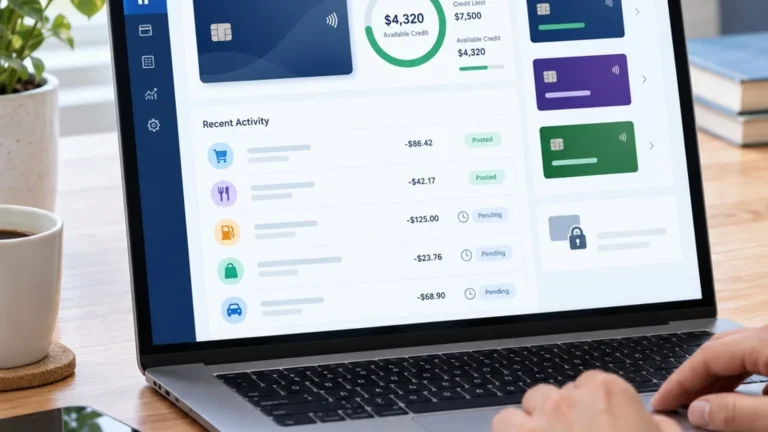
A cash advance is still part of your credit card account. It usually reduces available credit immediately, adds to the amount you owe, and may be subject to a separate cash advance APR. You can monitor the practical impact by reviewing your current balance, statement balance, available credit, and payment due date.
Your issuer may have a cash advance limit that is lower than your total credit limit. The limit, terms, and transaction categories vary by card. Review your cardholder agreement and current statement before assuming a particular withdrawal will be treated as a purchase instead of a cash advance.
Why utilization is the most likely score issue
Credit utilization compares revolving balances with revolving credit limits. For a single card, it is commonly described as the reported balance divided by the credit limit. Across all cards, it is the total reported revolving balance compared with total reported revolving credit limits, not just the unused credit remaining.
For example, suppose a card has a $2,000 credit limit and a $200 reported balance. A $500 cash advance, before considering fees and interest, could raise the balance to $700. That changes the utilization on that card from 10% to 35%. The actual effect on a score depends on the rest of your credit report, including balances on other cards, account age, payment history, and the timing of reporting.
A higher reported balance is not necessarily permanent. When you pay it down, a later report may show lower utilization. Still, a temporary increase can matter if you expect a lender to check your credit soon for an apartment, mortgage, auto loan, refinance, or new credit card.
Learn more about what credit utilization means and why the amount of available credit on a card can change. If your available credit appears unexpectedly low, this guide to available credit versus your card limit can help you identify common causes.
Cash advance costs can begin right away
CFPB guidance on credit card ATM withdrawals explains why cash advances can cost more than purchases. Your agreement may impose a fee and a separate APR; interest generally begins immediately, without a purchase grace period. Confirm the amount, fee, APR, and any ATM charge before proceeding.
The exact fee, APR, calculation method, and payment allocation rules are card specific. Do not rely on a generic number from another cardholder or website. Check the pricing and terms disclosure, your latest statement, and your online account before taking the advance.
💡 Illustrative cost example: Imagine you withdraw $300, your card charges a $15 cash advance fee, and interest begins accruing immediately under your agreement. Your starting amount owed could be $315 before any interest is added. If you carry that balance, the eventual cost rises further. This example is only a demonstration, not a universal fee, APR, or repayment estimate.
A cash advance fee may also use part of your available credit. That matters when you are close to the card limit. A small withdrawal can leave less room for an automatic bill payment, a pending purchase, or an emergency expense later in the month.
If you recently paid your balance in full but later see a small interest charge, read about residual interest after paying off a credit card. Cash advance interest can make statement timing especially important.
Payment history can create the bigger problem
A cash advance does not automatically cause a late payment. The risk arises when the added debt and costs leave you unable to make at least the required minimum payment by the due date. A missed payment may be reported after it becomes sufficiently late under the issuer’s reporting practices, and it can remain part of your credit history for a long time.
Paying at least the minimum on time can help avoid a late payment, but it is not the same as paying off the cash advance. Interest may continue to accrue while a balance remains. If possible, pay more than the minimum and direct extra money toward the highest cost balance according to your issuer’s payment allocation rules.
Do not stop opening statements because the balance feels stressful. Statements show the payment due date, minimum payment, interest charges, fees, and account messages. Set a calendar reminder, enable account alerts, or schedule a payment from a funded bank account. If several accounts are becoming hard to manage, review these steps for handling multiple past due accounts.
Check the terms before using the card for cash
Knowing the difference between a purchase balance and a cash advance balance can help you avoid surprise costs and protect available credit.
When a cash advance may affect credit more noticeably
The effect can be more noticeable when the advance meaningfully changes a balance that is already high. It can also matter more if you have few credit accounts, limited unused credit, or an upcoming application where the lender sees the newly reported balance.
Another edge case is a card that is close to its limit. A cash advance plus fee and accumulating interest could leave very little available credit. Transactions may be declined, and a cardholder may face additional complications if a recurring payment attempts to process. Keeping some available credit can provide useful flexibility, but it should not be treated as a reason to borrow more.
Cash equivalent transactions deserve extra attention. Depending on the issuer, money transfers, certain gambling transactions, foreign currency purchases, or person to person payment activity may be treated as cash advances. Ask the issuer before completing a transaction if the classification is unclear. The merchant label alone does not always tell you how your issuer will categorize it.
Same day alternatives and repayment checklist
When the need is urgent, focus first on protecting essentials: housing, utilities, food, needed medicine, transportation to work, and necessary childcare. A cash advance may be the least harmful choice in a narrow emergency, but pause long enough to compare same day options.
Before taking the advance
- Check whether the expense can be paid directly by card as a purchase instead of requiring cash.
- Ask the provider whether a short payment extension, partial payment, or payment plan is available.
- Review a linked bank account, emergency savings, or a trusted family support option without pressuring anyone.
- Contact local community assistance programs if the need involves food, utilities, housing, or transportation.
- Compare the total cost and repayment date before using any loan or advance product.
If you decide to use it
- Withdraw only the amount needed for the immediate essential expense.
- Save the receipt and check your account for the advance amount and fee.
- Confirm the due date and schedule a payment as soon as income is available.
- Keep enough money in your checking account for essential bills and scheduled payments.
- Review the next statement for interest, fees, and the remaining balance.
Avoid solving a short cash gap by repeatedly taking advances from multiple cards. That can raise total balances, increase fees, and make it harder to keep track of due dates. A written repayment plan is usually more useful than relying on memory during a stressful week.
Frequently asked questions
Does a cash advance count as a hard inquiry?
Usually, no. Taking a cash advance from an existing credit card account does not normally require a new credit application or create a hard inquiry. The potential score effects generally come from the reported balance and from payment behavior afterward.
Will paying off a cash advance immediately prevent any credit impact?
It can reduce costs and may prevent a higher balance from being reported, but timing matters. Your issuer may report account information on a schedule that does not match your statement due date. Paying promptly is still generally better than carrying the balance, but no one can guarantee how a particular reporting cycle will appear.
Can I use a cash advance to pay another credit card?
That approach can be risky because it shifts debt while adding cash advance costs. It may also leave less available credit and create a larger balance to repay. Contact the creditor directly if you need a payment arrangement rather than using one expensive revolving account to cover another.
Your next step
A credit card cash advance normally does not create a standalone negative item on your credit report. It can affect your credit score indirectly by increasing utilization, reducing available credit, and making missed payments more likely. The immediate financial cost can also be significant because fees and interest often begin without the purchase grace period you may expect.
Before taking an advance, review your own card agreement and statement, identify the full cost, and make a realistic repayment plan that preserves essential expenses. If you use one, borrow the minimum necessary, pay it down quickly, and watch your account until the balance and charges are fully resolved.
Explore related guides on credit cards and utilization.
Sources
- Consumer Financial Protection Bureau: Can I withdraw money from my credit card at an ATM?
- Consumer Financial Protection Bureau: What is a grace period for a credit card?
- Consumer Financial Protection Bureau: How credit card interest is calculated
- myFICO: Amount of debt and credit scores
Sources checked October 7, 2026.
Claire Bennett is an editorial name, as explained on the author page. No independent expert review is claimed.
Educational information only; not personalized financial, legal, tax, or credit advice. Account terms and scoring outcomes vary.