In this guide
- Short answer: BNPL can affect your credit score, but it depends
- How buy now, pay later works
- When BNPL may affect your credit
- Can missed BNPL payments hurt your credit?
- Why several BNPL plans can create a cash-flow problem
- A four-question checkout checklist
- How to monitor BNPL-related credit information
- Make your payment plan visible
- Frequently asked questions
- Your next step
- Sources
Short answer: BNPL can affect your credit score, but it depends
Buy now, pay later can affect your credit score, but the result depends on the provider, loan type, credit bureau, and scoring model involved. Many traditional pay-in-four plans use a soft credit inquiry and may not report routine payments to the major credit bureaus. Longer-term installment loans may involve a hard inquiry and regular credit reporting. Missed payments, defaults, or accounts sent to collections can damage your credit, especially if they appear on your credit reports. The safest approach is to treat every BNPL purchase as a real debt and confirm the provider’s credit-reporting policy before checkout.
BNPL is not automatically “invisible” to credit scores, and on-time payments do not automatically build credit. The terms shown at checkout matter more than the BNPL label itself.
How buy now, pay later works
Buy now, pay later is a short-term financing arrangement that lets you purchase an item immediately and repay it over time. According to the Consumer Financial Protection Bureau’s overview of BNPL loans, plans commonly split a purchase into several payments, though some providers offer longer installment loans.
A typical pay-in-four plan divides the purchase into four installments, often with the first payment due at checkout and additional payments due over the following weeks. Longer-term BNPL products can resemble traditional installment loans, with monthly payments over several months or more.
That distinction is important because providers may use different underwriting, inquiry, and reporting practices for each product. A provider might perform a soft inquiry for one short-term plan but use a hard inquiry for another financing option. It may report some accounts, report only negative information, or not furnish information to a particular bureau at all.
💡 Key point: Never assume a BNPL plan will help or hurt your credit simply because another provider’s product did. Read the specific checkout disclosure and loan agreement.
When BNPL may affect your credit
Credit scores are calculated from information in your credit reports. If a BNPL provider does not report an account to a bureau, that account generally cannot directly affect a score based on that bureau’s report. However, an account can still lead to credit consequences if missed payments are reported later or the debt is placed with a collection agency.
Soft inquiries versus hard inquiries
A soft inquiry is generally used for a limited credit check or eligibility review. It is not the same as applying for traditional credit through a hard inquiry, and soft inquiries generally do not affect credit scores. Many pay-in-four products commonly use soft inquiries, but the practice is not universal.
A hard inquiry occurs when a lender reviews your credit as part of a credit application. A hard inquiry may affect your score, although the impact and duration depend on the scoring model and your overall credit profile. Longer-term BNPL financing is more likely to work like a conventional installment loan, so checking the provider’s disclosure is especially important.
Payment reporting is not consistent
Check both the bureau and the model. Experian’s BNPL FAQ says reported BNPL accounts can appear on a report while remaining excluded from existing traditional scores. TransUnion’s published explanation, last updated November 12, 2024, describes BNPL data as visible to consumers but not used in scores based on its files under that policy. These statements should not be read as a universal rule for every loan marketed at checkout.
FICO announced FICO Score 10 BNPL and FICO Score 10 T BNPL on June 23, 2025, specifically to incorporate BNPL data. That does not establish which model a particular lender uses or whether your provider furnishes data used by that model. Ask about the exact product, bureau, and score rather than assuming all BNPL is invisible or automatically credit-building.
This means an on-time BNPL payment history might appear on one report but not another, or be present without affecting every score you see. Learn the difference between a credit report and a credit score before drawing conclusions from a single app or score update.
Can missed BNPL payments hurt your credit?
Yes. A missed BNPL payment can become more serious than a late reminder. The CFPB warns that borrowers who cannot repay may face late fees, account restrictions, collections activity, and potential credit-report consequences. Exact outcomes depend on the lender’s terms, the loan product, applicable law, and whether information is reported.
Illustrative missed-payment pathway
Illustrative scenario: You use a pay-in-four plan for a purchase and forget the second payment. The provider attempts to charge your linked payment method, but the payment fails. You receive a notice and may incur a fee if the agreement permits one. If you do not resolve the balance, the provider could restrict future use, pursue collection, or transfer the unpaid account to a collection agency. If a delinquency or collection account is reported to a credit bureau, it may affect your credit history and credit scores.
The early steps do not always appear on a credit report. Still, waiting until a missed payment becomes a collection problem is risky. If you are struggling to pay, contact the provider quickly, review available repayment options, and keep records of your communications.
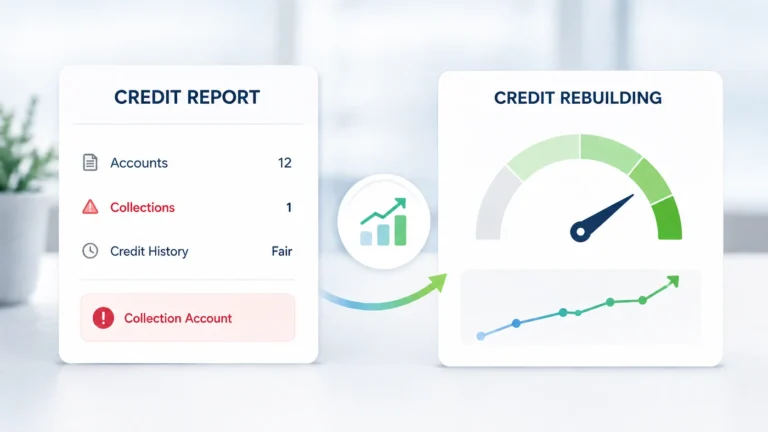
If a collection account appears, check that it is accurate and understand the steps for rebuilding credit after collections. Do not ignore notices because you believe the original BNPL account was too small to matter.
Why several BNPL plans can create a cash-flow problem
Even when a BNPL account is not reported, it still affects your budget. Multiple small installment plans can create overlapping due dates and automatic withdrawals. Because each purchase may seem manageable alone, it can be easy to underestimate the total amount due from your checking account during a given week or month.
BNPL balances are also different from credit card utilization. Credit utilization generally refers to revolving credit balances compared with credit limits. A pay-in-four plan may not appear as a revolving balance, yet its payment obligation can still reduce the cash you have available for rent, utilities, savings, and other debts. For a clearer view, read debt-to-income ratio versus credit utilization.
- List every remaining BNPL payment and its due date.
- Include upcoming automatic withdrawals in your checking-account budget.
- Avoid opening another plan to cover an existing payment gap.
- Use reminders before the payment date, not after a charge fails.
- Keep enough money in the linked account for scheduled payments.
A four-question checkout checklist
Before choosing BNPL, pause long enough to answer these four questions. A few minutes at checkout can prevent confusion about your credit and avoidable payment trouble later.
- Is this a pay-in-four plan or a longer installment loan? Longer financing may have different underwriting and reporting practices.
- Will the provider perform a soft or hard credit inquiry? Look for this information in the application or financing disclosure.
- Does the provider report payments, late payments, or defaults to credit bureaus? Confirm which bureaus may receive information.
- Could I pay every installment from money already in my budget? If the answer is no, delaying the purchase may be safer.
Also review the interest, fees, repayment dates, automatic-payment authorization, return process, and dispute procedures. A returned item does not necessarily cancel the financing immediately. Follow the merchant’s return instructions and the lender’s instructions, then monitor the account until the balance and future payments are updated.
How to monitor BNPL-related credit information
Check your credit reports regularly, particularly after using a longer-term BNPL product or resolving a late payment. Review account names, opening dates, payment history, balances, and collection entries. Knowing how to read your credit report can help you spot an unfamiliar account or inaccurate status.
If you find information you believe is wrong, follow the credit bureau’s dispute process and provide supporting records, such as payment confirmations, cancellation notices, or correspondence showing the account was resolved. You may also need to contact the BNPL provider or debt collector directly. Keep copies and dates for everything you submit.
Remember that checking your own report is not the same as applying for new credit. Monitoring lets you understand what lenders may see without relying on assumptions about whether a BNPL account is reported.
Make your payment plan visible
Before using BNPL, add every installment to your budget and verify the loan’s inquiry and reporting terms.
Frequently asked questions
Does using BNPL build credit?
It may, but only if the provider furnishes the account to a credit bureau and the scoring model considers that information. On-time payments are not guaranteed to build credit, and reporting can differ by product and bureau. Review the provider’s current terms rather than relying on general claims.
Does BNPL show up on a credit report?
It can. Experian may display BNPL data when it is furnished by a provider. Other bureau treatment can differ. Negative events, including reported delinquency or collections, may be more likely to create a meaningful credit issue than routine on-time pay-in-four activity.
Will one missed BNPL payment lower my score?
Not necessarily. A missed payment does not automatically appear on a credit report. But if the provider reports a delinquency or sends the debt to collections and that information is reported, your score could be affected. Pay or address the missed amount as soon as possible.
Your next step
BNPL can affect your credit score, but there is no one answer for every plan. Short pay-in-four products often use soft inquiries and may not report routine payments, while longer installment products may use hard inquiries and report account activity. Missed payments, defaults, and collections create the greatest potential credit risk. Read the disclosure, track due dates, and use BNPL only when the full repayment schedule already fits your budget.
Explore related guides on credit scores.
Sources
FICO: announcement of FICO Score 10 BNPL and 10 T BNPL, June 23, 2025
- Consumer Financial Protection Bureau: Will a BNPL loan impact my credit scores?
- Consumer Financial Protection Bureau: What is a BNPL loan?
- Consumer Financial Protection Bureau: What happens if I cannot repay?
- Experian: Buy now, pay later FAQ
- TransUnion: Buy now, pay later information
Sources checked October 7, 2026.
Claire Bennett is an editorial name, as explained on the author page. No independent expert review is claimed.
This article is for educational purposes only and is not financial, legal, or credit advice. Terms, reporting practices, and scoring methods can change; review current provider disclosures and consider your individual circumstances before borrowing.