In this guide
- What does a credit card hardship program do?
- How can a credit card hardship program affect your credit score?
- Does a hardship program remove late payments from your credit report?
- How to ask your credit card issuer for hardship assistance
- Questions to answer before accepting an offer
- If you pay today, does the plan start today?
- What if the credit report looks wrong afterward?
- What if the offered payment is still unaffordable?
A credit card hardship program can affect your credit score, but the result depends on the agreement and what changes on your credit report. A lower required payment is not automatically a negative mark. Existing late payments, a reduced credit limit, or an account closure can still matter. Ask the issuer how it will report your specific account before enrolling. Experian explains these possible credit effects.
If you are struggling with a bill, the practical question is: can this arrangement give you a payment you can sustain, and what happens to your account while you make it? For related card-balance and utilization guides, browse the Credit cards & utilization hub.
What does a credit card hardship program do?
A hardship program changes certain repayment terms when you are experiencing financial difficulty. The exact offer depends on your issuer and circumstances.
For example, American Express says its payment plans may reduce interest rates and monthly payments, provide relief from late fees, and prevent an account from becoming further past due when the customer follows the program terms. It also says enrollment affects the ability to use the card. These are examples of one issuer’s options, not benefits every bank guarantees. See American Express’s payment assistance information.
How can a credit card hardship program affect your credit score?
| What changes | Why it matters | What to ask |
|---|---|---|
| Required payment | A smaller agreed payment may make it easier to stay on schedule. | What amount satisfies the agreement each month? |
| Credit limit | A lower limit can increase utilization even without new spending. | Will my limit change, and when? |
| Account access | Your card may be restricted or closed. | Is the restriction temporary, or is the account closing? |
| Credit reporting | Payment status and a possible arrangement notation are different pieces of information. | How will my payment status and the arrangement be reported? |
Does a hardship program show on your credit report?
Experian notes that a hardship notation may be visible to lenders even when it does not directly change a score. A lender’s decision can consider more than the score itself. Read Experian’s explanation of hardship reporting.
Can a hardship program lower your credit limit or close your card?
A lower credit limit and an account closure are different changes, so ask which one the issuer proposes. To understand the balance-to-limit calculation, see our guide to how credit utilization affects your credit score.
Imagine a reported balance of $1,200 on a card with a $6,000 limit. That card’s utilization is 20%. If the limit falls to $2,000 while the balance stays the same, utilization becomes 60%.
This is an illustrative calculation, not a prediction of how many points a score will change. It shows why an affordable payment and higher utilization can happen at the same time. The CFPB explains that reducing available credit through an account closure can also raise utilization and lower a score. See the CFPB’s guidance on closing a credit card.

Does a hardship program remove late payments from your credit report?
Do not assume it will. Making future payments under an agreement and removing an earlier accurate late payment are separate issues. The CFPB says accurate negative information generally cannot be removed simply because you want it deleted. Read the CFPB’s explanation of accurate negative information.
Most negative payment-history information can generally remain on a credit report for up to seven years. A hardship plan is therefore not a promise of a clean credit history or an immediate score recovery. See the CFPB’s credit reporting timelines.
For the difference between a mark remaining on your report and its effect over time, read how long a late payment affects your credit score.
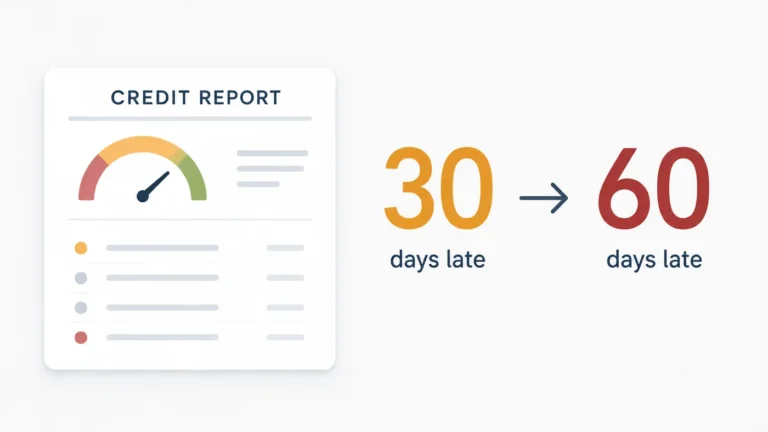
If you are already behind, ask two separate questions: “What happens to the amount already past due?” and “What must I do for the account to become current?” Write down both answers. For more background, see our guide to 30-day versus 60-day late payments.
How to ask your credit card issuer for hardship assistance
When the card is at or near its limit, the maxed-out card checklist helps you prepare the balance, available credit, due date, and essential-expense figures before the hardship call.
The CFPB recommends contacting your card company promptly when you cannot afford the minimum payment. Explain the difficulty, what you can pay, and when you expect normal payments to become possible again. You do not need to wait until you have missed a payment to ask about help. See the CFPB’s steps for unaffordable card bills and its early-action guidance.
If the income drop followed a job loss, our guide to protecting your credit after losing your job covers the wider payment priorities.
For your own call notes, prepare a short snapshot:
- Reliable monthly take-home income.
- Essential spending, including housing, food, utilities, and transport.
- Other required debt payments.
- An amount you could realistically pay toward this card.
A practical opening might be: “My income has fallen, and my current payment is no longer affordable. After essential expenses, I can pay about [amount] per month. What assistance options can you review for my account?”
If your payments are still affordable and you mainly want to reduce interest costs, use the call script for requesting a lower APR on your existing card. Ask the issuer to distinguish a regular rate review from enrollment in a hardship program.
Questions to answer before accepting an offer
Use this checklist to compare the actual offer with your budget. Record specific dates and amounts wherever possible.
- Start date: When do the new terms take effect, and what is due before then?
- Monthly cost: What are the payment, interest rate, and any remaining fees?
- Past-due amount: Is it included in the schedule or handled separately?
- Reporting: What payment status will be reported during the plan?
- Card access: Will the card stay usable, be suspended, or close?
- End date: What payment and interest rate apply afterward?
- Missed plan payment: What happens if you cannot meet the new schedule?
Request written confirmation and keep it with your statements. If a number or condition is unclear, resolve it before relying on the new arrangement.
If you pay today, does the plan start today?
Confirm that with the issuer. A payment receipt tells you a payment was made; it does not, by itself, explain the effective date or every condition of a hardship agreement.
Until the new terms take effect, check what happens if you pay less than the minimum on a credit card. A smaller payment may leave the current bill short even while you are discussing assistance.
For example, suppose the current statement requires $180 and a representative discusses a $75 plan payment. Before sending $75, ask whether that amount satisfies this month’s obligation or applies only after enrollment is complete. This hypothetical example illustrates a question to resolve, not a standard issuer policy.
Keep the payment confirmation and the agreement together. Also check what will happen to any automatic payment already scheduled.
What if the credit report looks wrong afterward?
Compare the reported information with your agreement, payment records, and account statements. Identify the exact month, balance, or status you believe is incorrect.
The CFPB recommends disputing errors with both the credit reporting company and the company that supplied the information. Explain the issue clearly and provide copies of supporting documents. Keep the originals and a record of what you submitted. Follow the CFPB’s credit report dispute guidance.
Our guide to disputing a late payment covers that process in more detail. Dispute an actual reporting error; enrollment alone does not show that an older late-payment entry is wrong.
What if the offered payment is still unaffordable?
Tell the issuer before agreeing. If several debts are involved, a nonprofit credit counselor may help you review the whole budget. A debt management plan can combine payments through a counseling organization and may reduce interest charges or fees. Ask about costs, read the agreement, and confirm that creditors accept the proposed arrangement before sending payments through it. See the CFPB’s guide to credit counseling.
For the differences between counseling repayment and negotiated forgiveness, see debt management plan vs. debt settlement.
When reviewing an offer, put the proposed payment beside your actual monthly budget. Then check the reporting terms, account restrictions, and payment after the plan ends. Those details will help you judge whether the arrangement is workable for you.