In this guide
- The direct difference
- How revolving and installment accounts work
- Payment structure and payoff timeline
- What each account can show on your credit report
- Potential score and payoff effects
- Which account type is this? Use this checklist
- Common questions
- Review the numbers before choosing credit
- Your next step
- Explore different loan situations
- Sources
The direct difference
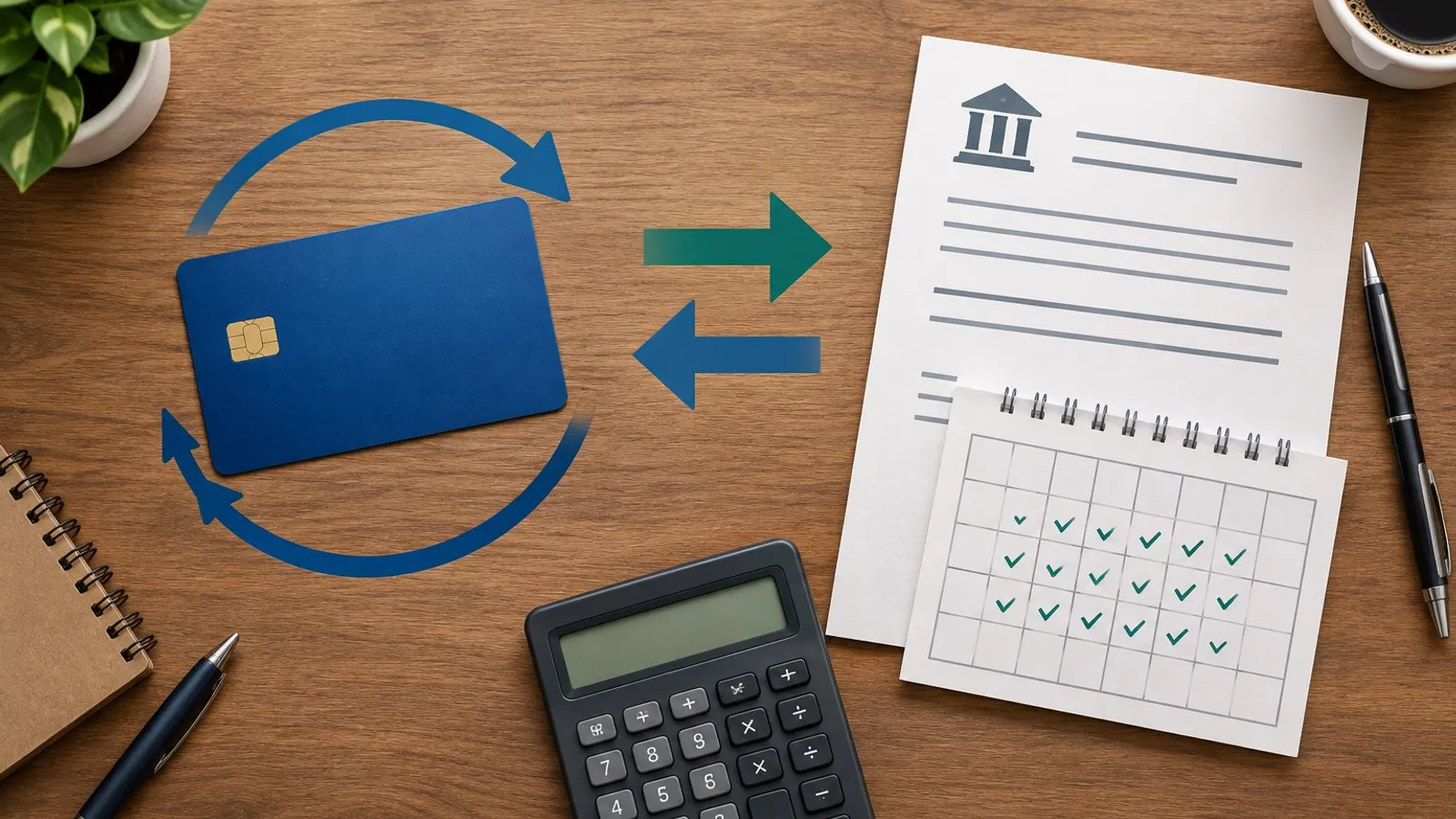
Revolving credit lets you borrow, repay, and borrow again up to a credit limit; installment credit gives you a set loan amount that you repay through scheduled payments. A credit card is the familiar revolving example, while a mortgage, auto loan, student loan, or personal loan is usually installment credit. The difference matters because the account fields, payment expectations, and ways balances can affect a credit report are not identical. For revolving accounts, reported balance relative to the limit is central. For installment loans, progress toward the original balance and payment history tell a different story. Neither type is automatically better; choose based on a genuine borrowing need and affordable repayment plan.
How revolving and installment accounts work
With revolving credit, a lender approves a maximum amount you may use. You can make purchases, take an advance if the account permits it, or draw from a line of credit. As you repay the balance, available credit generally becomes available again. The account can remain open indefinitely unless you or the lender closes it.
Credit cards are the most common revolving accounts. Some home equity lines of credit and personal lines of credit also work this way, although their draw periods, rates, fees, and repayment rules can differ from a typical card.
The CFPB’s description of a personal installment loan illustrates the other structure: a defined loan amount repaid through scheduled installments. Some education loans have multiple disbursements, and payment rules vary by product. Repaying principal generally does not restore an amount you can borrow again without a new loan or refinancing.
Revolving credit
The balance can rise and fall repeatedly. Your available credit generally equals the limit minus the current balance and pending activity.
Installment credit
The loan has a defined payoff path. Repayment reduces the remaining principal instead of restoring an available borrowing limit.
The category is about account mechanics, not whether debt is “good” or “bad.” A mortgage can be a large installment obligation, and a credit card can have a modest balance. What matters is whether the payment fits your budget and whether you manage the account as agreed.
Payment structure and payoff timeline
Revolving accounts typically require at least a minimum payment each billing cycle. Paying only the minimum can keep an account current, but it may extend repayment and lead to interest charges when a balance carries beyond any applicable grace period. The payment amount can change as your balance, interest charges, or account terms change.
Installment loans generally have a scheduled payment amount and due date. Many loans use amortization, meaning early payments may include more interest and later payments apply more toward principal. Some installment products have variable rates, balloon payments, deferment options, or other rules, so read the promissory note rather than assuming every loan works alike.
Illustrative repayment comparison
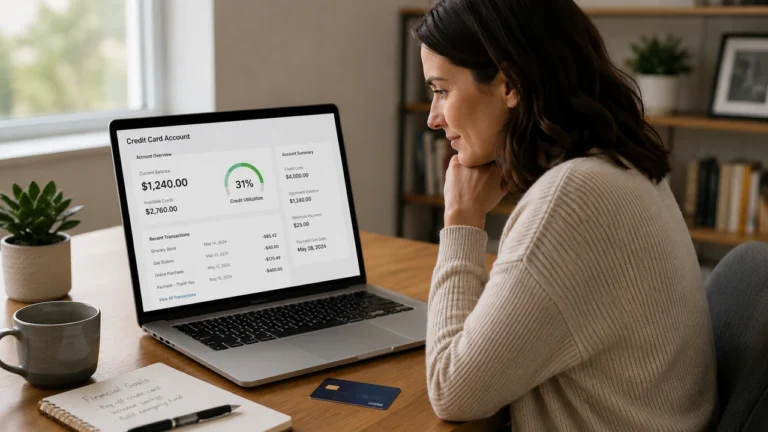
Illustrative scenario: Suppose Maya uses $2,000 on a credit card with a $5,000 limit. She may continue using the card if she has available credit, but her required payment can vary and new purchases can increase the balance. If Maya instead takes a $2,000 personal installment loan, she receives the loan proceeds and makes the scheduled payments until the balance reaches zero. Paying down that loan does not create a reusable $2,000 line.
What each account can show on your credit report
A credit report may identify an account as revolving or installment and can show the creditor, account status, balance, payment history, opening date, and other reported details. The exact labels and fields vary by credit bureau and creditor. Your report is the record of reported account information; your credit score is a calculation that uses information from that report.
Why utilization is mainly a revolving-credit concept
Credit utilization normally compares reported revolving balances with reported revolving credit limits. In the example above, a $1,000 card balance on a $5,000 limit represents 20% utilization for that account. Overall revolving utilization considers balances and limits across qualifying revolving accounts.
Do not divide an installment loan balance by your credit-card limits. That is not a meaningful utilization calculation. Installment balances can still be considered in credit scoring models, but they are evaluated differently from revolving utilization. For a deeper explanation, see What is credit utilization? and debt-to-income versus credit utilization.
Potential score and payoff effects
Payment history, amounts owed, account age, new credit, and credit mix can all matter in credit scoring systems, but their exact treatment depends on the scoring model and the information in your file. Credit mix is only one part of a score. It is not a reason to open an account, take a loan, or pay interest you do not need to pay.
On revolving accounts, a lower reported balance relative to available limits can reduce utilization. Timing matters because issuers may report balances at different points in the billing cycle. Paying before the statement closes may produce a different reported balance than paying after the statement closes, even if you avoid interest by paying the statement balance by its due date.
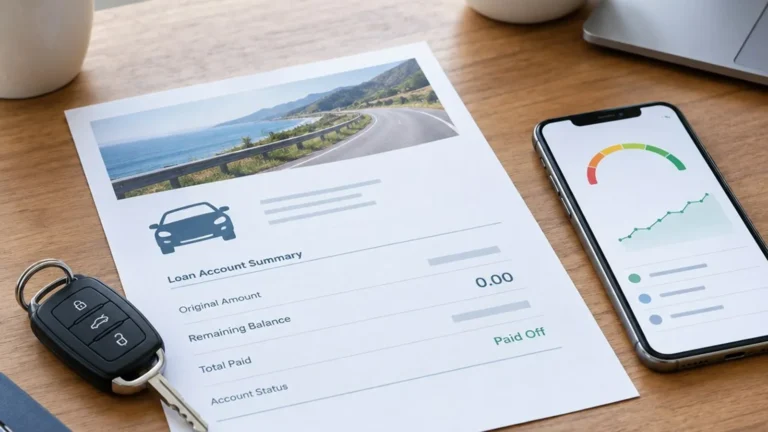
Paying off an installment loan can close the account and may coincide with a score change. That does not mean paying off debt was a mistake, nor is there a fixed score outcome. A closed paid loan, changes in the mix of open accounts, and normal report updates can all be part of what you see. Learn more in Why did my credit score drop after paying off a car loan?.
Which account type is this? Use this checklist
Use your account agreement and credit report together. Product names can be confusing, especially when an account includes a draw period, a promotional offer, or a refinancing feature.
- Is there a reusable credit limit? If repaying restores available borrowing capacity, it is likely revolving credit.
- Did you receive a fixed loan amount? If the lender issued a defined amount with a payoff schedule, it is likely installment credit.
- Can the required payment change with the balance? That is common with revolving accounts, although loan terms always control.
- Does the statement show an original loan amount and maturity date? Those are common installment-loan features.
- Will paying the balance to zero end the account? That is typical for an installment loan; a credit card may remain open with a zero balance.
- Does your credit report list a credit limit? A reported limit often signals revolving credit, but verify the account type rather than relying on one field alone.
Practical next steps
First, make every required payment on time. Next, review revolving balances before applying for important credit, especially if balances are high relative to limits. Then, avoid using a new installment loan merely to create a “better mix.” Finally, review your reports for errors, including incorrect balances, limits, payment statuses, or account types. Our guide on how to read your credit report can help you identify the fields worth checking.
Common questions
Is a personal loan revolving or installment credit?
A standard personal loan is generally installment credit because you borrow a defined amount and repay it over a set term. A personal line of credit may be revolving instead, so check the agreement.
Can a zero-balance credit card help my credit?
A card with a zero reported balance may preserve available credit if the issuer keeps the account open. However, account activity, reporting practices, and the rest of your credit file matter. Do not carry a balance or pay interest solely for score reasons.
Does closing a credit card turn it into an installment account?
No. Closing a card does not change its account type. It can remove that account’s available limit from future revolving-utilization calculations, which may matter if other cards have balances.
Review the numbers before choosing credit
Understand your reported balances, payment obligations, and borrowing purpose before opening or using an account.
Your next step
Revolving credit is reusable borrowing up to a limit, while installment credit is a fixed loan repaid over time. Keep the distinction clear when reviewing utilization, comparing payments, and interpreting a payoff. The most useful strategy is simple: borrow only when necessary, pay every account as agreed, and monitor the information reported in your credit file.
Account type and borrower role are separate questions. If someone else will join the loan, check cosigner vs. co-borrower to understand repayment responsibility and ownership.
Explore related guides on credit scores.
Explore different loan situations
Use these guides to compare the details that matter for your situation:
Sources
Sources checked October 7, 2026.
- myFICO: Revolving and installment credit differences
- myFICO: Revolving accounts FAQ
- Consumer Financial Protection Bureau: Personal installment loans
- CFPB financial terms glossary: credit utilization ratio
Claire Bennett is an editorial name, as explained on the author page. No independent expert review is claimed.
Educational disclaimer: This content is for general educational purposes and is not financial, legal, tax, lending, or credit-repair advice. Credit reporting, loan terms, and scoring results vary by lender, credit bureau, and individual circumstances.