In this guide
- Start here: choose your situation
- Get a script for your situation
- How to get a late fee waived in four steps
- What to do if the late fee is a billing error
- How to verify your credit card late fee refund
- Does a late-fee waiver protect your credit score?
- What if the issuer refuses?
- Frequently asked questions
- Sources and editorial note
To request a credit card late fee waiver, contact your issuer, identify the charge, briefly explain what happened, and ask for a one-time courtesy reversal. First confirm what payment is needed to bring the account current. Approval is discretionary when the fee was valid; a fee caused by a billing error calls for an investigation and correction.
A waived fee does not, by itself, remove a late payment from your credit report or forgive the missed payment.
Start here: choose your situation
Find the closest match, then use the appropriate script or next step below.
| Your situation | Your next step |
|---|---|
| You paid late and the fee matches your card’s terms. | Ask for a courtesy waiver. Approval is discretionary. |
| Your records show an on-time payment, but a late fee appeared. | Ask the issuer to investigate the payment and fee. |
| You cannot afford the overdue payment. | Ask about payment assistance as well as the fee. |
| The fee was reversed, but a late payment remains on your credit report. | Check the reporting separately. Accurate and inaccurate entries need different approaches. |
Get a script for your situation
Open the matching option and replace the brackets with your facts. Use the number on your card or the secure message center in your account. Do not include a full card number in ordinary email.
I paid late and want a courtesy waiver
“I’m contacting you about the late fee of [amount] charged on [date]. My payment was late because [brief, truthful reason]. [If true: I have now made the payment needed to bring the account current.] Would you consider a one-time courtesy reversal? Please confirm the decision, when any credit will post, and the amount and due date of my next required payment.”
If true, mention an otherwise on-time payment record and what you changed to prevent another missed payment. The CFPB suggests asking the card company about a possible waiver; approval is not guaranteed.
I paid on time, but a late fee appeared
“I’m contacting you about the late fee of [amount] charged on [date]. My payment confirmation shows [date, time, amount, and confirmation number]. Please investigate when the payment was received and credited, explain why the fee was charged, and correct any error. What records do you need from me, and what is my case number?”
Sending a payment and having it received are different events. Use the facts in your records. A call or ordinary secure message may not preserve formal billing-error rights: follow the written-notice instructions and deadlines below.
I cannot afford the overdue payment
“I cannot afford the amount currently due. What payment-assistance options are available for my account, and can you review the late fee? Before I agree to a plan, please explain the required payments, dates, interest and fees, and any effect on use of the card or credit reporting. Can you send the terms through my secure account?”
Explain what you can realistically pay. Do not promise a payment you cannot make, and keep following existing terms unless the issuer confirms a change. A fee waiver alone will not resolve an overdue payment.
If a courtesy request is declined, ask: “Is there a review process, or is this fee ineligible under my account’s policy?” A supervisor may not have authority to override the decision. For an approved request, use the refund checklist below.
How to get a late fee waived in four steps
1. Check the charge and payment status
Open the statement and account history. Record the fee amount and date, the payment due date, the minimum required, and when your payment was received. Save any payment confirmation.
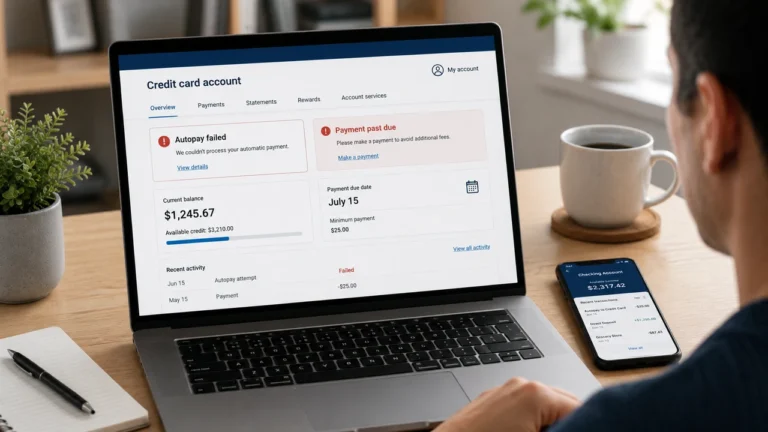
If a payment is still pending, or money left your bank but never appeared on the card account, check for a possible duplicate debit before paying again. Use the investigation checklist for autopay that failed or was not credited correctly.
Ask what amount would bring the account current and which payment method will be credited soonest. Do not wait for a courtesy decision before making an undisputed payment you can afford. If you cannot catch up, explain that during the same call and ask about payment assistance.
2. Contact the issuer through a verified channel
Use the number on the back of your card or statement, or the secure message center in your account. State the specific charge you want reviewed. A short explanation makes it easier to distinguish a courtesy request from a payment-processing problem.
3. Ask for the exact adjustment
Request reversal of the late fee, not a vague “fix” to the account. If interest was also charged, ask separately whether the issuer will review it. A late-fee waiver alone does not mean interest was waived or your purchase grace period was restored.
The CFPB explains purchase grace periods: paying only the minimum can leave you owing interest, and failing to pay the balance in full on time can cause you to lose an applicable grace period.
4. Get the result and posting timeframe
Ask whether the request is approved or merely submitted for review. Record the case number, the amount approved, when the adjustment should appear, and what payment remains due. Save a secure message or other written confirmation if available.
What to do if the late fee is a billing error
For a fee you believe is wrong, compare the required minimum and applicable payment cutoff with your records. The CFPB advises asking the issuer why an apparently on-time payment generated a fee. Sending a payment is not always the same as the issuer receiving it.
If the fee is a billing error: notice and response deadlines
To preserve your billing-error rights, send written notice to the billing-inquiries address in your statement’s billing-rights instructions. This may differ from the payment address; the CFPB explains where to send a billing dispute. Identify your account, the fee or missing payment, its date and amount, and why you believe it is wrong. Keep copies of the notice, supporting records, and proof of delivery.
Under Regulation Z § 1026.13(b), the issuer must receive your notice no later than 60 days after it sent the first statement reflecting the error. For a missing payment credit, the clock starts with the statement on which that credit should have appeared. Electronic notice counts only when the issuer’s billing-rights instructions expressly accept that submission method.
A phone call or courtesy request alone does not replace this notice. With a qualifying, timely billing-error notice, you generally need not pay the disputed amount or related charges during the investigation, but must keep paying undisputed amounts on time.
Once the issuer receives that notice, § 1026.13(c) sets two response deadlines:
- Written acknowledgment: within 30 days of receipt, unless the issuer completes the required resolution procedures within that time.
- Resolution: within two complete billing cycles after receipt, and never later than 90 days after receipt.
Both deadlines run from receipt of the notice; the 30-day acknowledgment period does not add extra time to the resolution deadline. These rules govern billing-error notices, not ordinary requests to waive a valid fee as a courtesy.
How to verify your credit card late fee refund

Check the account after the issuer’s stated posting timeframe. Look for an adjustment matching the approved fee amount. If it is missing, follow up with the case number instead of assuming the request was granted.
For a courtesy waiver, do not subtract a promised fee credit from your required payment unless the issuer confirms an adjusted amount. A fee credit can reduce your balance without satisfying the payment needed to bring the account current.
- Does the credit match the fee that was approved for reversal?
- Is the account current, or does a past-due amount remain?
- What is the next minimum payment and due date?
- Were any interest charges reviewed separately?
- Will an already scheduled automatic payment still be withdrawn?
Hypothetical example: Your current balance is $640, including a $30 late fee. If the issuer posts a $30 fee credit and nothing else changes, the balance becomes $610. That calculation does not establish your next minimum payment or prove a missed payment has been cured. Confirm both separately.
Does a late-fee waiver protect your credit score?
It does not automatically change credit reporting. Experian explains that creditors generally report late payments once they are at least 30 days past due. Fees can arise earlier. See what happens when a payment is less than 30 days late; that period is not extra time to pay.
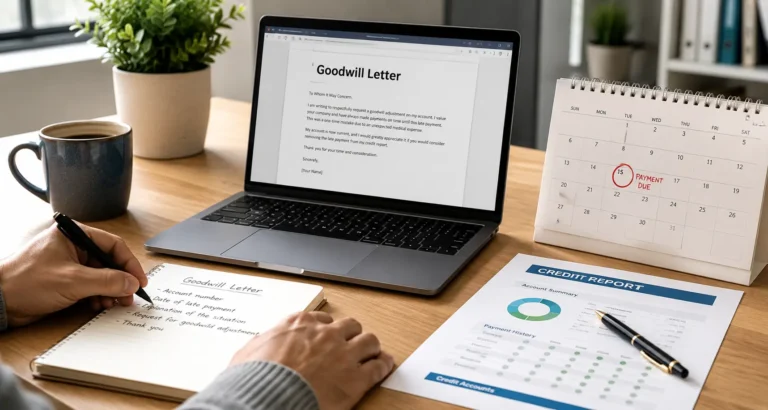
If an accurate late payment has already been reported, a goodwill request about credit reporting is separate from a fee-waiver request and is not guaranteed. If the reporting is inaccurate, challenge the specific error instead of calling it goodwill.
What if the issuer refuses?
Ask for the reason and keep the response. A valid fee does not become a billing error because a courtesy request was denied. If your records show an actual mistake, use the billing-error procedure above.
Address the reason the payment was missed. If payday and the bill deadline repeatedly clash, consider requesting a different credit card due date. Keep using the existing deadline until the issuer confirms the change. For reminders or autopay, verify the first effective date, payment amount, and available funds.
Frequently asked questions
Can you request a refund after paying the late fee?
Yes. Identify the fee you already paid and ask whether the issuer will reverse it. Ask how an approved adjustment will be applied; do not assume it will arrive as a cash refund to your bank.
Is the first late fee automatically waived?
Not across all cards. Some account terms or courtesy policies may allow it, but check your particular card. Do not skip the request or assume a first mistake is free.
How long does a late-fee refund take?
There is no single courtesy-refund timeline for every issuer. Ask for the expected posting date and follow up if the approved adjustment is missing. Formal billing-error deadlines are a separate matter.
Explore related guides on credit cards and utilization.
Sources and editorial note
Sources checked October 13, 2026: the linked CFPB guidance, Regulation Z § 1026.13, and Experian explanation. This update adds situation-specific call and secure-message scripts and clarifies the billing-error notice address, response deadlines, and how to verify a courtesy credit. The scripts, decision table, verification checklist, and hypothetical calculation were prepared for this guide.
General educational information for U.S. consumers, not individualized financial or legal advice. Your account terms and the facts of the payment determine which process applies.