In this guide
Your credit card minimum payment can increase because your statement balance grew, interest or fees rose, a past-due amount carried forward, or an installment plan added a monthly payment. The issuer may also have changed the payment formula, or a temporary payment reduction may have ended.
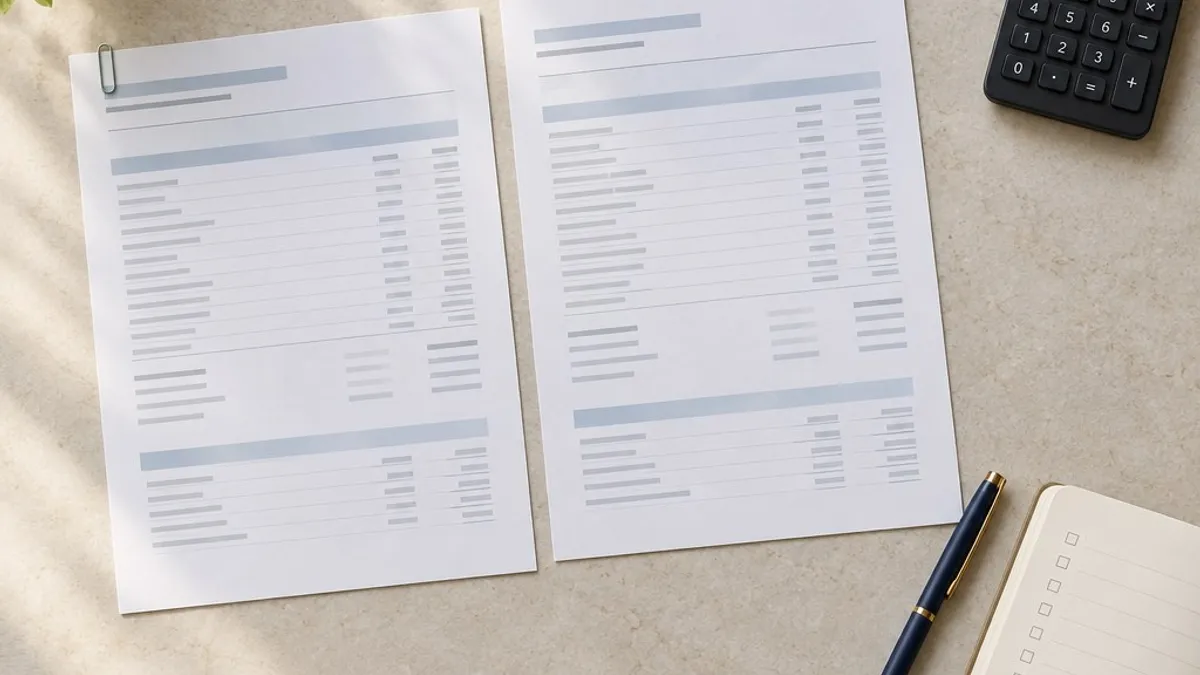
Open your two latest statements and compare the minimum due, balance, interest, fees, past-due amount, and installment payments. Those figures usually show where to investigate.
Why did my minimum payment go up?
1. Your statement balance increased
If your minimum includes a percentage of the balance, a larger balance can produce a higher payment. Purchases, recurring subscriptions, balance transfers, or cash advances can outweigh the payments you made. Experian identifies a growing balance as a common cause.
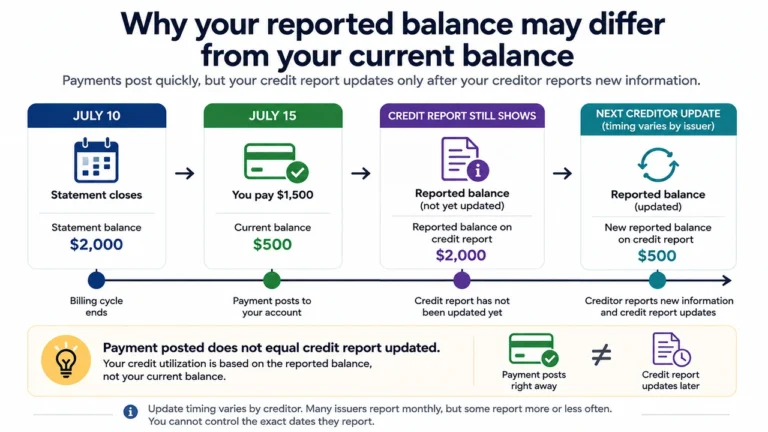
Compare statement balances from the same point in each billing cycle. Today’s app balance may already reflect a payment or refund made after the latest statement closed. See statement date vs. due date if those dates are confusing.
2. Your interest charge increased
If the increase follows a late or returned payment, check how a penalty APR applies and when it can be reduced. The rules can differ for existing balances and new transactions.
A higher APR, an expired promotional rate, or a higher average daily balance can increase interest. Under a formula that adds billed interest to a percentage of the balance, that can raise the minimum.
The CFPB explains that many issuers calculate interest daily. Check the interest charge, APR for each balance category, and billing-cycle length. A payment made late in the cycle may reduce the closing balance without eliminating interest already accrued earlier.
If you recently stopped paying in full, check whether you lost your purchase grace period.
3. Fees or an overdue amount were added
Look for an annual fee, late fee, cash-advance fee, or balance-transfer fee. How each affects the minimum depends on your agreement: it may enter the balance calculation or be added separately.
Also check the past-due field and payment history. A missed, insufficient, or returned payment may leave an amount to catch up on. Ask the issuer whether that amount is already included in the displayed total minimum so you do not count it twice.
4. An installment plan added a payment
Converting a purchase into a payment plan can increase the minimum even when it creates no new purchase. For example, Chase Pay Over Time after purchase adds the plan’s monthly principal and plan fee to the card’s minimum payment due. Additional plans can raise it further.
Check the plan section and first payment date. Other issuers’ programs can use different calculations.
5. Your payment terms changed
Compare the minimum-payment provision in your agreement with any recent notice. A higher percentage or dollar floor can raise the requirement. If you had a hardship arrangement, check its end date and the payment required afterward.
The CFPB says significant changes to account terms generally require 45 days’ advance notice. That is different from a higher bill produced by an unchanged formula. Exceptions also apply, including certain previously disclosed hardship-plan changes under Regulation Z.
Compare these lines on your last two statements
| Statement line | What to check |
|---|---|
| Total minimum due | Record the increase in dollars. Compare original statement figures, not one original amount with an app’s remaining amount. |
| Statement balance | Did new charges exceed payments and credits? |
| Interest and APRs | Did interest rise? Did a promotional rate end or a listed APR change? |
| Fees and past-due amount | Is there a new charge, an unpaid earlier minimum, or a payment reversal? |
| Installment plans | Did a plan payment begin, or did another plan get added? |
| Notices and arrangements | Did the formula change or a temporary reduction expire? |
Keep the statements and payment confirmations together. If one line does not explain the full increase, check the others: multiple changes can occur in the same cycle.
How is a credit card minimum payment calculated?
There is no universal formula. Common approaches use a percentage of a specified balance, or a percentage plus interest and certain fees, subject to a dollar floor. Past-due amounts and plan payments may have separate rules. Chase’s calculation guide explains why you must check your own agreement.
Hypothetical example: Suppose the minimum is the greater of $35 or 1% of the balance used in the formula plus billed interest. There are no fees, overdue amounts, or installment plans.
- With $30 interest: 1% × $2,400 + $30 = $54.
- With $60 interest: 1% × $2,400 + $60 = $84.
- Difference: the minimum rises $30 while the balance used for the percentage stays $2,400.
This comparison isolates the effect of interest; it is not a forecast of two consecutive bills or a particular issuer’s formula. Use the interest amount actually billed and the balance definition in your agreement. Do not add interest twice if it is already included in the relevant calculation.
Why did it increase without new purchases?
New spending is only one input. Start with the interest, fee, past-due, and installment-plan rows above, then check payment terms. A card can still generate costs while you are not using it.
Also separate timing from calculation. Paying after a statement closes can lower your current balance while the statement still shows its original minimum. Check the remaining minimum due before deciding what you still need to pay.
What to do before the payment is due
- Confirm the amount. Ask the issuer to identify every component of the new minimum and any payment already applied toward it.
- Review autopay. A fixed dollar amount may now be too low. Minimum-payment autopay may withdraw more than last month, so check available bank funds. Compare minimum-payment and statement-balance autopay.
- Address an unaffordable increase early. The CFPB recommends contacting the issuer promptly. Ask about assistance and confirm when any revised terms start. Read the hardship-program checklist before accepting an offer.
Paying last month’s smaller minimum may leave a shortfall. See what happens if you pay less than the required minimum. A request for help does not automatically change the amount due.
“My minimum increased from $___ to $___. Please break down the balance component, interest, fees, overdue amount, and plan payments. Did my payment formula change? What amount remains due, and by what date?”
Frequently asked questions
Why is my minimum payment so high when my balance went down?
A lower balance may be outweighed by higher interest, a fee, an overdue amount, or an installment obligation. You may also be comparing today’s balance with an earlier statement. Compare matching statement dates first.
Will paying extra lower next month’s minimum?
It may, but the result depends on when the payment is credited, the formula, new charges, and other amounts due. A dollar floor can keep the minimum unchanged even after the balance falls.
Also check where payments above the minimum go. Different balances on the same card can receive different portions of your payment, so the total you send may not reduce every balance equally.
Can I ask the bank to lower the minimum?
Yes, but approval is not guaranteed. Ask for the new amount, effective date, duration, and account restrictions in writing. Until an arrangement takes effect, use the issuer’s confirmed current requirement.
Explore related guides on credit cards and utilization.
Sources and editorial note
Sources checked October 7, 2026: the linked CFPB guidance, Regulation Z, Chase explanations, and Experian article. The calculation and statement-comparison checklist are illustrative; actual payment formulas vary by account.
General educational information for U.S. consumers, not individualized financial or legal advice. Check your card agreement and confirmed payment arrangements for the terms that apply to you.